
Last updated November 24, 2026
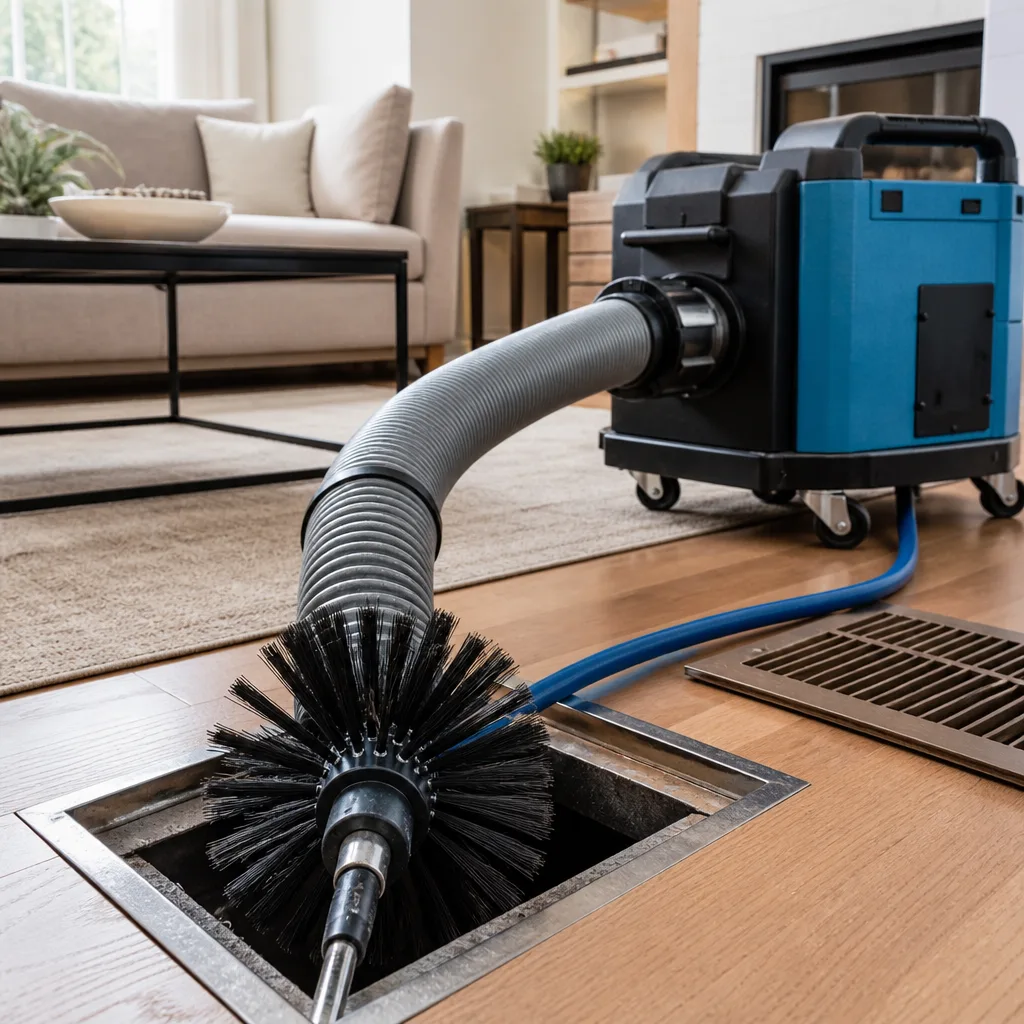 Whole-home duct cleaning
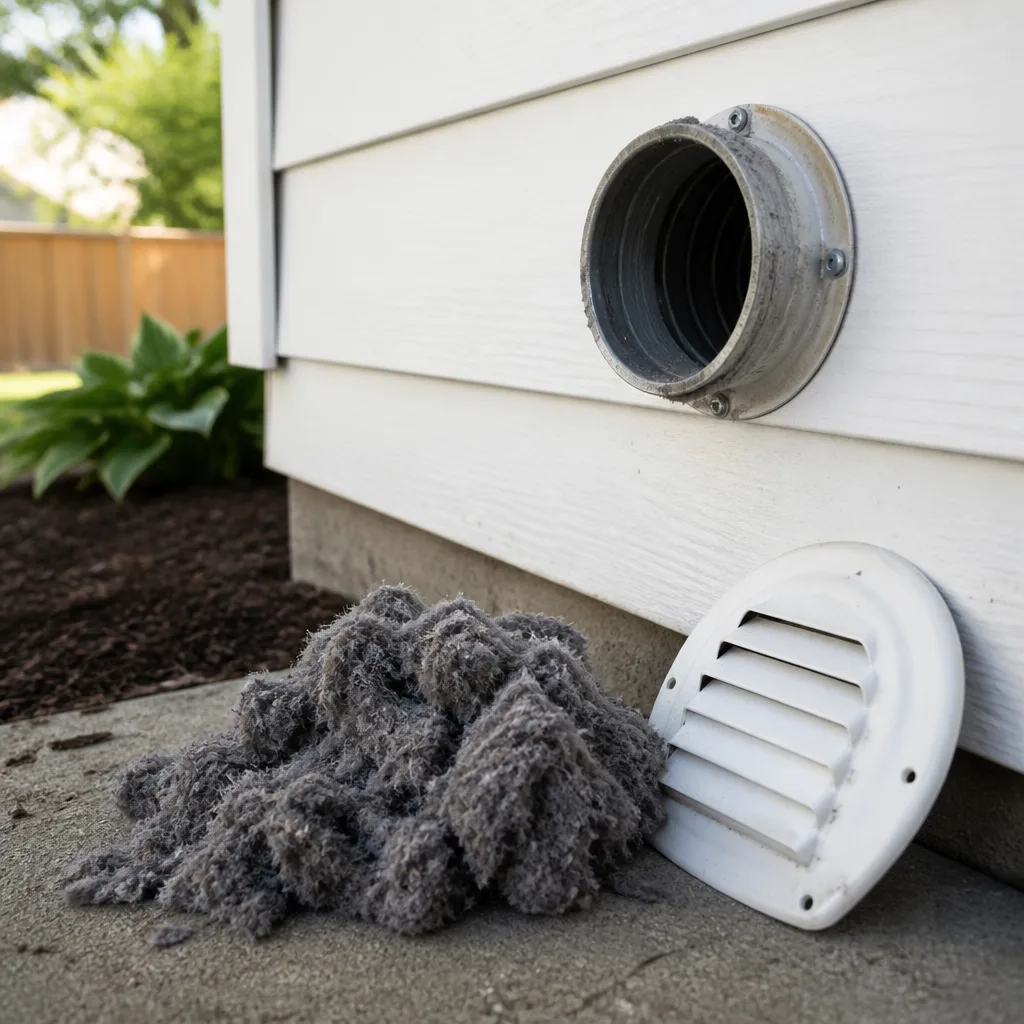 Dryer vent cleaning
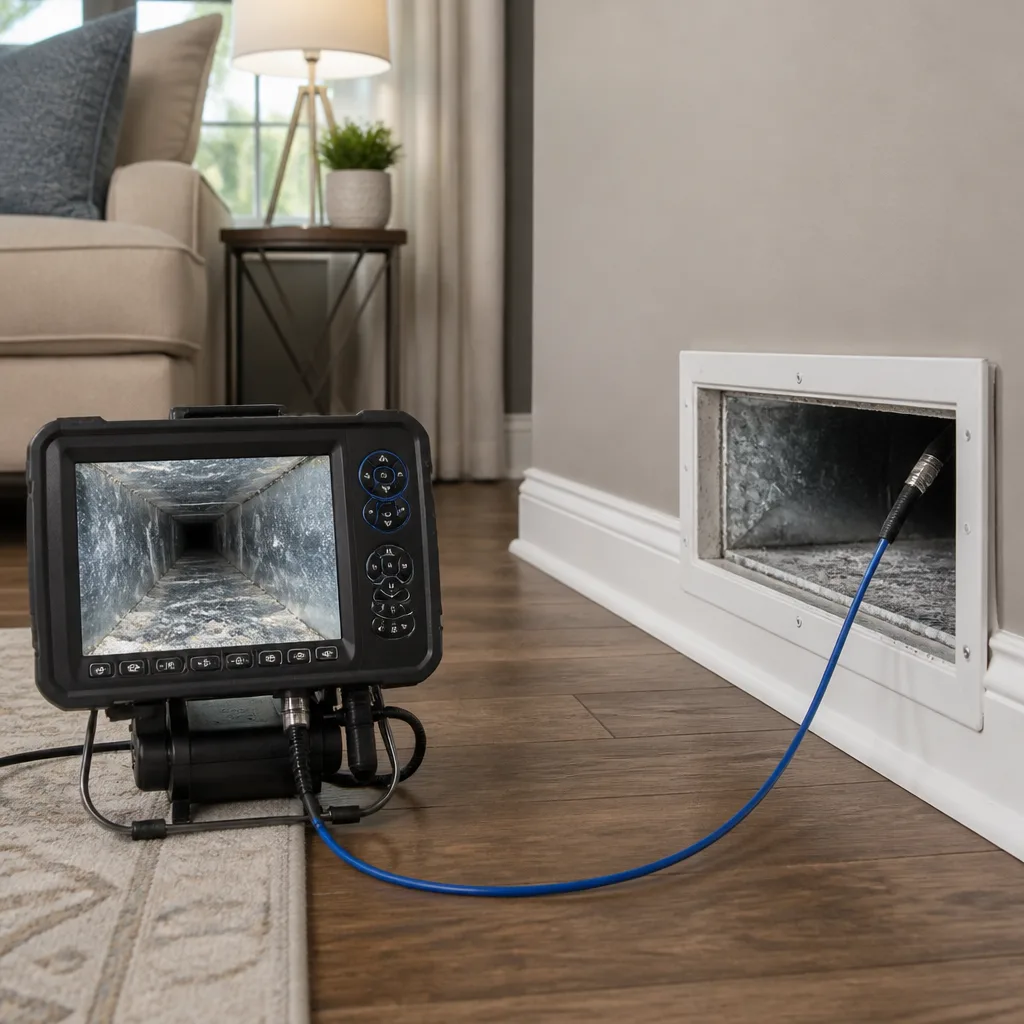 Camera inspection
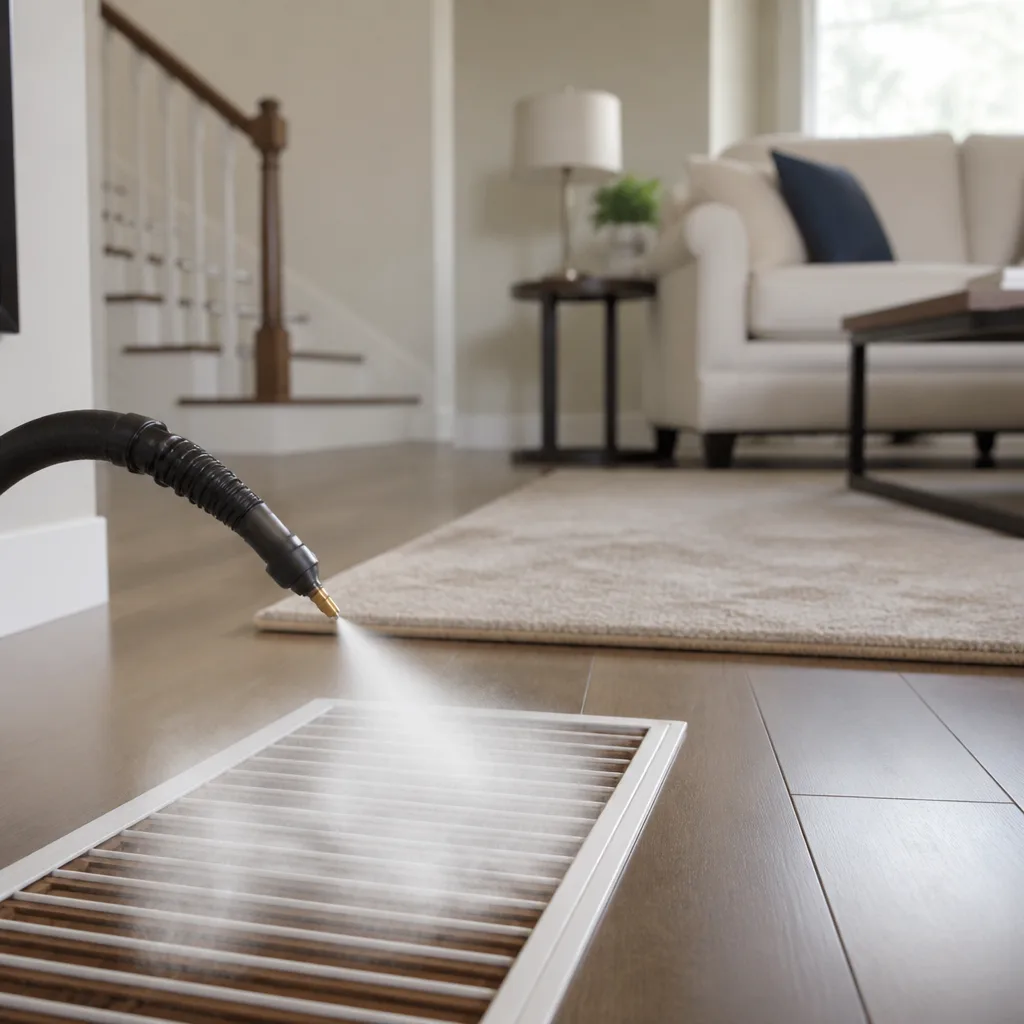 Sanitizing & deodorizing
Whole-system duct and dryer vent check with before-and-after photos - you see exactly what came out of your vents
That "$99 whole-house special" is a bait ad - the real number appears once they are in your hallway, or the "clean" is a shop-vac at the register. We photograph the inside of your ducts before and after instead.
Air Duct Cleaning Emergency Preparedness Guide for West Jordan Homes
Most West Jordan households have a readiness kit tucked somewhere: water, a flashlight, batteries, maybe a hand-crank radio. What almost none of them have is a plan for the forced-air system after that kit gets used. Here’s the counterintuitive part: the ductwork in your home is the one part of your property that a Wasatch Fault event, a smoke-heavy wildfire season, or a burst supply line can damage without leaving an obvious mark on the outside. You’ll tour the house, see walls standing and windows intact, and still be circulating contaminated air through every room. This guide covers what to check after an earthquake, how smoke behaves inside ducts, the moisture timeline that matters after a flood, and how to document the whole air pathway before and after an event so you can actually recover the cost.
Quick Answer
Air duct emergency preparedness in West Jordan means three things: knowing what to inspect on your HVAC system before you switch it back on after a seismic event, understanding that smoke and floodwater behave differently inside ductwork than ordinary dust does, and having baseline documentation of your duct system on file before anything happens. If ductwork is disconnected, water-logged, or smoke-saturated, don’t run the system until a technician inspects it. A duct system that’s structurally compromised can spread contamination through every room instead of clearing it.
Styles & brands we work with
- Whole-home duct cleaning
- Dryer vent cleaning
- Camera inspection
- Sanitizing & deodorizing
Table of Contents
- What to Check After an Earthquake Before You Turn the HVAC Back On
- Wildfire Smoke Events and Why Your Filter Isn’t Enough
- Flood and Moisture Events: The 48-72 Hour Window
- Pre-Event Baseline Inspection and Documentation
- What to Show Your Insurance Adjuster
- Building an Air System Preparedness Kit for a West Jordan Home
- Seasonal Timing in the Salt Lake Valley
What to Check After an Earthquake Before You Turn the HVAC Back On
The Wasatch Fault runs directly beneath the Salt Lake Valley, and a moderate event can do surprisingly focused damage to a forced-air system. Duct connections are the weak link. The joints where flexible duct meets rigid hard duct, the collars at the plenum, and the hangers holding trunk lines in a crawlspace or attic all take the shock differently than the house frame does.
Before you touch the thermostat, walk the accessible portions of the system and look for these signs:
- Disconnected flex sections. Flexible duct is often secured with tape and zip ties at the collar. A sharp jolt can slip it right off. If a section has fallen away from its hard-duct connection, you’ll see a visible gap or duct hanging loose.
- Insulation pulled into the airstream. Loose insulation that ends up inside a duct runs straight into the air handler and gets distributed into rooms.
- Debris that was settled and is now airborne. Years of settled dust on the bottom of horizontal runs can get shaken loose and pushed into the supply side on the first startup.
- Crushed or kinked runs. Flexible duct that’s pinched against a joist or crushed under fallen stored items restricts airflow and can overheat the heat exchanger.
- Displaced hangers. If a trunk line has dropped or twisted, the connection points downstream may be under stress.
If you find any of this, don’t restore operation. The safest move is a professional inspection and, if needed, air duct cleaning combined with a structural check on the duct system itself. Turning a broken system back on pushes whatever’s loose through every room in the house. Our technicians have up to 10 years of experience and use Rotobrush equipment to inspect and clean the full run rather than spot-vacuuming the accessible sections.
Wildfire Smoke Infiltration Events and Why Your Filter Isn’t Enough
Smoke doesn’t act like dust, and treating it like dust is the most common mistake we see. Dust is mostly heavy enough to settle or get captured by a decent filter. Fine smoke particles are far smaller, they stay suspended in air for a long time, and they move through the return side of a system the same way air does. A standard filter catches what it catches and lets the rest pass. That’s not a knock on the filter; it’s just not designed to be a smoke barrier.
What happens inside ductwork during a smoke event is different from ordinary soiling. Smoke leaves an oily residue that clings to duct walls, and it penetrates insulation that has any porosity or minor damage. Once the smoke clears outside, the system keeps delivering that residue into the home on every cycle.
Priorities after a smoke event, in order:
- Replace the filter immediately. A smoke-loaded filter is a saturated media pad, not a filter. It’s done.
- Run the fan on low and check airflow at every register. Weak airflow at a few vents can indicate a damper issue or a crushed run, both common in older homes that have been remodeled.
- Wipe exposed surfaces and clean the return grilles. This is the part you can do yourself without touching anything dangerous.
- Have the return side and supply trunks assessed. Smoke residue on duct interior walls doesn’t come off with a consumer vacuum. It requires mechanical agitation and filtration equipment rated for fine particulate.
- Consider air quality treatment. Sanitizing after a smoke event addresses odor and biological contamination that the cleaning process disturbs.
We use Abatement Technologies filtration equipment on site because it’s the same standard applied in environmental remediation. That’s not because your home is a hazardous waste site; it’s because when you’re clearing smoke residue out of a closed system, you want the contaminants captured at the machine, not spread through the room you’re trying to clean. If you use an Aprilaire or Honeywell whole-home filter or humidifier, technicians who service that equipment know how it interacts with the rest of the system instead of working around it.
Flood and Moisture Events: The 48-72 Hour Window
Standing water near an air handler doesn’t stay put. It wicks into the base insulation, the cabinet lining, and any flexible duct running at or near floor level. That moisture, combined with the warmth and dust load resident in any duct system, creates conditions where mold can begin colonizing inside the ductwork within 48 to 72 hours. That’s the window. Once it closes, you’re not cleaning surface moisture out; you’re dealing with an established contamination problem that may require duct replacement rather than cleaning.
If a water event reaches your HVAC equipment or any low-lying ductwork:
- Kill power to the air handler and heat pump or furnace. Water and electricity in the same cabinet is a safety issue, full stop.
- Don’t run the system to “dry it out.” A wet system running is a wet system spreading moisture to every room it serves.
- Photograph water lines and equipment before extracting water. You’ll need the images for insurance.
- Get standing water out of the mechanical space quickly. Every hour of standing water increases wicking into insulation and cabinet lining.
- Have the duct system inspected within the 48-72 hour window. An inspector can tell you whether drying is feasible or whether sectioned replacement is the right answer.
Moisture that touches drywall paper on the inside of a return cavity, insulation inside a flex run, or the fiberglass lining on a cabinet is three genuinely different problems. A trained inspector knows the difference. West Jordan homes built in the 1990s and 2000s often use flexible duct with internal liner; homes closer to the older parts of the valley may have rigid metal with external wrap. The remediation for each is different, and applying the wrong approach makes things worse.
Pre-Event Baseline Inspection and Documentation
The most valuable thing you can do for your duct system is document it before an emergency. Post-event damage is far easier to assess and claim when you have a documented “before” that shows the condition of the duct system, the equipment, and the connections. Without it, the adjuster has no way to distinguish between pre-existing conditions and damage from the event.
A baseline inspection and documentation package should include:
- Photographs of every accessible duct run. Attic, crawlspace, mechanical closet, and the visible portion of trunk lines behind registers.
- Photos of the air handler, plenum, and return. Include the filter size, brand, and change date.
- A written condition report. Note the age and material of duct type, any pre-existing crushed runs, existing disconnected joints, and the condition of insulation.
- Before-and-after photos of any cleaning or repair done. This establishes your baseline in the cleanest possible state, which makes post-event assessment far cleaner.
- Service records for the HVAC unit and any air quality equipment. Honeywell or Aprilaire components have service intervals; a documented service history helps establish that the system was functioning properly before the event.
A baseline inspection is also a diagnostic. It’s a chance to find the crushed runs, minor disconnected joints, and sealant failures that will make an emergency much worse. HVAC cleaning as part of that baseline covers the coil, blower, and cabinet, and Duct Repair & Sealing addresses any of those soft spots before they become problems. Sealed, cleaned, and documented is the goal; then whatever the next event is, you’re comparing against a known state.
What to Show Your Insurance Adjuster
Duct damage after an earthquake, smoke event, or flood is often claimable, but only if you can demonstrate it. The most common reason a duct portion of a property claim gets denied is inadequate evidence that the ductwork was intact and clean before the loss. Photo evidence with timestamps, a written inspection report from a qualified technician, and a clear description of the mechanism of damage (displacement from seismic movement, smoke infiltration from a named event, water intrusion from a specific source) do the heavy lifting.
Prepare the following for your adjuster:
- Pre-event baseline documentation. Photos, inspection report, and any prior cleaning records.
- Post-event photos of the same locations. Match the angles to the baseline where you can. The comparison is the strongest part of the claim.
- A written technician assessment. What damage is present, what the cause is believed to be, and what remediation is required (cleaning, repair, sectioned replacement, sanitizing).
- A written estimate for remediation. One flat estimate for the full scope, broken out by component, is more credible than a wide range.
- HVAC unit and air-quality component records. If a smoke event loaded a whole-home filter or damaged a coil, the service history shows prior condition.
Get a second written quote if you’re unsure about the scope. Insurers respond to specificity, not urgency. Every estimate we provide comes as a single flat price per system, agreed in writing before work starts, so the number your adjuster sees is the number you’ll pay.
Building an Air System Preparedness Kit for a West Jordan Home
An air-system kit is small, cheap, and the kind of thing you’re glad you had. A West Jordan home’s air pathway involves ducts, an air handler, a filter, and possibly a whole-home humidifier or air quality component. The kit addresses the parts you can safely interact with.
- Two spare filters of the exact size your system takes. Note that size on the inside of the filter door or on the cabinet. Aprilaire and Honeywell media cabinets use specific filter dimensions; a “close enough” filter is a leak path.
- A headlamp or flashlight. You’ll be looking in an attic or crawlspace.
- Photographer’s notebook or your phone with the camera ready. You’ll want to document the duct condition immediately after any event.
- Work gloves and a dust mask. N95 if you have them. Safe for you to wear; not a substitute for cleaning.
- Nitrile gloves and a bag for contaminated filter material. A smoke-loaded or wet filter shouldn’t sit in a trash can in the mechanical space.
- A printed copy of your baseline duct inspection photos and report. Cloud storage is fine until the internet isn’t.
- A list with the number for your HVAC technician and your insurer. Post-event, you’ll be making calls you’d rather not spend time looking up.
Don’t put tape, sealant, or “DIY duct repair” materials in the kit. Duct repair is one of the areas where an attempted shortcut either fails or makes the situation harder to assess. A technician using the right materials will do it in a fraction of the time a homeowner will take, and the repair will actually last.
Seasonal Timing in the Salt Lake Valley
West Jordan’s climate gives us two predictable windows of duct-related risk. The first is late spring through early fall, when wildfire smoke from the surrounding mountains can move into the valley. The second is winter, when snowmelt, frozen pipe failures, and the occasional winter rain-on-snow event create moisture problems in crawlspaces and mechanical closets. A third event type, seismic, doesn’t follow a season; the Wasatch Fault is always active.
The practical timing:
- Late spring: a baseline inspection and cleaning if it’s been a while, so the system is in known-good condition going into smoke season.
- Summer: monitor the filter closely during smoke events, and plan a post-event assessment if smoke enters the home.
- Fall: dryer vent cleaning belongs here, before the heavy-use months, and it addresses a fire risk that tends to get ignored in preparedness planning that focuses on natural disasters.
- Winter: watch for moisture around the air handler after any freeze event or pipe failure; the 48-72 hour window still applies.
West Jordan homes in neighborhoods along the Jordan River corridor and near the Oquirrh foothills tend to see more dust infiltration than homes tucked against the Wasatch bench, simply because wind direction and drainage patterns differ. If you’re not sure which pattern your home follows, that’s exactly what a baseline inspection tells you. We’re a West Jordan business, and we work this valley’s conditions on every job.
See the difference
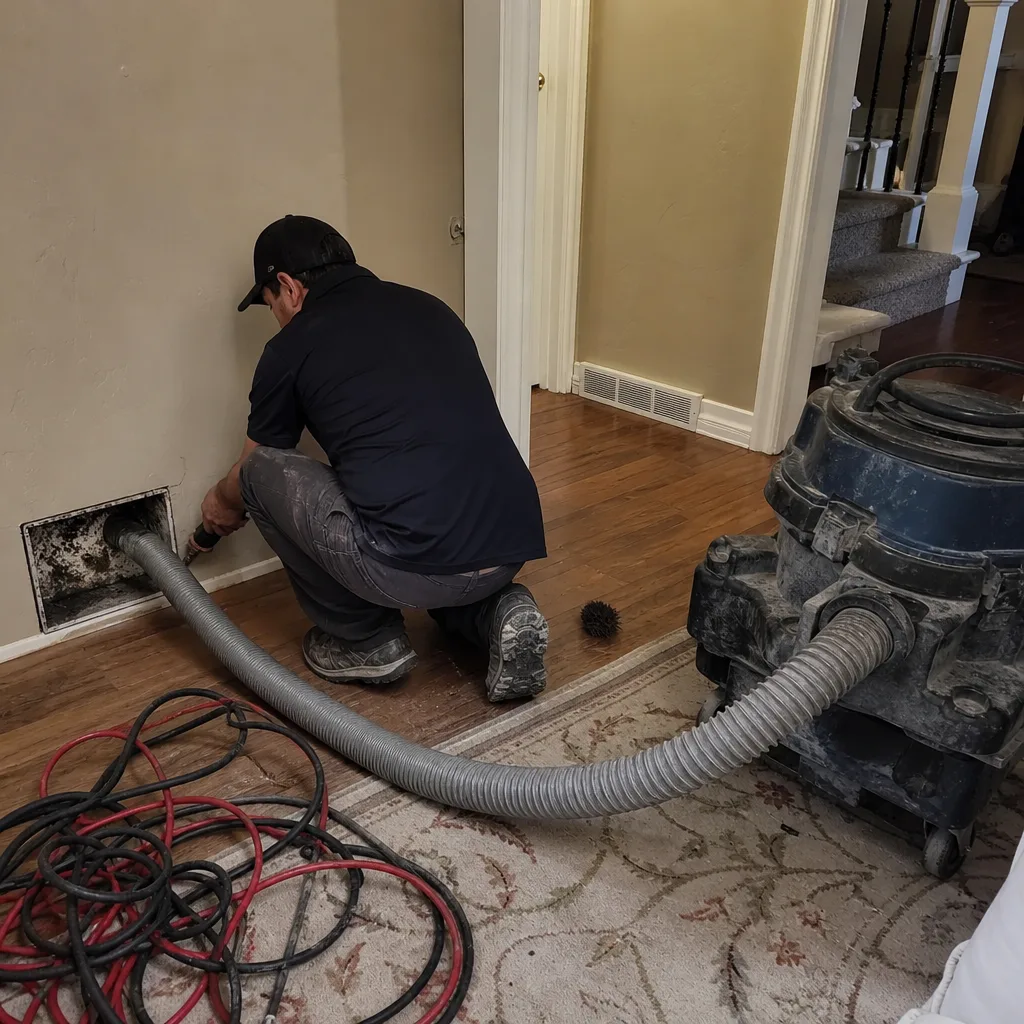 Before
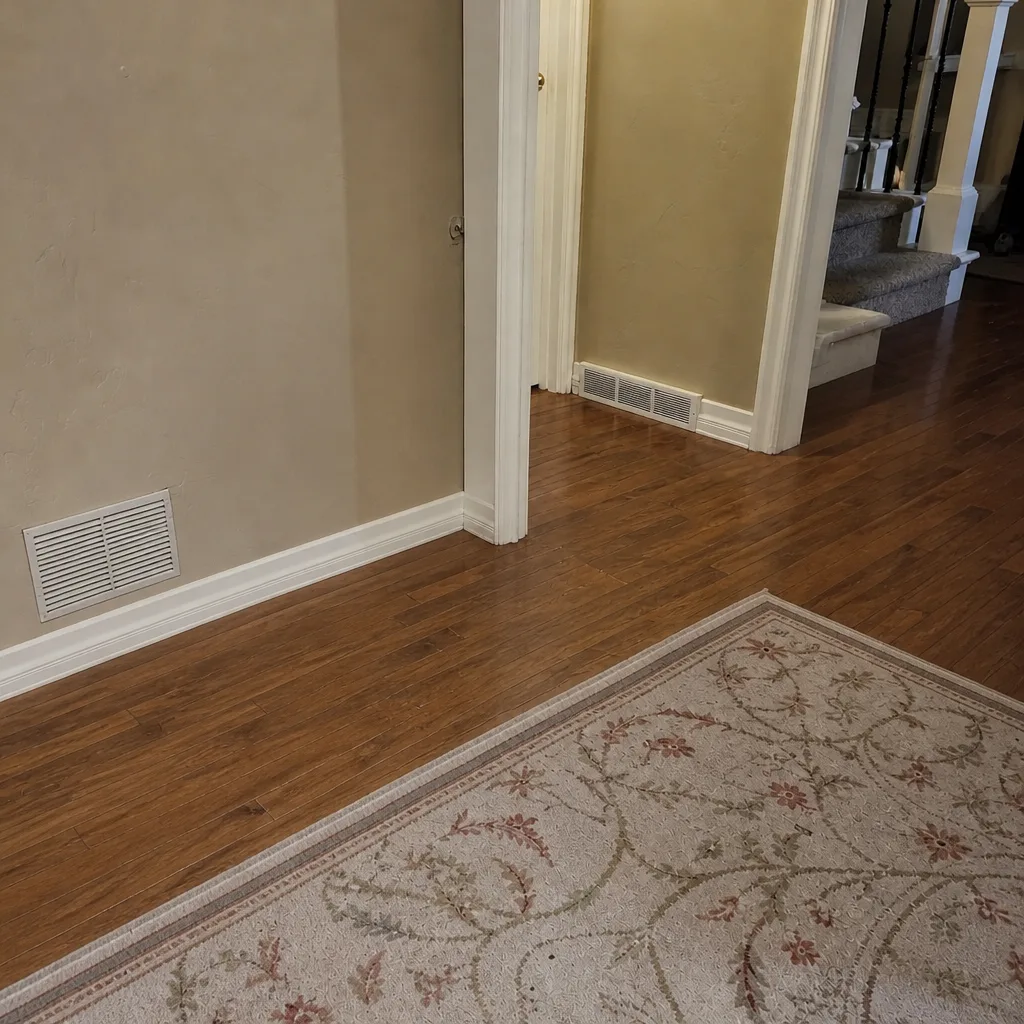 After
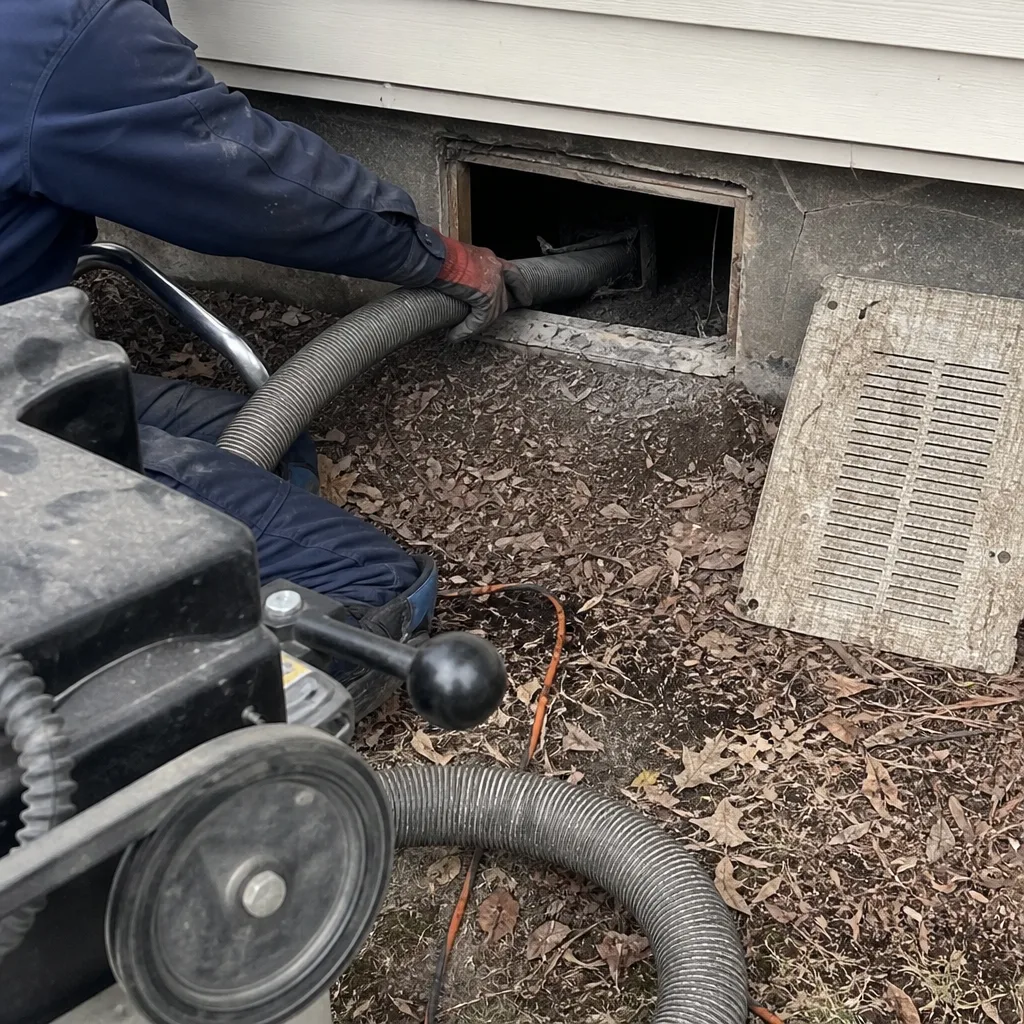 Before
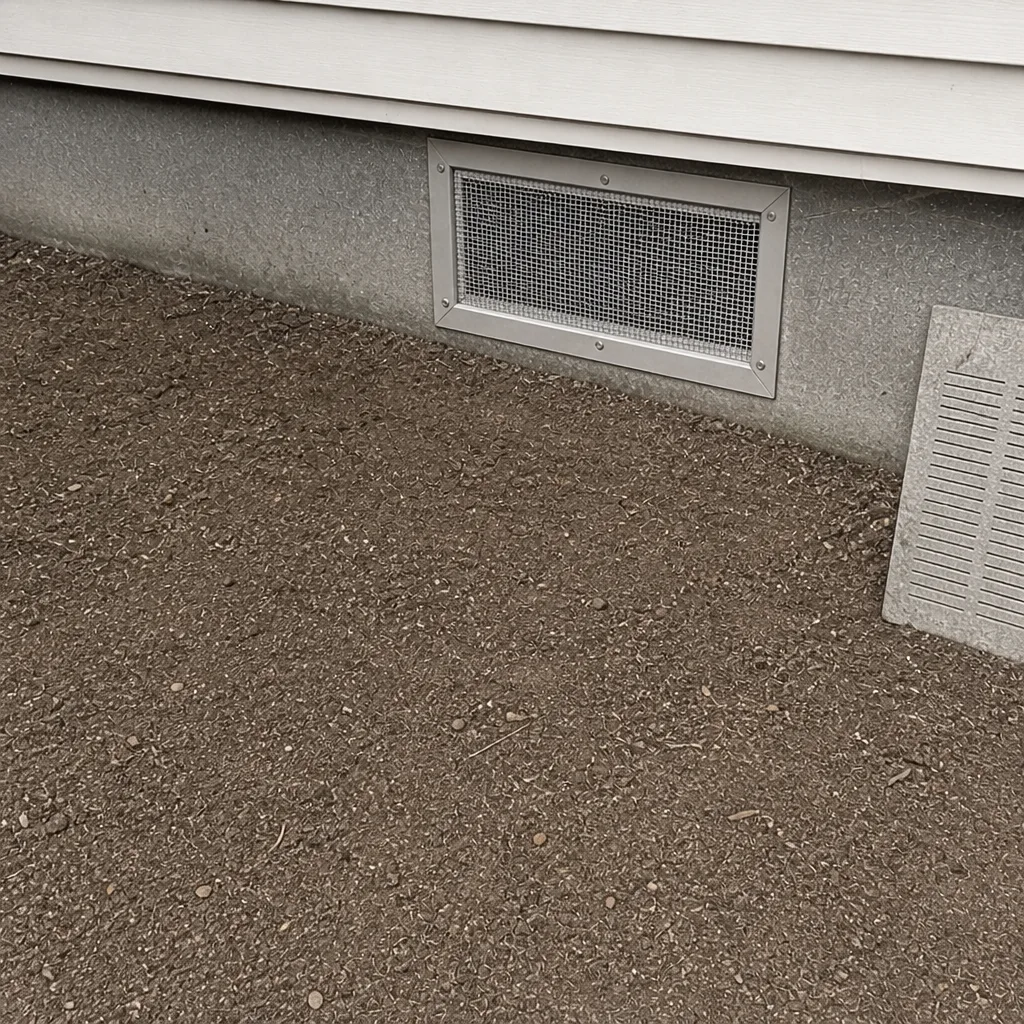 After
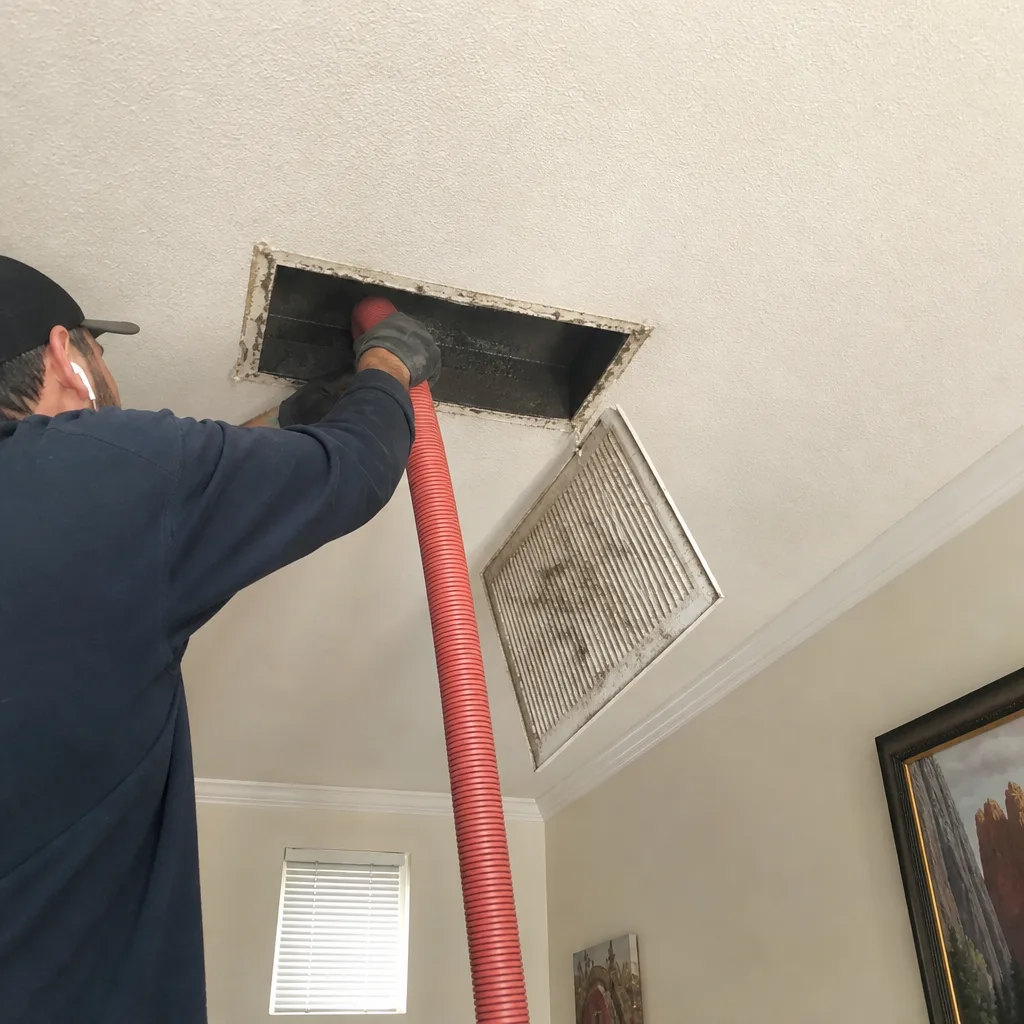 Before
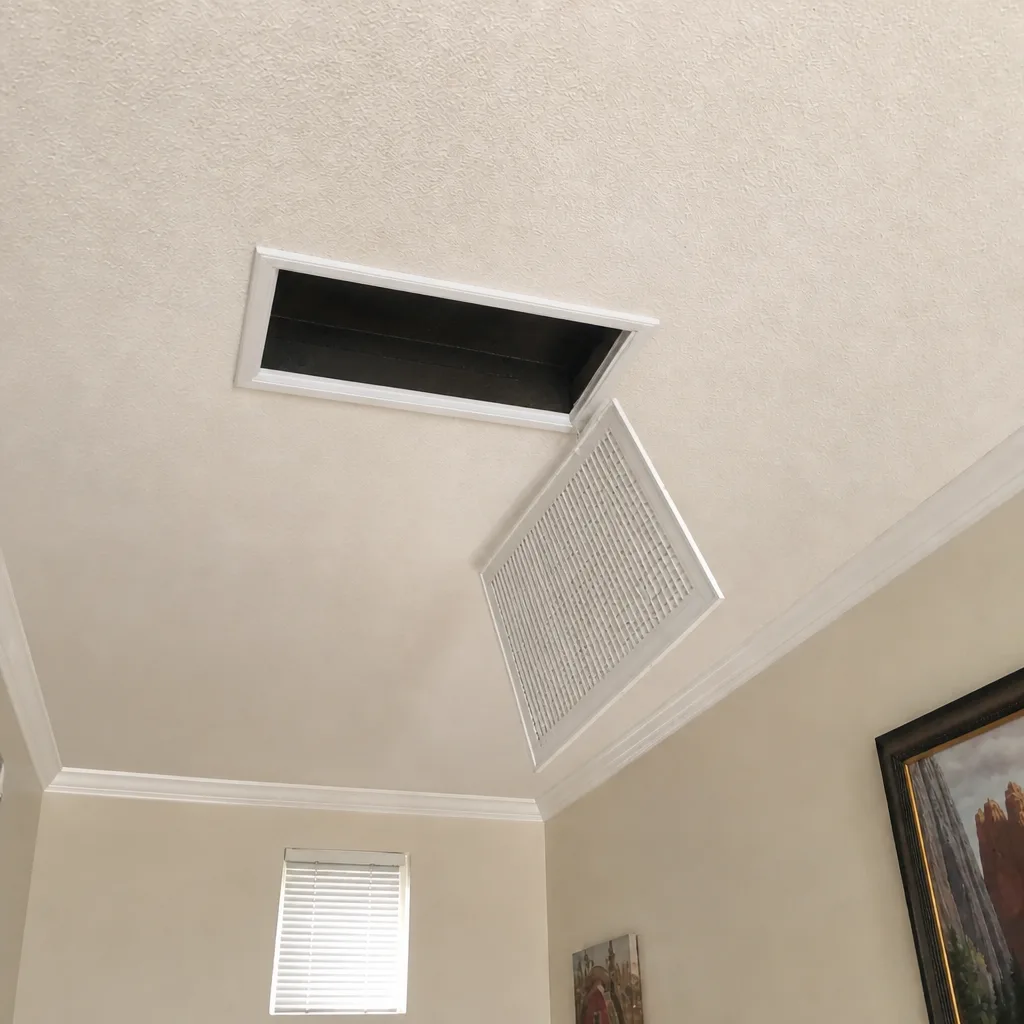 After
Common Mistakes to Avoid
- Turning the system on to “check if it works” after a seismic event. If duct connections are displaced, the first startup pushes setted debris and possibly insulation into every room. Inspect first, run second.
- Assuming a HEPA filter solves smoke events. Fine smoke particles and oily residue stick to ducts beyond what any filter captures. Filtration from the machine during cleaning is what removes them.
- Waiting past 72 hours on a moisture event. Mold colonization inside ducts can begin within 48-72 hours. The window is real and it closes fast.
- Treating the duct system as a separate problem from the HVAC unit. Ducts, coil, blower, and cabinet form one air pathway. Cleaning one without the others leaves the source of contamination intact.
- Skipping a baseline inspection because “everything seems fine.” Without a “before,” the adjuster has no way to assess the “after.”
- Replacing duct sections without addressing the seal. Duct Repair & Sealing is what stops air loss after a repair; cleaning without sealing leaves the repaired system leaky.
- Forgetting the dryer vent in preparedness planning. A clogged dryer vent is a fire risk that doesn’t care what season it is, and it’s one of the few duct problems that’s fully preventable with routine maintenance.
When to Call a Professional
Call us after any seismic event where you find displaced ductwork, debris on the supply side, or a joint that’s clearly disconnected. Call us after a smoke event if odors persist inside the home, if any register is producing a visible haze, or if the filter loaded faster than usual. Call us after any water intrusion near the air handler, the return, or low-lying duct runs, ideally within the 48 to 72 hour window. Call us before an event too, if your duct system has never been inspected, because a baseline is the most useful thing you can do for future claims. West Jordan Air Duct Cleaning offers free estimates in West Jordan, and we work one flat price per system agreed in writing before work starts. Call (877) 302-8330. We answer 24/7. Fast dispatch from 7am to 7pm, Sunday through Friday.
Frequently Asked Questions
Not until you’ve inspected the accessible ductwork. A house can look intact from the doorway while a flex section has slipped off its collar in the attic or a trunk line has dropped in the crawlspace. The safest order is inspect, then run. If you can’t safely access the attic or crawlspace, call for an inspection before restoring the system.
48 to 72 hours is the realistic window. Once moisture soaks into cabinet lining, duct insulation, or internal liner, mold can begin colonizing inside the system in that timeframe. Past the window, cleaning may not be sufficient and sectioned replacement becomes the better answer. Call (877) 302-8330 for an exact quote; estimates are free.
If the smell is coming from the duct system, yes, professional cleaning combined with sanitizing is the reliable fix. Smoke residue that clings to duct walls and insulation won’t dissipate on its own, and running the system keeps redistributing it. Our technicians use Abatement Technologies filtration equipment to capture contaminants at the machine during cleaning rather than pushing them into the room.
We don’t charge for the estimate, and the price for any work is set by a written estimate before work starts. Typical duct cleaning scopes in the West Jordan market run in the hundreds of dollars for a standard single-system home, with higher ranges for larger systems or jobs that include sanitizing, repair, or sealing. The written estimate is the number that matters; ask for it in writing every time.
You can and should take your own photos, and they’ll support the claim. But insurers respond best to a written technician assessment alongside your photos, one that states the damage, the likely cause, and the required remediation. That document is what makes the claim legible to an adjuster. We provide a written condition report as part of every assessment.
Photographs of every accessible duct run, the air handler, plenum, and return, a written condition report, and any existing cleaning or repair documentation. It’s a diagnostic as much as a record: it catches crushed runs and failing seals before they become emergency problems. West Jordan homeowners who have one on file have a far easier time with post-event claims than those who don’t.
The Bottom Line
The duct system is the part of your home that disaster preparedness guides consistently leave out, and it’s the part most exposed to events this valley actually experiences. After a seismic event, inspect before you run. After a smoke event, understand that your filter is not a barrier and the residue has to come out. After a flood, treat 48 to 72 hours as a hard deadline. And do a baseline inspection before any of that happens, because the documentation is what makes recovery possible. Ducts, dryer vents, HVAC units, sealing, and air quality treatment all work as one system. A good preparedness plan treats them that way. Call (877) 302-8330 for a free estimate. We answer 24/7. Fast dispatch from 7am to 7pm, Sunday through Friday.
For the full range of what we do across the air pathway in this valley, start at West Jordan Air Duct Cleaning.
Written by the team at West Jordan Air Duct Cleaning.