
Last updated November 24, 2026
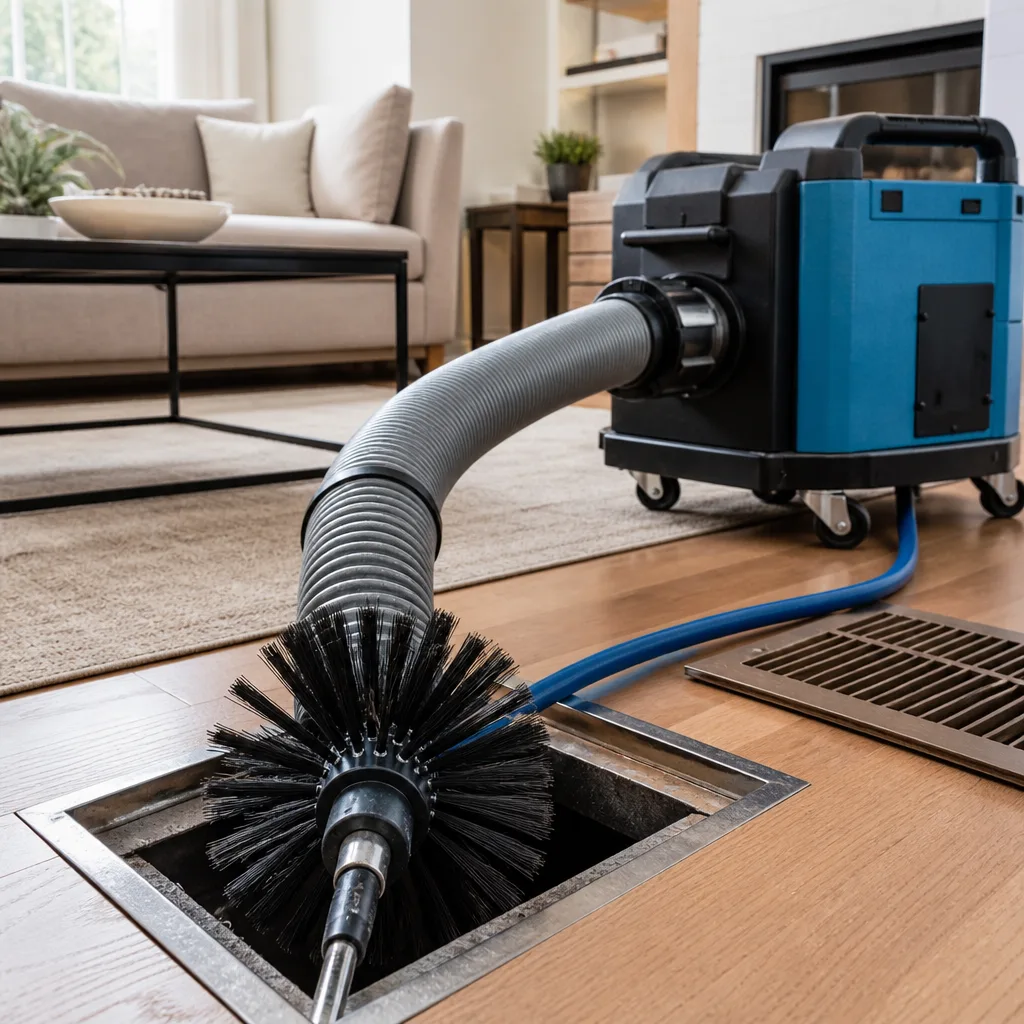 Whole-home duct cleaning
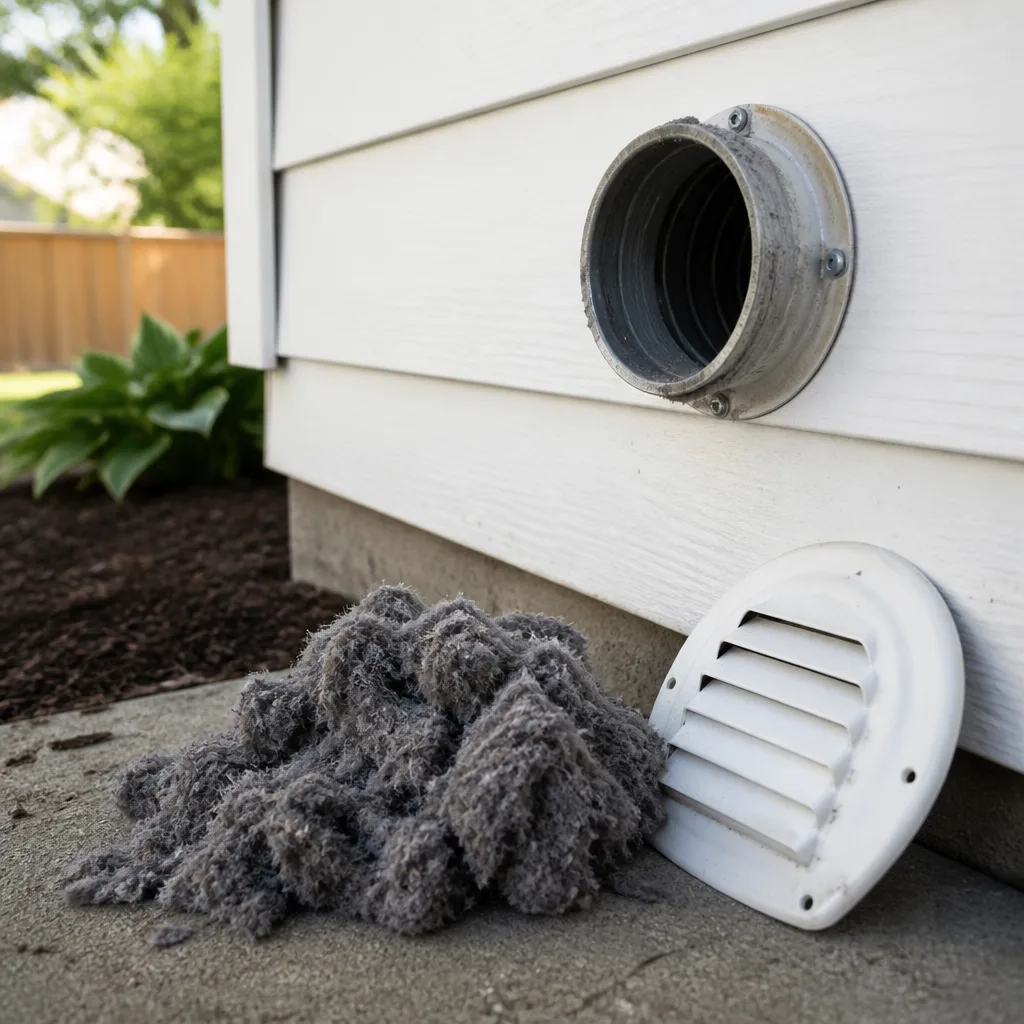 Dryer vent cleaning
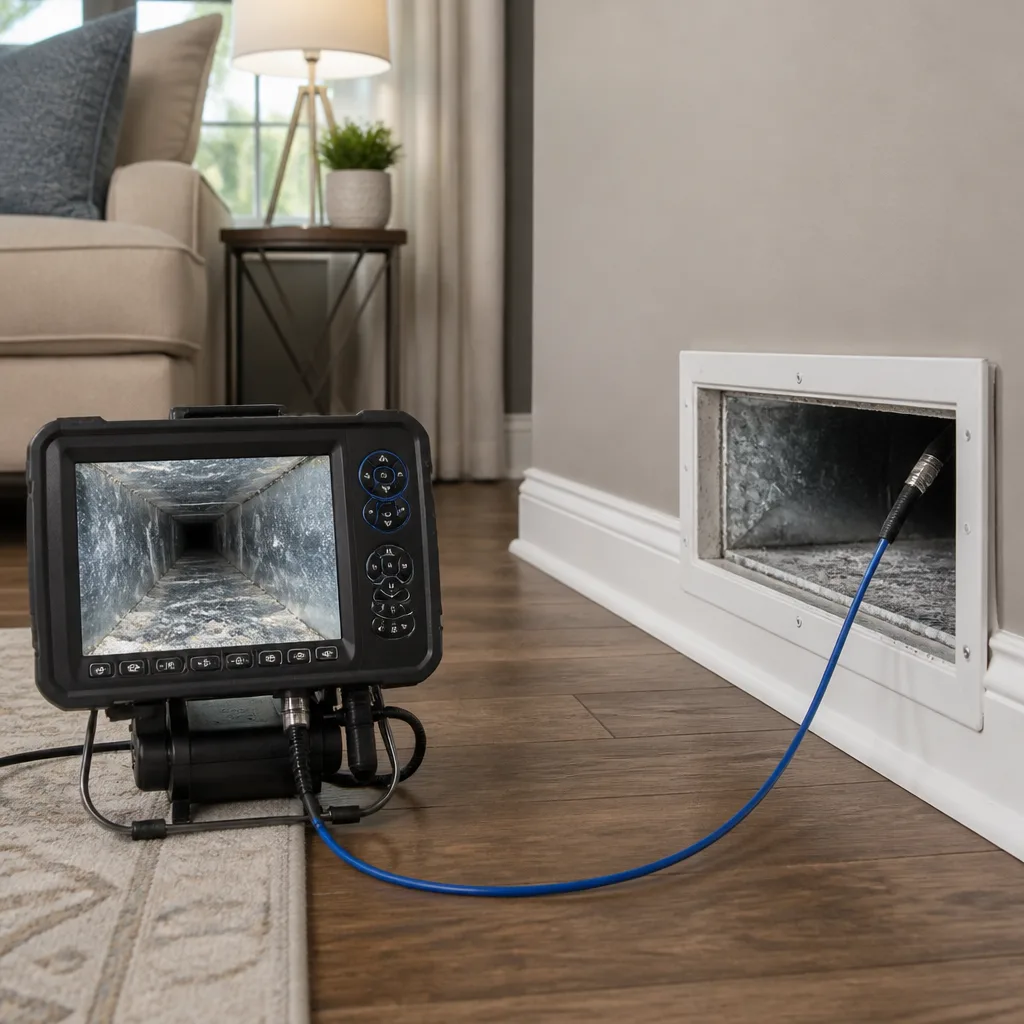 Camera inspection
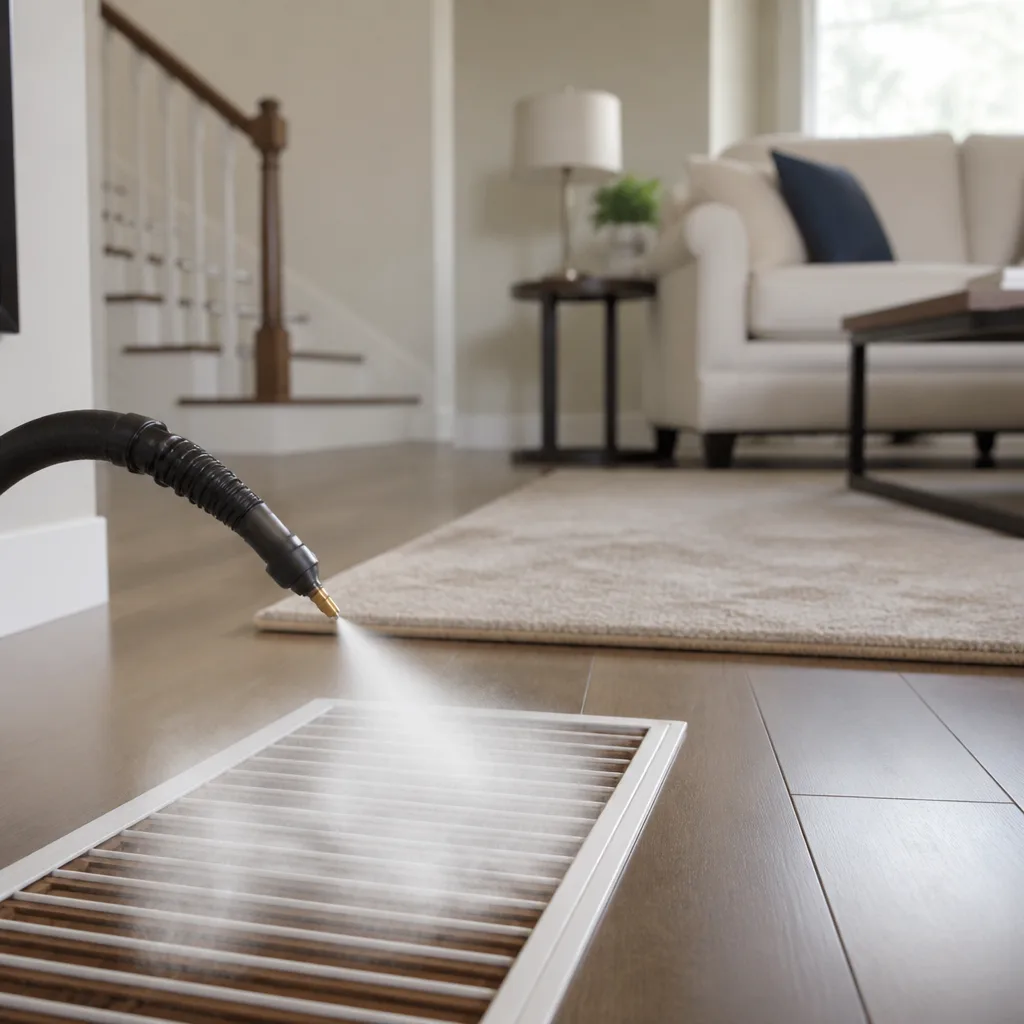 Sanitizing & deodorizing
Whole-system duct and dryer vent check with before-and-after photos - you see exactly what came out of your vents
That "$99 whole-house special" is a bait ad - the real number appears once they are in your hallway, or the "clean" is a shop-vac at the register. We photograph the inside of your ducts before and after instead.
Air Duct Cleaning Troubleshooting in West Jordan: Common Problems and How to Fix Them
Replacing a furnace filter doesn’t fix a partially collapsed flex duct – but that’s the first thing most guides tell you to try. The reason is that the advice is written for the easiest possible cause, not the most likely one. Weak airflow, a musty smell, or a room that never warms up can come from the duct system, the HVAC unit, or a combination of both, and the only useful way to sort them out is to rule causes out in order. This guide walks through each symptom the way a technician works through it, starting with the duct system before blaming the equipment. You’ll learn which problems are duct-related, which belong to the HVAC unit, what a good cleaning genuinely fixes, and what it never will. West Jordan homes have their own quirks, and those come up throughout.
Quick Answer
Most duct problems in West Jordan get misdiagnosed because homeowners and cheap cleaning crews both treat every symptom as a cleaning issue. In practice, weak airflow, uneven temperatures, and odd smells each have several possible causes, and you need to isolate them one at a time – duct leakage, crimped flex runs, undersized returns, and a dirty HVAC coil all look similar on the surface. Cleaning solves some of these, sealing solves others, and some require a full duct inspection before any work begins. The guide below gives you a step-by-step way to tell the difference.
Styles & brands we work with
- Whole-home duct cleaning
- Dryer vent cleaning
- Camera inspection
- Sanitizing & deodorizing
Table of Contents
- Why duct symptoms have more than one cause
- Duct problem or HVAC problem? Reading the clues
- What a successful duct cleaning fixes – and what it won’t
- Normal symptoms after cleaning versus signs of an incomplete job
- West Jordan factors: clay soil, crawlspaces, and duct wear
- The decision tree: re-clean, seal, or inspect
- Common mistakes to avoid
- When to call a professional
Why Duct Symptoms Have More Than One Cause
A symptom is not a diagnosis. When a homeowner tells us a back bedroom is always cold, that single observation could come from at least five different things, and each one has a different fix. The mistake is picking the cheapest known cause and treating it as if it were certain.
Here’s what a technician runs through before touching any equipment:
- Restricted supply air: a crimped or crushed flex duct, a closed damper, or a collapsed section hiding in an attic run.
- Return-air shortage: too few return vents, or returns that are undersized for the system, which starves the whole loop.
- Duct leakage: disconnected joints, torn flex jacket, or unsealed boots at the wall, bleeding conditioned air into an attic or crawlspace.
- Dirty coil or blower: a clogged indoor coil cuts airflow the same way a duct restriction does, but no amount of duct cleaning touches it.
- System sizing: an HVAC unit installed for a smaller load, or a duct layout that was never balanced for the rooms it serves.
The order matters. A technician rules out the closed flap before ordering a full diagnostic. The system should be walked before the equipment comes out, because pulling a flexible duct run to fit a vacuum head can miss a tear that’s actually the problem. In West Jordan, with its mix of older single-story homes and newer two-story builds, we see all five of these causes on a regular basis.
None of this is a reason to skip cleaning when it’s needed. It’s a reason to diagnose before cleaning, so the work you pay for addresses the actual cause instead of a guess. This is where the cheaper coupon offer tends to fall apart – it’s priced for one cause, and it can’t tell you if you have one or five.
Duct Problem or HVAC Problem? Reading the Clues
The single most useful thing you can do as a homeowner is figure out whether the symptom follows the duct system or follows the HVAC unit. That one distinction narrows the field more than anything else. You don’t need gauges to make most of this call – just observation.
Clues that point to the ducts
- The symptom is room-specific. One room is weak or cold while others are fine. That points to a branch or a run, not the whole system.
- The symptom appears with certain door or window states. A room that goes weak when the door is closed often has a return-air problem.
- Dust collects at a specific vent or along a specific wall. That’s a leak at the boot or a gap at the register.
- The smell is localized. A musty odor from one or two vents usually means moisture or debris in that section of ductwork, not the air handler.
Clues that point to the HVAC unit
- Every room is weak at once. Whole-house airflow trouble is rarely a single duct branch. It’s more often the blower, the filter, or the coil.
- The symptom changes with filter condition or filter type. If a new filter helps for a few weeks, the duct isn’t the bottleneck.
- The unit short-cycles or runs constant. That’s controls, charge, or equipment behavior – duct cleaning won’t change it.
- The smell comes from the unit itself. Odor near the air handler on the return side often points to a dirty coil or a wet drain pan.
There’s a static-pressure angle here that a technician checks but is worth knowing about. A duct system that’s undersized or restricted will show high static pressure on the supply side and low on the return side, and those two numbers tell a completely different story from one another. You won’t have a manometer, but you can read the shorthand: if the filter looks clean and the airflow is still poor everywhere, the restriction is somewhere in the duct runs or the coil, and the next step is inspection, not cleaning.
What a Successful Duct Cleaning Fixes – and What It Won’t
A thorough duct cleaning removes accumulated dust, debris, construction dust from remodels, and settled allergens from the accessible interior of the duct system. Done properly with commercial-grade equipment – we run Rotobrush and Nikro systems, the same class of machinery used in commercial buildings – it addresses the accumulated load inside the ducts. That’s a real result, and it’s why cleaning is worth doing when there’s something to remove.
But there’s a list of problems that cleaning will never fix, and it’s a long one. If any of these are present, cleaning alone leaves you with the same symptoms and a lighter wallet.
What cleaning won’t solve
- Duct leakage. If conditioned air is escaping through disconnected joints or torn flex jacket, the system is losing air no matter how clean the inside is. The fix is sealing, not cleaning.
- Crimped or crushed flex runs. A duct pinched in an attic install or flattened under a joist restricts airflow at that point permanently. Cleaning can’t un-crimp a duct.
- Undersized returns. If a home was built with too few return paths, the system starves for air. No amount of cleaning changes the geometry of the return system.
- A dirty evaporator coil. The coil is in the air handler, not the ducts. When it clogs, airflow drops and the system can frost or struggle even after the ducts are spotless.
- Poor balancing. Dampers out of adjustment, or a layout that never delivered the right share of air to each room. That’s a design and adjustment problem.
This is where our approach differs from a single-service duct vacuum. We offer air duct cleaning, dryer vent cleaning, HVAC cleaning, Duct Repair & Sealing, and Air Quality & Sanitizing because the problems connect. When a technician finds tearing and leaks during cleaning, we can seal them in the same visit instead of handing you a second number to call. That keeps a symptom from coming back after you’ve already paid to fix half of it.
Normal Symptoms After Cleaning Versus Signs of an Incomplete Job
What happens in the days after a cleaning tells you a lot about whether the job was done right. Some reactions are completely normal and settle on their own. Others are a signal that the work was rushed or incomplete. Knowing which is which keeps you from panicking over a normal dust puff – and keeps you from accepting a job that wasn’t finished.
Normal after cleaning
- A brief dust spike for a day or two. Loose dust is disturbed during the process, and small amounts can settle back out into rooms. It clears quickly. Give surfaces a wipe and run the system normally.
- A faint residual odor that fades. Some cleaning processes and debris loosening produce a temporary smell that dissipates as the system runs. If sanitizing is part of the job, a short-lived scent is common.
- Slightly uneven airflow for the first few cycles. Registers may have been adjusted during the job, and dampers may need to be set back. This usually corrects once the system is run and checked.
Signs the job wasn’t finished properly
- Dust returning to surfaces within days and staying. A steady return of dust to flat surfaces soon after cleaning usually means the source wasn’t fully addressed – often leaks, or an incomplete mechanical cleaning.
- No visible change at all in airflow. If airflow is unchanged and symptoms were airflow-related, cleaning wasn’t the answer to begin with. That’s a diagnosis issue, not a completion issue, and it’s worth an inspection.
- An odor that doesn’t fade. A persistent musty smell after cleaning often points to moisture in the system or a wet coil rather than leftover dust.
- No access openings, no photos. A professional cleaning opens access points to reach the ducts. If the technician never opened anything and can’t show you the before-and-after condition of your own system, the job didn’t cover the duct interiors.
One reason we use Abatement Technologies filtration equipment on the job is to control what’s airborne during cleaning – it’s the same standard applied in environmental remediation, and it keeps the disturbance contained rather than spread through the house. That’s a large part of why the after-cleaning dust period is short and controlled instead of a cloud of debris. When we clean, we also photograph the before-and-after of your actual ducts, so you can verify the work rather than take it on faith.
West Jordan Factors: Clay Soil, Crawlspaces, and Duct Wear
West Jordan sits on the western side of the Salt Lake Valley, and the local ground behaves in a specific way that homeowners here live with. The soil has a heavy clay content, which moves with the seasons. It swells when it takes on moisture and shrinks as the valley dries through a hot summer. Over years, that constant flex works on home foundations and the structures sitting on them, and for homes with ducts running in a crawlspace or below the slab, that movement has consequences for the duct system.
What that means in practice:
- Joints open over time. Where duct sections meet in a crawlspace, repeated foundation movement can pull connections apart. A disconnected joint is a leak, and a relatively small one can bleed a surprising amount of conditioned air before it ever shows as a comfort problem.
- Flex duct loses tension. Flexible duct runs supported near a moving foundation can sag or flatten, reducing their effective diameter and choking airflow to specific rooms.
- Crawlspace conditions matter. Utah’s dry air doesn’t mean a crawlspace is dry year-round. Drainage and ground moisture collect, and duct jacket and insulation suffer before the metal does. A torn jacket is both a leak and a path for dust and moisture into the system.
- Wide temperature swings. A West Jordan summer pulls the system hard for months, and the transition into cold weather is when a lot of failing connections finally reveal themselves.
For an older home on the west side near the older neighborhoods, we generally see more duct-related issues than on newer builds, simply because the system has had more seasons of foundation movement working on it. That doesn’t mean new construction is exempt – poorly sealed boots and loose flex straps show up in newer homes too. If your home sits where drainage collects, a crawlspace duct inspection is worth doing before you order any cleaning. This is also where duct repair and sealing earns its keep: fixing the structural problem means the cleaning you do afterward actually holds.
The Decision Tree: Re-Clean, Seal, or Inspect
Once you’ve done the work of narrowing your symptom down, the next question is which action is right. Here’s how a technician moves through it, in order. Work through these steps rather than guessing from the symptom alone.
- Was the duct system cleaned recently, and did that fix the symptom? If airflow or dust improved and then normal behavior returned as expected, you’re done. No re-clean is needed.
- Did dust or odor return within a week or two and keep coming back? That points to a source the cleaning didn’t reach. Inspect for leaks and openings before scheduling another cleaning.
- Is airflow still weak, room-specific, and unchanged by cleaning? That points to a restriction – a crimped run, a closed damper, or a collapsed section. Seal or repair the duct; a second clean solves nothing.
- Are there visible tears, disconnected joints, or dust lines at boots and registers? That’s a sealing job. Cleaning is the wrong tool. Seal the leaks, then clean if debris remains.
- Are all rooms weak at once, and the filter is clean? Rule out the HVAC side – blower, coil, filter housing – before spending on ducts at all.
- Has the home had recent remodeling, or has the system never been documented? Order a full duct inspection. That gives you a picture of what’s actually in the system, and a basis for deciding between cleaning, sealing, or both.
- Does the symptom keep coming back after sealing and cleaning? At that point, inspect the system as a whole – layout, returns, and unit – because the cause is systemic, not localized.
In West Jordan, we see the fourth step a lot: boots that were never sealed at the wall, particularly in homes with heavy crawlspace duct runs. That’s a repair, not a cleaning. It’s the difference between addressing a symptom and fixing what causes it. If you’re not sure which step you’re on, the honest answer is to have the system looked at rather than book a cleaning and hope. A free estimate from our team can start that conversation – West Jordan Air Duct Cleaning focuses on the full air pathway, not just the duct interiors, which is what lets us catch the problems cleaning alone would leave behind.
Common Mistakes to Avoid
Most of the frustration homeowners bring us comes from a small set of preventable mistakes. Here are the ones that come up most.
- Blaming the ducts for an HVAC problem. Whole-house airflow failure with a clean filter usually traces to the coil, blower, or return system, not the ducts. Cleaning won’t touch it, and you’ll spend money on the wrong thing.
- Paying for a clean when the ducts need sealing. If joints are leaking or flex runs are crimped, cleaning the inside changes nothing about the loss. The fix is repair and sealing. Our team offers HVAC cleaning and sealing together for exactly this reason.
- Accepting a quote without knowing what’s covered. A per-vent price and a vague promise about “main trunks” tells you nothing. Ask for a flat price for the whole system and before-and-after photos of your own ducts.
- Choosing a price that can’t possibly cover the work. A very low per-vent number only works if the crew does almost nothing. The bait-and-switch pattern in this industry is built on exactly that gap, and it’s the reason so many homeowners distrust duct cleaning in the first place.
- Cleaning ducts without sealing known leaks. On a West Jordan home with crawlspace runs, sealing comes first when leaks are present. Cleaning before sealing sends the cleaning’s benefit up the crawlspace.
- Assuming new construction has no duct problems. Loose boots, missing mastic, and undersized returns show up in newer homes here as often as old ones. A new house isn’t a sealed system by default.
- Venting a dryer into the crawlspace or attic. It adds moisture and lint to the same cavity that holds your duct runs. Lint in a shared space is an avoidable hazard, and the fix belongs with dryer vent cleaning.
When to Call a Professional
Some of these symptoms you can rule out on your own. Others are worth a professional look without waiting. Call us when whole-house airflow has dropped and a clean filter doesn’t change it, when dust returns to surfaces within days of cleaning, or when you can see tearing, disconnected joints, or dust lines at boots and registers. Call if a musty smell persists from certain vents, if you’re in a crawlspace home with a shifting foundation and the duct system has never been documented, or if you’ve had remodeling and the ducts haven’t been dealt with since. These are the situations where guessing costs more than diagnosing. West Jordan Air Duct Cleaning offers free estimates in West Jordan – call (877) 302-8330. We answer 24/7. Fast dispatch from 7am to 7pm, Sunday through Friday. Our technicians have up to 10 years of experience, and we bring commercial-grade equipment to the job rather than a shop-vac rig.
See the difference
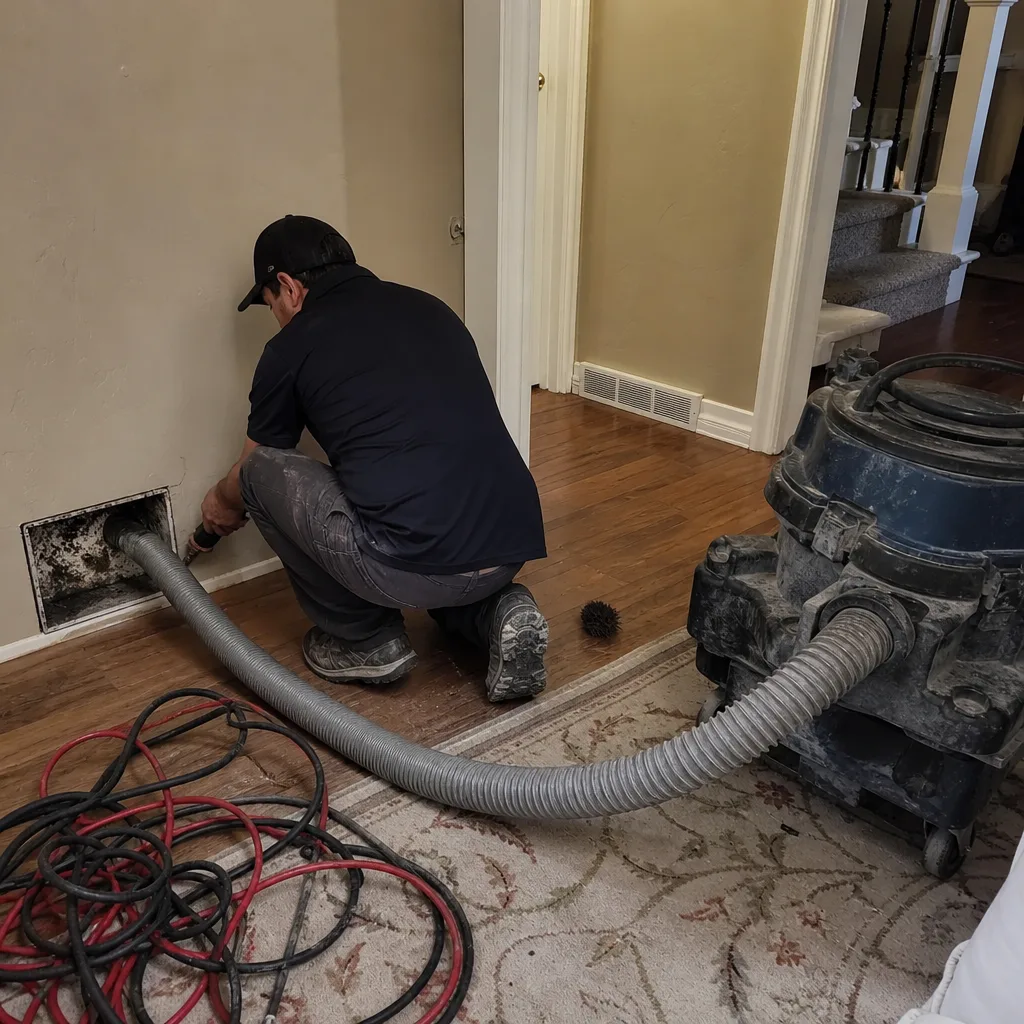 Before
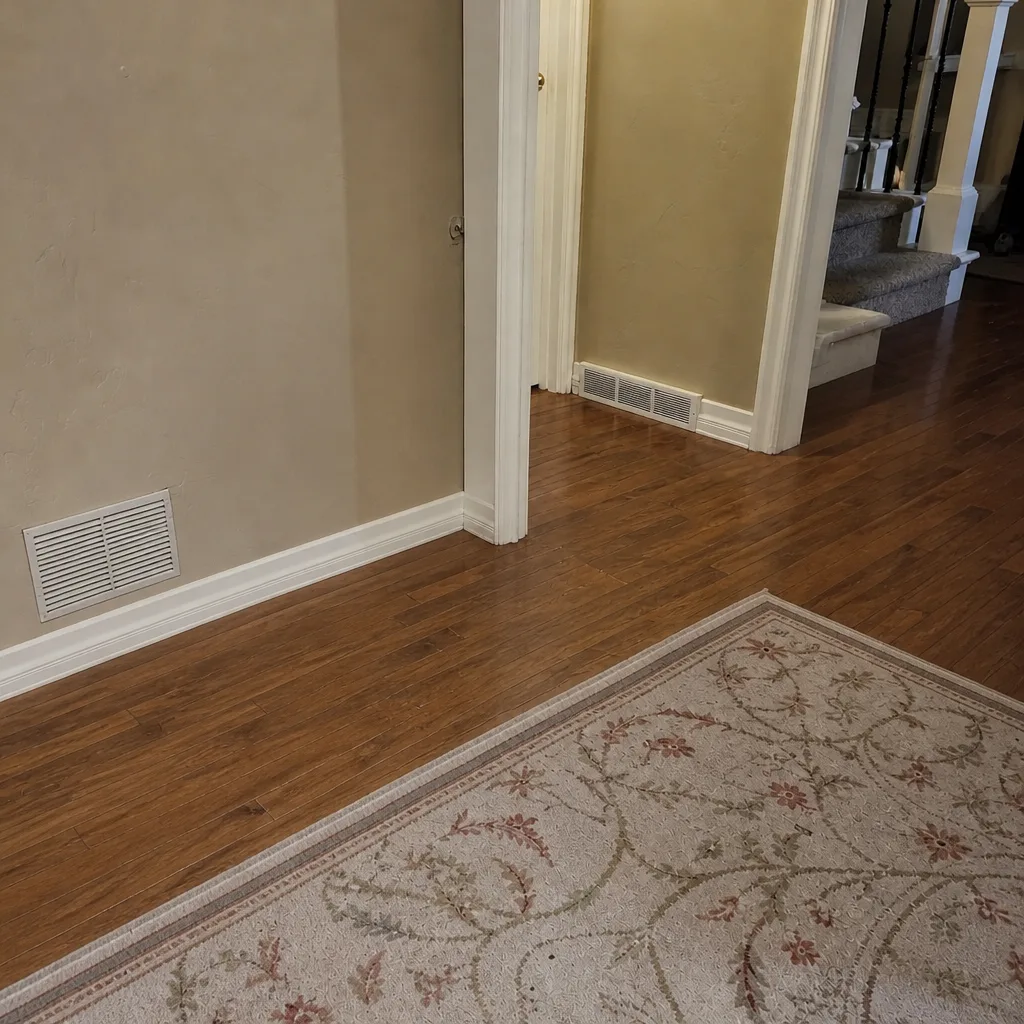 After
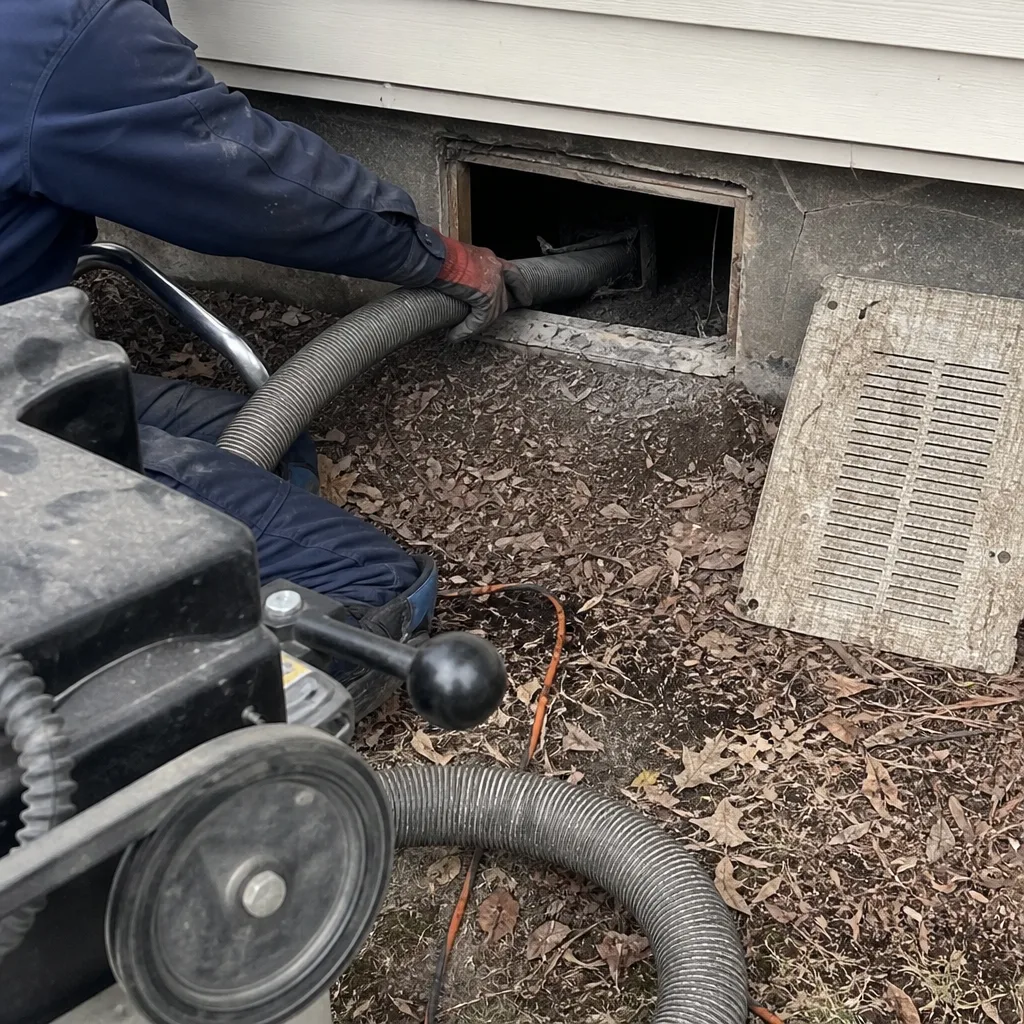 Before
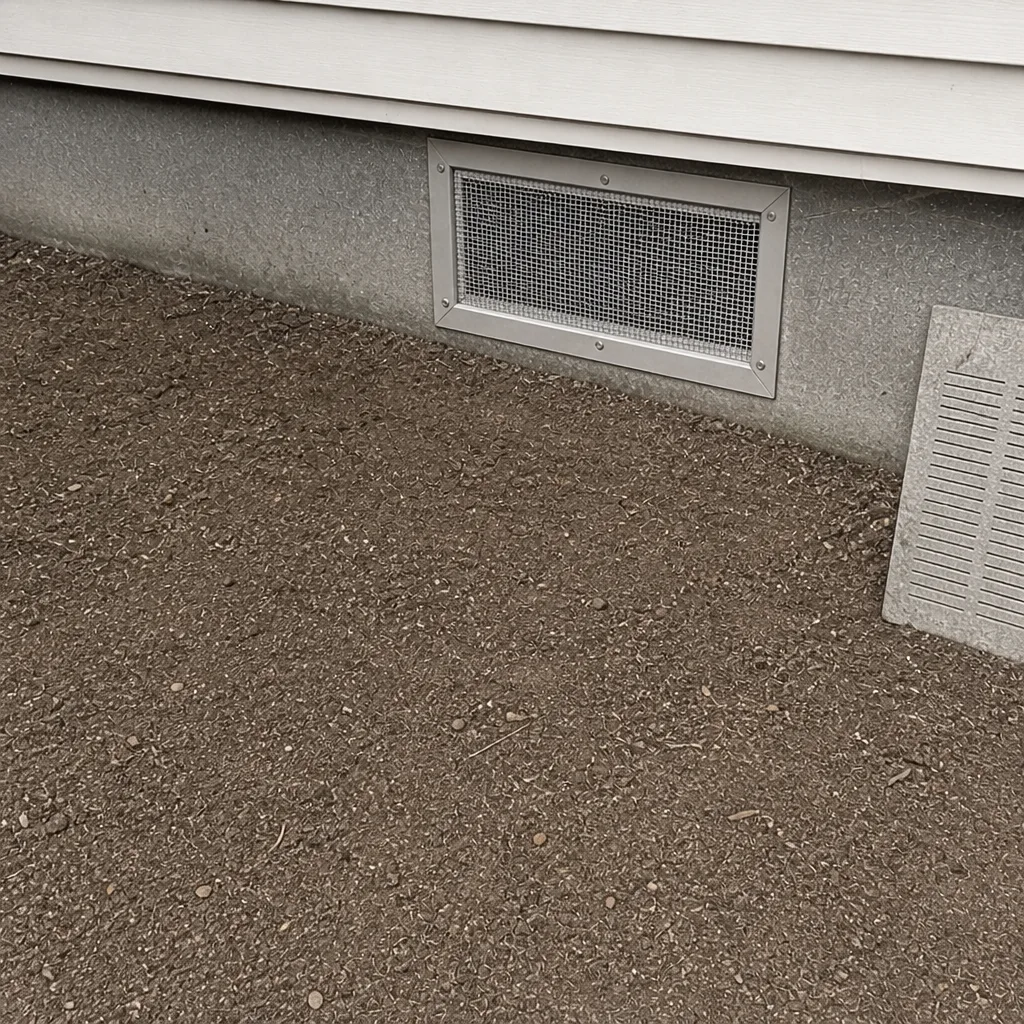 After
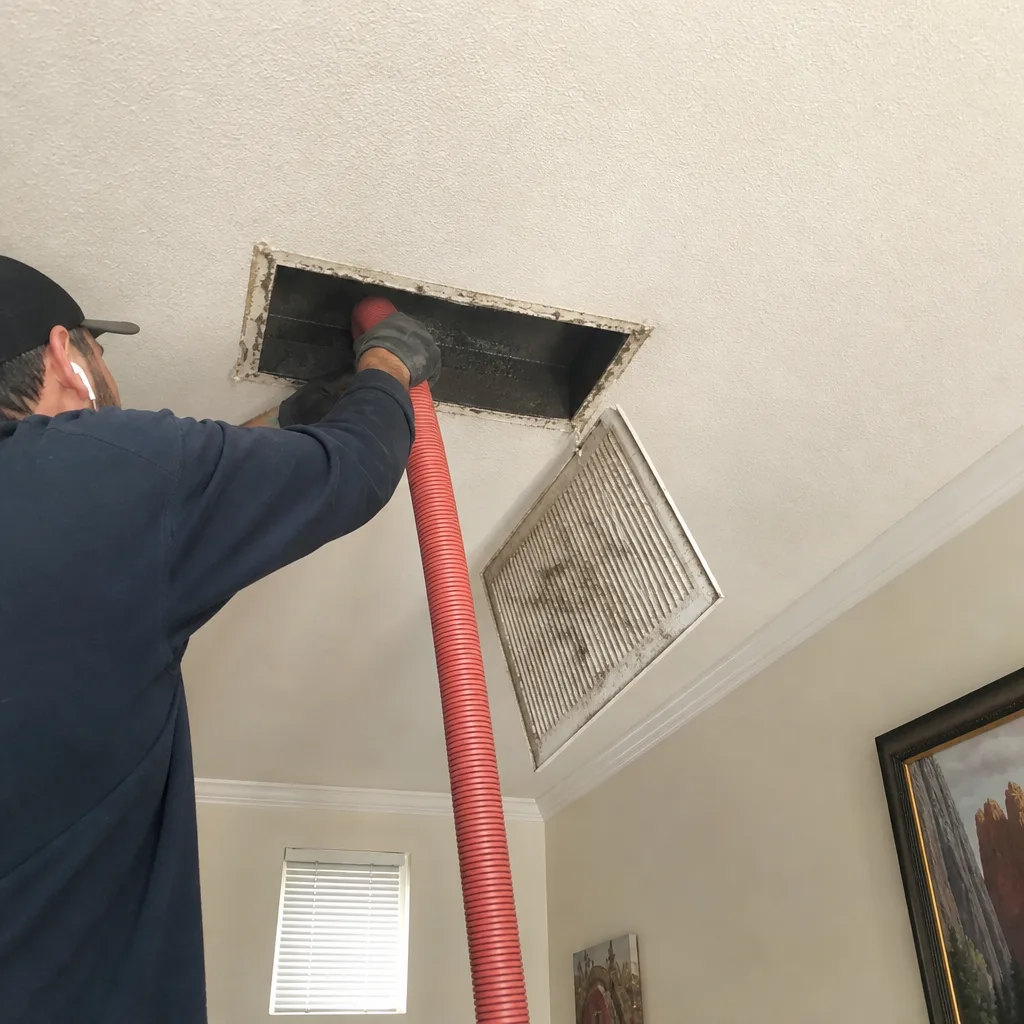 Before
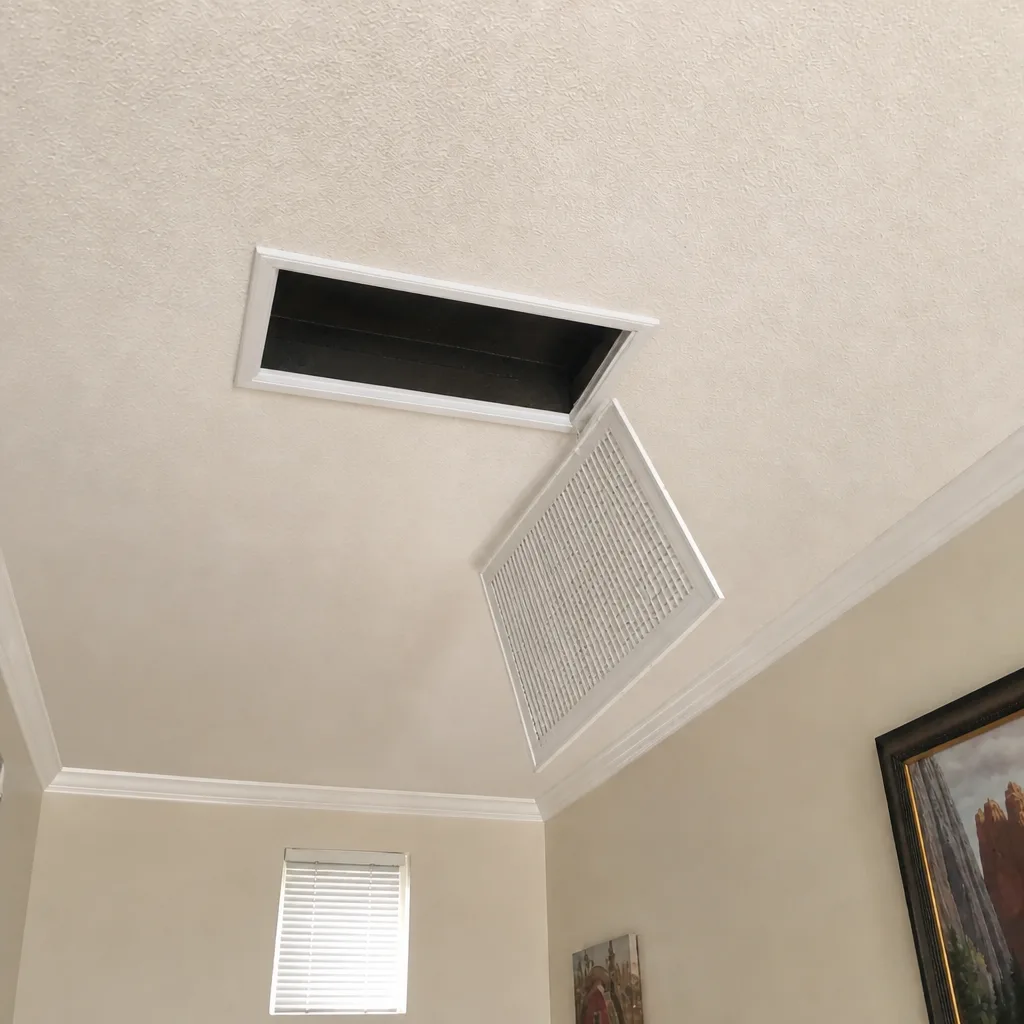 After
Frequently Asked Questions
Air duct cleaning in West Jordan is priced per system, by a written estimate agreed before work starts – not per vent. That’s deliberate, because per-vent pricing is what makes bait-and-switch possible: a low per-vent number becomes a much larger invoice once the technician is on site. You’ll get one flat price for your whole system, agreed up front, with before-and-after photos of your own ducts. Call (877) 302-8330 for an exact quote – estimates are free.
A very low quote usually means the crew plans to do very little: a quick vacuum at visible vents, no access openings, no work on the trunk lines, and no photos to verify the result. Real cleaning requires commercial-grade equipment, access openings, and enough time to cover the whole system. When a price looks too low to be true in this industry, it’s usually because the scope is far smaller than the one you think you’re buying. Call (877) 302-8330 to get a flat price for a clear scope – estimates are free.
You’ll know the work was done when the technician opens access points to reach the duct interiors, uses commercial-grade equipment, and shows you before-and-after photos of your own system. That last part matters more than any brochure: photos of your ducts, not stock images. A crew that never opens anything and can’t show you the interiors didn’t clean them. Call (877) 302-8330 for a free estimate and a clear explanation of what the job covers.
Most homes in West Jordan don’t need it on a fixed schedule – it’s driven by conditions, not a calendar. Recent remodeling, a crawlspace system with movement-related leaks, pets, or a long interval since the last cleaning all make it worth considering. A cleaner system that’s leaking still leaks, so sealing matters more than frequency. If you’re unsure, ask for an inspection rather than booking on a timer. Call (877) 302-8330 – estimates are free.
A single room that never keeps up is usually a duct-side problem, not an HVAC-unit problem: a crimped flex run, a partially closed damper, a disconnected branch, or a room lacking a return path. Whole-house equipment problems tend to affect every room, which is how you can tell them apart. Given how much crawlspace movement many West Jordan homes deal with, a loose or flattened run is a common culprit. Call (877) 302-8330 to have the system checked – estimates are free.
Sometimes, but not always. A musty smell from specific vents often points to moisture or settled debris in that section of ductwork, and cleaning can resolve it. If the smell comes from the air handler or persists after cleaning, the source is more likely a wet coil or a drainage issue, which is an HVAC problem rather than a duct one. Call (877) 302-8330 and we’ll help you figure out which side of that line you’re on – estimates are free.
The Bottom Line
Duct symptoms are rarely what they first appear to be. Weak airflow, uneven temperatures, and musty smells each have several possible causes, and the right fix depends on ruling them out in order – starting with the duct system before blaming the HVAC unit. Cleaning removes accumulated dust and debris, but it won’t fix leakage, crimped flex runs, undersized returns, or a dirty coil. West Jordan’s clay-heavy soil and crawlspace duct runs make sealing and repair a routine part of the picture here. Clean when the system needs it, seal when the system leaks, and get a full duct inspection when you’re not sure. One company, every duct – and one flat price agreed before work starts.
Written by the team at West Jordan Air Duct Cleaning.
Call (877) 302-8330 for a free estimate. We answer 24/7. Fast dispatch from 7am to 7pm, Sunday through Friday.