
Last updated November 24, 2026
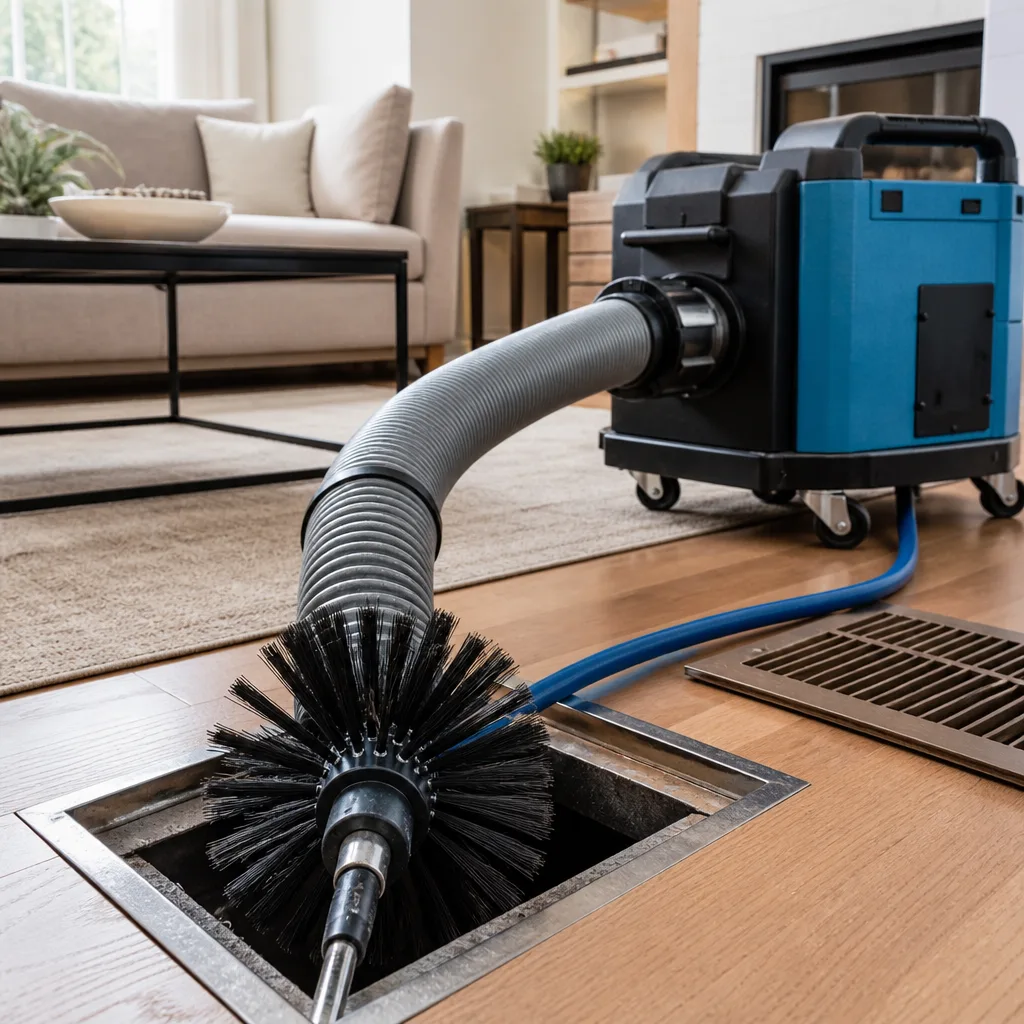 Whole-home duct cleaning
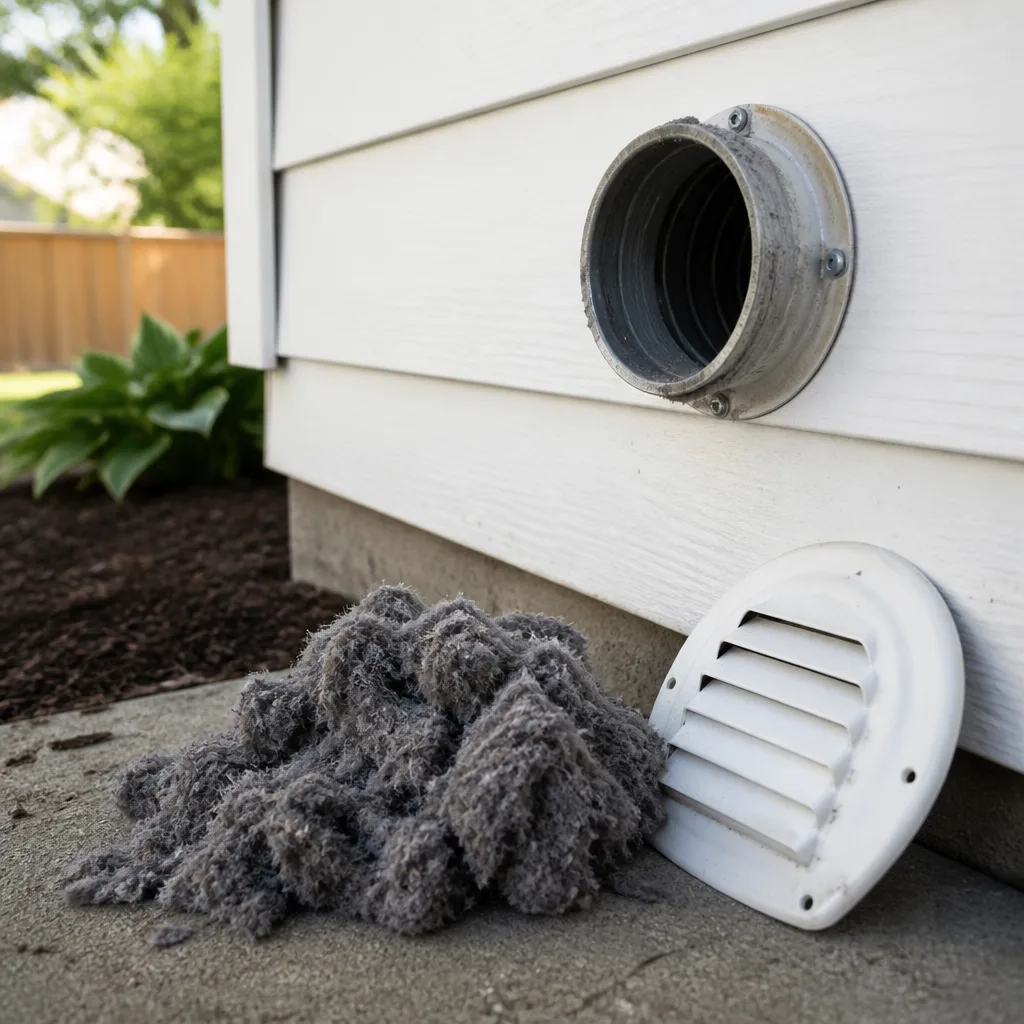 Dryer vent cleaning
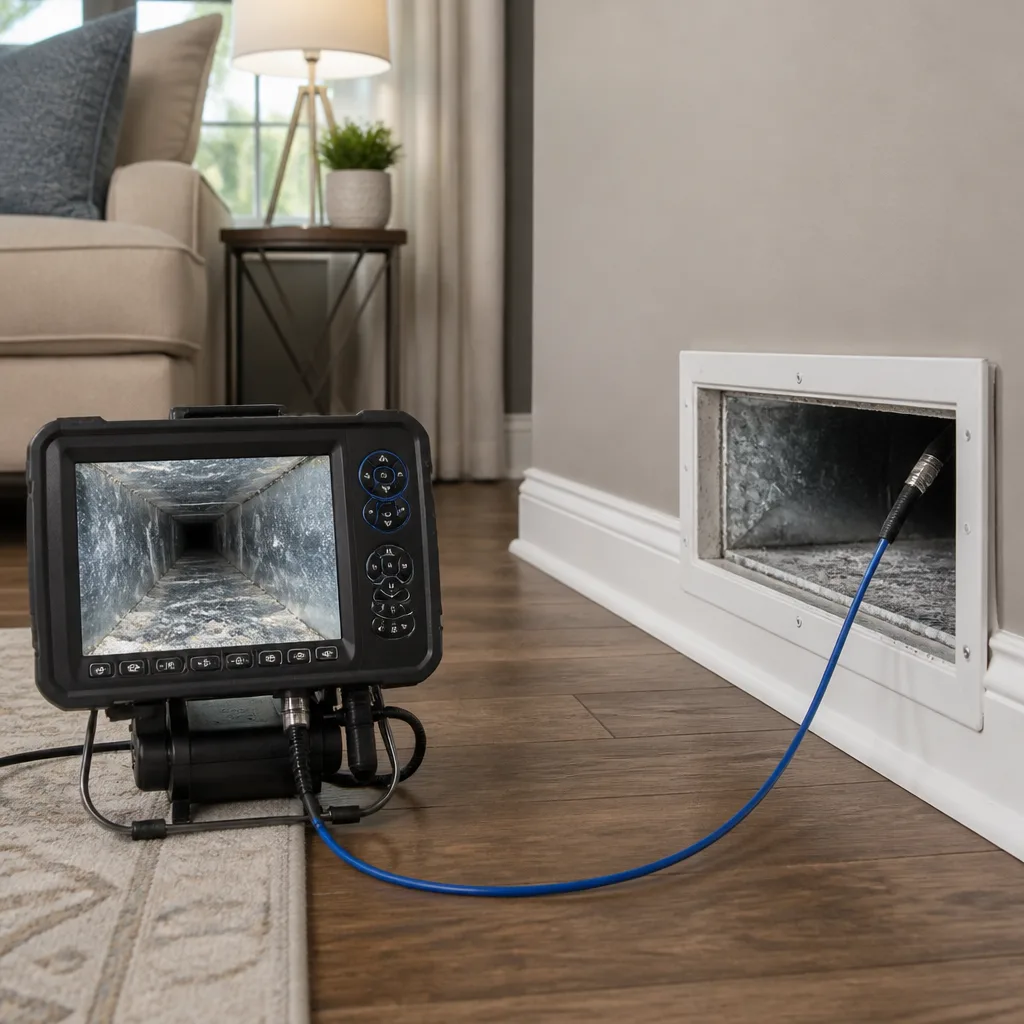 Camera inspection
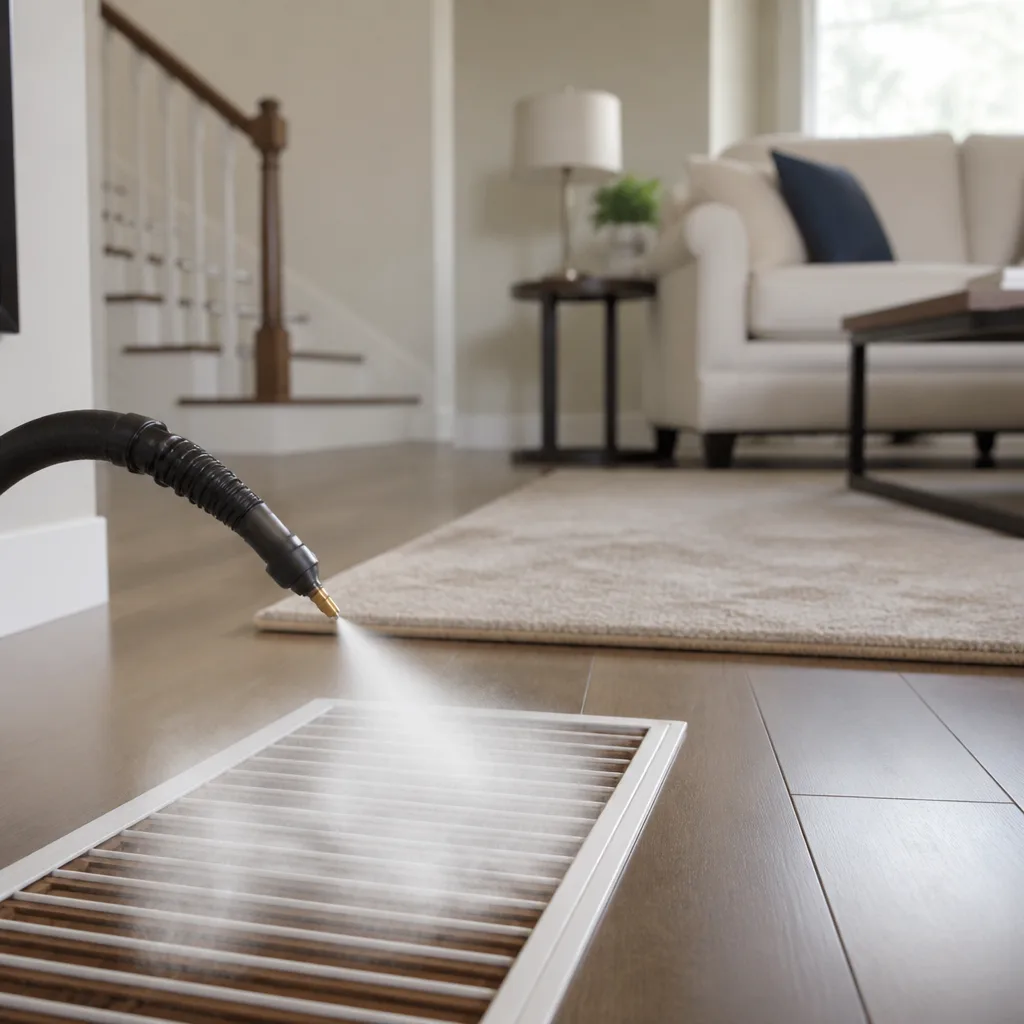 Sanitizing & deodorizing
Whole-system duct and dryer vent check with before-and-after photos - you see exactly what came out of your vents
That "$99 whole-house special" is a bait ad - the real number appears once they are in your hallway, or the "clean" is a shop-vac at the register. We photograph the inside of your ducts before and after instead.
The Complete Guide to Air Duct Cleaning in West Jordan
Most duct cleaning advice treats your ductwork as if it were a standalone object: you clean it, you’re done. That’s the wrong mental model, and it leads West Jordan homeowners to spend money on the wrong thing. In this city, the duct network is the connective tissue of the whole HVAC system. Supply runs, return runs, plenums, the air handler cabinet, and the coil all sit in one loop, and what happens in one part of that loop shows up in every other part. West Jordan also sits in one of the fastest-growing corridors in Utah, which means a lot of local housing stock is either freshly built and still shedding construction dust, or old enough that original duct seams are beginning to fail. Sometimes both conditions arrive in the same house. This guide maps the whole system, not just the tubes, so you can tell a real full-system evaluation from a quick pass with a vacuum and a smile.
Quick Answer
Air duct cleaning in West Jordan means removing accumulated dust, construction particulate, and debris from the entire air pathway – supply and return ducts, plenums, the air handler cabinet, and the evaporator coil – using negative pressure and contact agitation, not a shop vacuum. A typical whole-home cleaning here falls in the $350-$650 range depending on system size and access, with duct sealing and sanitizing quoted separately. A written estimate, agreed before work starts, is the only price that matters.
Key Takeaways
- Full-system cleaning covers five zones: supply ducts, return ducts, plenums, air handler cabinet, and coil. Any quote that skips two or three of those is a partial job.
- Source-removal cleaning uses negative pressure plus mechanical agitation. Blow-and-vacuum methods cannot achieve the same result and often redistribute debris.
- Seal failing ducts before cleaning, not after, or you’ll pay twice.
- West Jordan’s high desert dust and nearby construction activity put a heavier particulate load on home systems than most older Salt Lake suburbs see.
- Ask for a post-cleaning verification report with before-and-after photos. No report tells you something.
Styles & brands we work with
- Whole-home duct cleaning
- Dryer vent cleaning
- Camera inspection
- Sanitizing & deodorizing
Table of Contents
- Why West Jordan Homes Need a Different Approach
- What a Full-System Evaluation Actually Includes
- Source-Removal Cleaning vs. Blow-and-Vacuum
- When Duct Sealing Should Happen Alongside Cleaning
- How Much Does Air Duct Cleaning Cost in West Jordan?
- How to Read a Post-Cleaning Verification Report
- What You Can Check Yourself Before Booking
Why West Jordan Homes Need a Different Approach
West Jordan sits in the Salt Lake Valley on ground dominated by Jordan Valley clay – soil that swells and compacts with moisture cycles and holds fine dust on its surface for months at a time. That’s not trivia. Clay-heavy ground doesn’t absorb wind-driven particulate the way sandy soil does. It releases it. Combined with the high desert wind cycles that push through the valley, and with the volume of active construction in this part of the valley, the particle profile landing inside local homes differs from what you’d see in an older Salt Lake neighborhood with mature landscaping and established grading.
The result is a blend of fine mineral dust, drywall and wood dust from construction, and the ordinary spill of daily living, all of which collects in the return ducts first and works its way downstream. Returns pull from the rooms where people actually spend time, so the particulate that accumulates there isn’t abstract.
Then there’s the heating season. West Jordan gets hard cold snaps, and furnace systems that have idled through the shoulder months fire up and push that accumulated layer of dust back into the living space in the first weeks of heating. Homeowners notice the dusting and the smell, and assume the furnace itself is at fault. Often it isn’t. The furnace is just the engine moving a dirty load.
Age and newness create opposite problems that both land at the same door:
- Newer builds arrive with construction debris, drywall dust, and loose tape inside the ducts, and often with undersized or poorly sealed return pathways.
- Older homes have original duct seams that have dried out, separated, or pulled apart as the house has shifted over its heating seasons.
- Mixed neighborhoods – infill in established areas, or an older home on a street where new construction is going up around it – get both problems at once.
That’s the local case for a full-system evaluation rather than a menu-item cleaning. If you’re ready to talk about the whole system, our air duct cleaning page covers the scope in detail.
What a Full-System Evaluation Actually Includes
A full-system evaluation in a West Jordan home should touch five distinct zones. Most residential quotes only price two of them, then call it complete. Here’s what each zone is and why a proper technician inspects it before any cleaning happens.
Supply ducts
These are the runs that deliver conditioned air to the registers in each room. They’re the most visible part of the system and the easiest to clean poorly – a technician can brush out the trunk line and call it done while the smaller branch runs stay untouched. A real evaluation looks at branch connections, register boots, and any flex sections for crimping or debris.
Return ducts
Returns carry air back to the air handler and are, in our experience, the most heavily loaded section of the system. Because they pull from multiple rooms and often run through unfinished or accessible spaces, return plenums often show the heaviest accumulation of drywall dust and settled debris.
Plenums
Supply and return plenums are the large transition ducts directly on either side of the air handler. They see high airflow and are a common failure point for seam separation. If the return plenum is failing, no amount of cleaning will keep the system clean.
Air handler cabinet
Inside the cabinet, dust collects on the blower wheel, on the cabinet interior, and around the filter frame. A dirty blower wheel doesn’t just look bad – it moves air less efficiently and can put strains on the motor. Cleaning the cabinet is part of the job, not an upgrade.
Evaporator coil
The A/C coil sits in the duct path and catches everything that gets past the filter. A matted coil restricts airflow, freezes in hot weather, and drags down cooling performance. Coil cleaning is one of the reasons HVAC cleaning belongs alongside duct cleaning rather than years later.
We use commercial-grade Rotobrush and Nikro systems on all five zones because residential shop-vac rigs can’t sustain the airflow and brush agitation that a real cleaning requires. Our technicians have up to 10 years of experience working through systems like this.
Source-Removal Cleaning vs. Blow-and-Vacuum
Source-removal cleaning is the only method that actually removes the debris sitting inside your ducts. It combines sustained negative pressure at the duct opening with mechanical agitation from a rotating brush, whip, or air nozzle, so the contaminant is loosened from the duct wall and evacuated simultaneously. Blow-and-vacuum is the shortcut version: air is forced through the system, some debris is captured downstream, and a meaningful share of it settles back into the same spaces when the machine stops.
Two methods, two very different outcomes. Homeowners can’t usually tell them apart on the job, because the equipment looks roughly similar when it’s sitting in the driveway. Here’s how to spot a source-removal process being run properly:
- An inspection happens before cleaning. A technician walks the system, opens registers, checks coil and cabinet condition, and looks at duct seams. No inspection, no plan.
- Negative pressure is established first. A high-volume HEPA unit – we use Abatement Technologies equipment, the same standard applied in environmental remediation work – is connected at a main trunk or air handler point before anything is loosened.
- Agitation is contact-based. A rotating brush or whip physically contacts the duct interior. Air-only cleaning is not contact cleaning.
- Access points are sealed and closed cleanly. Cuts into the duct system should be visibly patched or resealed, not left taped with the first thing in the van.
- Debris is captured, not released. The whole point of the setup is that contamination stays in the collection system, not in the air the technician is breathing or the room the homeowner is standing in.
Ask any contractor walking in the door which method they use and why. A straight answer, in technical terms, tells you something. A flat-out refusal to explain tells you more.
When Duct Sealing Should Happen Alongside Cleaning
Duct sealing should happen before cleaning whenever the ducts have visible seam separation, disconnected joints, or a running pressure test that shows the system is leaking. Cleaning a leaking duct system is cleaning a bucket with holes in it – the air you paid to condition is going somewhere other than your rooms, and the dirt the system is pulling in through the leaks is a moving target.
The order matters for a simple reason. Seal first, then clean. Every leak in a duct system is also an intake point for dust from inside the wall cavity or the unconditioned space around the ducts. If you clean first, the sealant work introduces dust and debris of its own into a freshly cleaned system, and you’ve paid twice for the same result. Sealing first closes those intakes, restores system pressure, and lets the cleaning happen against a stable, closed pathway.
In West Jordan homes, the sealing conversation usually starts with three things:
- Original installer tape that has dried and separated at plenum joints, especially on older systems.
- Sagging or disconnected flex runs in older attic and crawlspace installations.
- Static pressure tests that show the system is losing more air than it should between the air handler and the registers.
Sealing isn’t a magic fix, and it isn’t cosmetic. It’s the structural side of the same job, and it’s why we offer it as one of our five core services rather than a referral. Cleaning without addressing a failing duct is surface maintenance. Cleaning with the duct repaired is a complete outcome – sealed, cleaned, and verified.
How Much Does Air Duct Cleaning Cost in West Jordan?
Air duct cleaning in West Jordan typically runs $350 to $650 for a whole-home system, depending on the number of registers, duct access, and how much of the system can be reached without opening walls. These are estimates based on the local market; the written estimate for your specific home sets the final price. Duct sealing, coil cleaning, and sanitizing are quoted separately because they address different problems.
- Whole-home duct cleaning (supply, return, plenums, cabinet, coil): $350-$650 typical
- Duct repair and sealing, per system: $300-$900 typical, based on the number of leaks and access
- Evaporator coil cleaning: $150-$400 typical, depending on coil type and access
- Air quality and sanitizing treatment: $100-$300 typical, based on square footage and system size
- Dryer vent cleaning: $120-$250 typical
Two things matter more than the number itself. First, pricing is per system, agreed in writing before work begins – not per vent, not by the hour, not with a teaser coupon that evaporates once the technician is on site. Second, a low headline price is worth asking about. If the quote is far below the range above, either the scope is smaller than it appears (no coil, no cabinet, no plenums) or the price is designed to expand on arrival. Both happen.
The estimate is free, and we’ll walk you through what’s included line by line. Call (877) 302-8330 to set one up. We answer 24/7. Fast dispatch from 7am to 7pm, Sunday through Friday.
How to Read a Post-Cleaning Verification Report
A post-cleaning verification report is the difference between “we cleaned your ducts” and “here is proof we did.” It’s not a marketing document – it’s a record you can hold a company to. Ask to see a sample verification report before you book. A contractor who can’t produce one is telling you something about how they close out a job.
Here’s what a proper report includes:
- Before-and-after photos of your own ducts. Not stock images. Not a slide deck of “typical” results. Photos taken inside your return plenum and at your register boots, with timestamps if available.
- Pre-cleaning condition notes. What the technician saw at each zone – the coil condition, the state of the seams, any visible mold, pest debris, or disconnected runs.
- Method used. Source-removal with negative pressure and mechanical agitation, ideally with the equipment named. If the method isn’t listed, ask why.
- Scope of work performed. Which zones were cleaned – all five, or only some of them – and which were skipped and why.
- Any recommended follow-ups. Duct sealing on a separated joint, a filter upgrade, a coil cleaning if the coil was borderline. Honest recommendations, not an upsell list.
The absence of a report tells you something specific. A contractor who won’t document the before and after is either not confident in the result or not equipped to photograph inside the duct system at all – both of which are signals to keep shopping. The report also gives you a baseline. It’s how you know, a year or two down the road, whether the system has accumulated again and whether the filter changes you’re doing are actually working.
What You Can Check Yourself Before Booking
A few things are worth checking yourself before you call anyone. You won’t be opening ducts or reaching into the air handler – those are jobs for a trained technician – but the visible diagnostics are useful, and they’ll help you describe the problem accurately when you book.
- Look at the registers. Visible dust clinging to the supply registers and streaking out from the edges usually means the duct behind them is loaded.
- Check the filter. Pull the filter and hold it up to a light. If the R-value is right for the furnace and it’s clogging faster than the package suggests, the system may be pulling dust from leaks or from a dirty return.
- Notice the dusting rhythm. If the house dusts noticeably in the first days of heating season or after construction nearby, the system is redistributing what it pulled in over the idle months.
- Listen to the air handler. A blower wheel packed with dust produces a heavier, louder sound than a clean one, especially on startup.
- Check the dryer vent path. A dryer that takes two cycles instead of one, or a vent flap that barely moves, points to lint buildup, which is a separate but equally real fire concern – dryer vent cleaning is part of the same indoor-air pathway and deserves its own appointment.
One safety note worth taking seriously: the air handler cabinet and evaporator coil sit in the same enclosure as the electrical connections and, in some systems, the gas line. Never open the air handler or reach into the cabinet yourself. Those are jobs for a trained technician with the power verified off. The same goes for anything inside the plenums – the inside of the duct system is not a homeowner inspection zone.
How Often Does Duct Cleaning Really Need Doing?
Most West Jordan homes land somewhere between every three and five years for full-system cleaning, but the honest answer is that the interval depends on conditions rather than a calendar. A newer home in an active construction corridor will need its first cleaning sooner than the owner expects – build debris and drywall dust settle into the system long before the house “feels” dirty. An older home with well-sealed ducts and a good filter setup can go longer.
What moves the interval shorter:
- Active construction or renovation within a mile or two of the home.
- Pets, and especially pets that shed heavily indoors.
- A recent remodel, even a minor one – drywall dust travels.
- A filter that’s undersized for the system or changed less often than it should be.
- Any history of a dirty coil or high static pressure reading.
What moves it longer:
- Ductwork that’s properly sealed and holding pressure.
- A correctly sized filter (Honeywell and Aprilaire filters we service are sized to the system, not guessed).
- No recent renovation activity.
A better rule than a calendar: book a cleaning when a diagnostic walkthrough shows the system has accumulated again. That’s the honest interval. If your filter is doing its job and the system is sealed, the ducts don’t need touching. If the return plenum is loaded, they do.
Air Quality and Sanitizing: When It Belongs in the Conversation
Air quality and sanitizing belongs in the conversation after the system is cleaned, not in place of cleaning. Sanitizing a dirty duct system does nothing useful – it treats a surface that hasn’t been cleaned. When the source removal is done, an application of a Guardsman-grade protective product can address residual microbial concerns in the cleaned duct life, but only after the physical debris is gone.
In West Jordan the most common reason to add sanitizing is post-construction or after a long vacancy, when the ducts have been sitting with dust and moisture in them for a stretch of time. The second is a homeowner who’s noticed a persistent musty smell that persists after a proper cleaning. Both are real signals and both are worth addressing with a treatment rather than hoping the smell goes away.
What sanitizing is not: a substitute for cleaning, a fix for a failing duct, or a solution to a system that’s pulling in contaminated air from a crawlspace. If the root cause isn’t addressed – and it usually isn’t, unless a sealing or pressure test was part of the visit – the smell will be back.
Common Mistakes to Avoid
- Booking on the coupon price alone. A low headline price is usually the entry point for a narrow scope or a larger invoice once the technician is on site. Ask what’s included – coil, cabinet, plenums, both supply and return – before you compare prices.
- Cleaning before sealing. If the ducts are leaking, sealing after cleaning wastes the cleaning. Seal first, clean second, verify at the end.
- Hiring a vacuum-only service. Blow-and-vacuum rigs redistribute as much debris as they collect. Ask which method is used, and if the answer isn’t source-removal with negative pressure and agitation, walk.
- Skipping the coil and cabinet. A clean duct system with a matted coil is a half-finished job. The coil sees every particle that gets past the filter.
- Ignoring the filter. An undersized or clogged filter defeats the cleaning faster than anything else. Confirm the filter size and the interval your system actually calls for.
- Never asking for a report. No before-and-after photos and no written scope means no way to verify the work. Ask to see a sample report before the appointment.
- Ignoring the rest of the pathway. Ducts and a dryer vent share a house, a filter, and a maintenance calendar. A stunning duct cleaning with a lint-packed dryer vent still leaves the home with the same problems.
See the difference
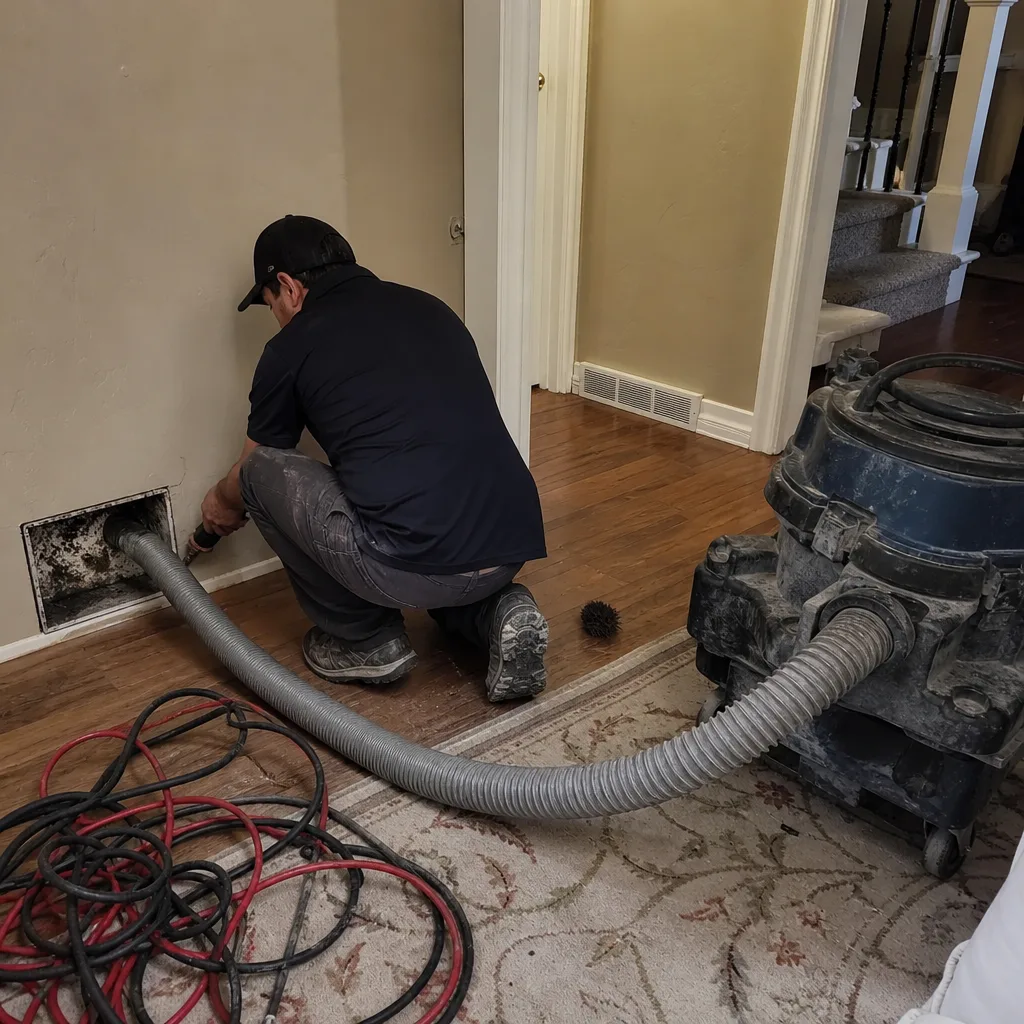 Before
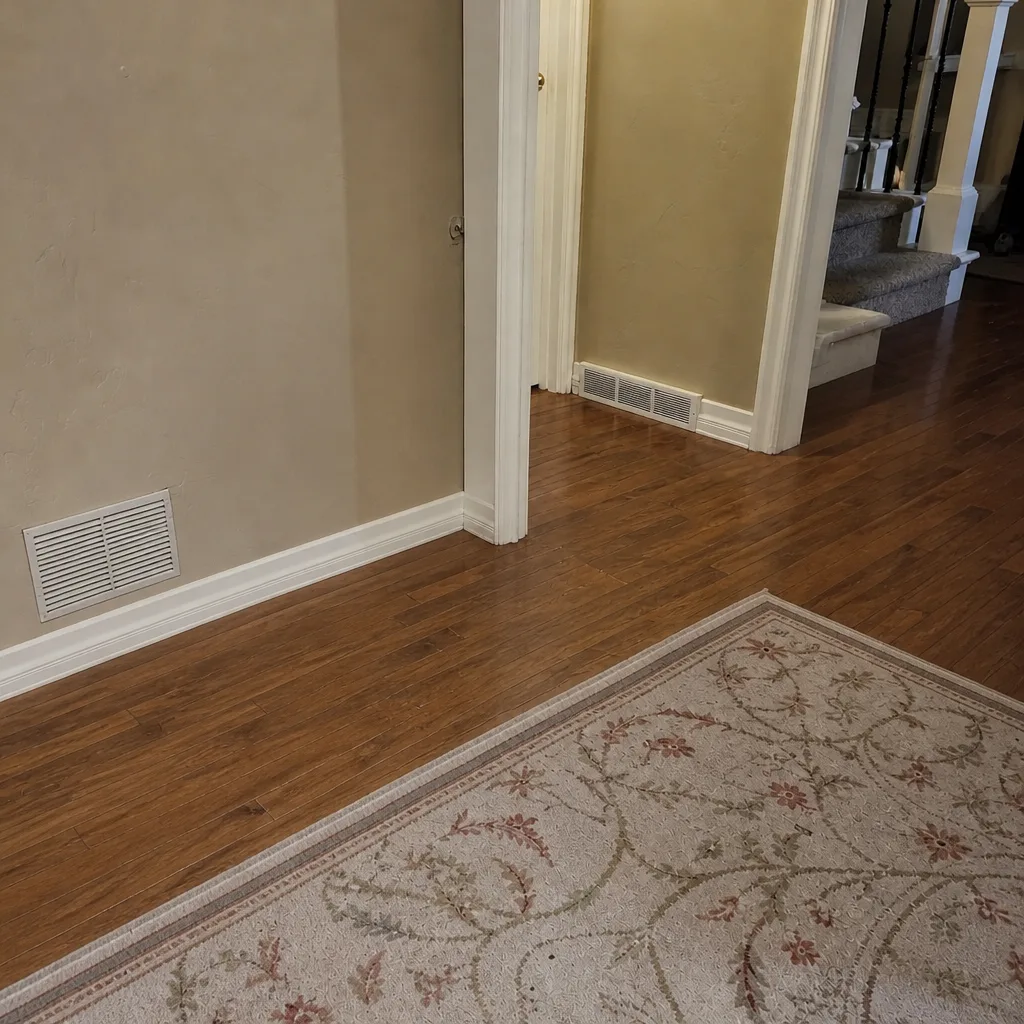 After
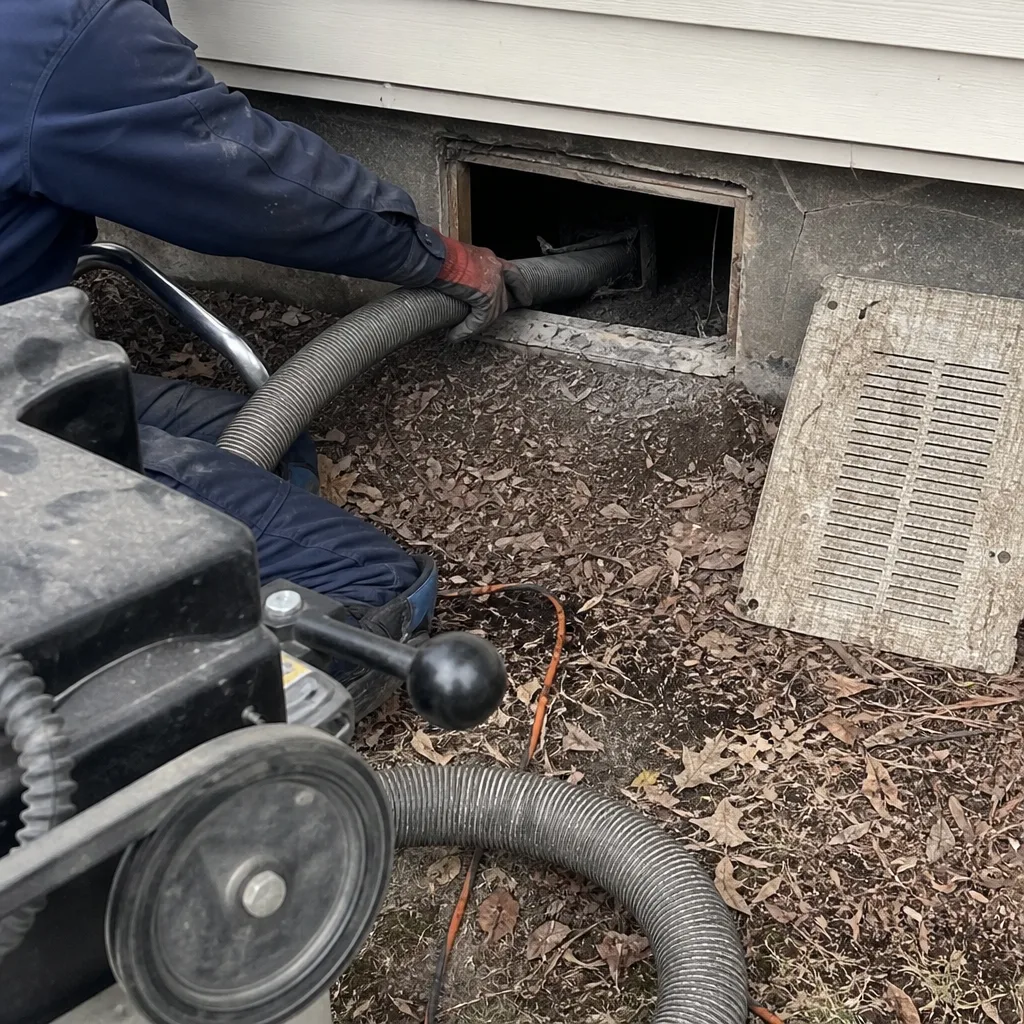 Before
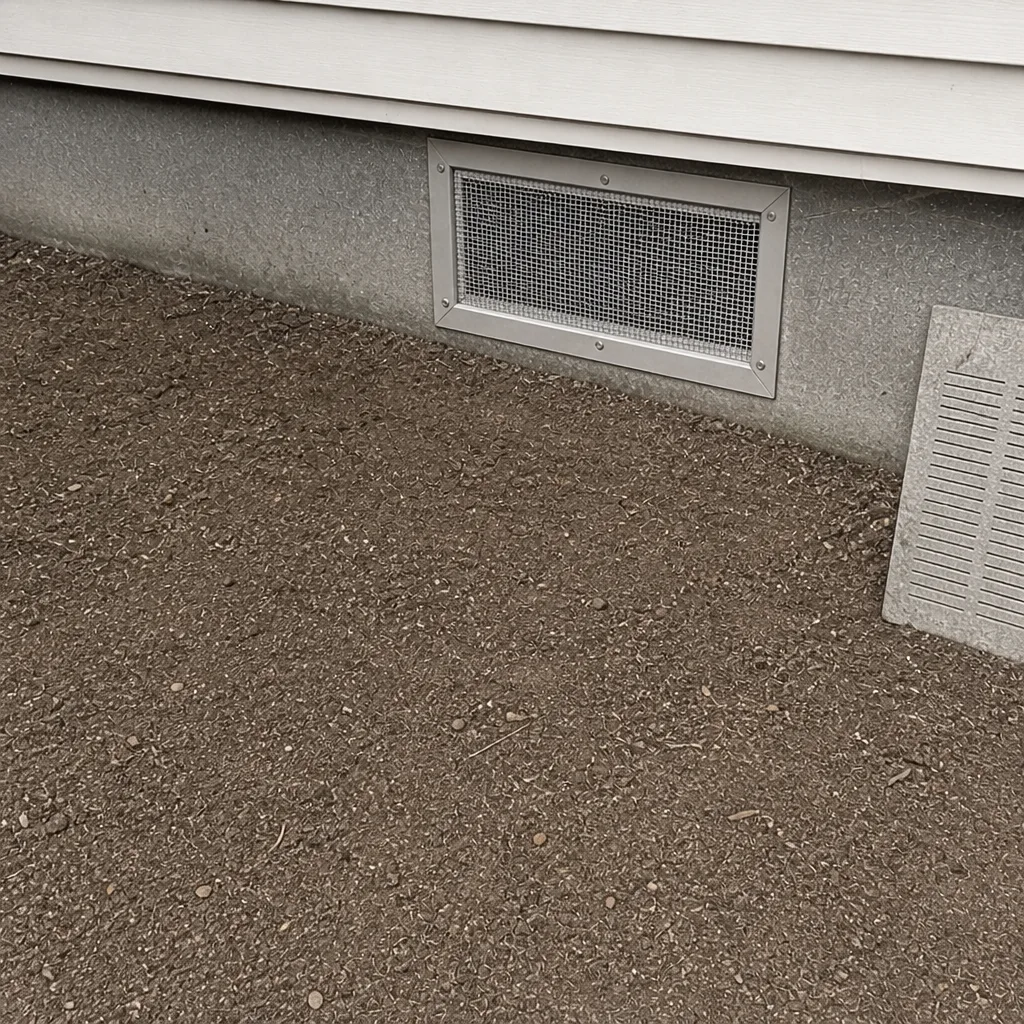 After
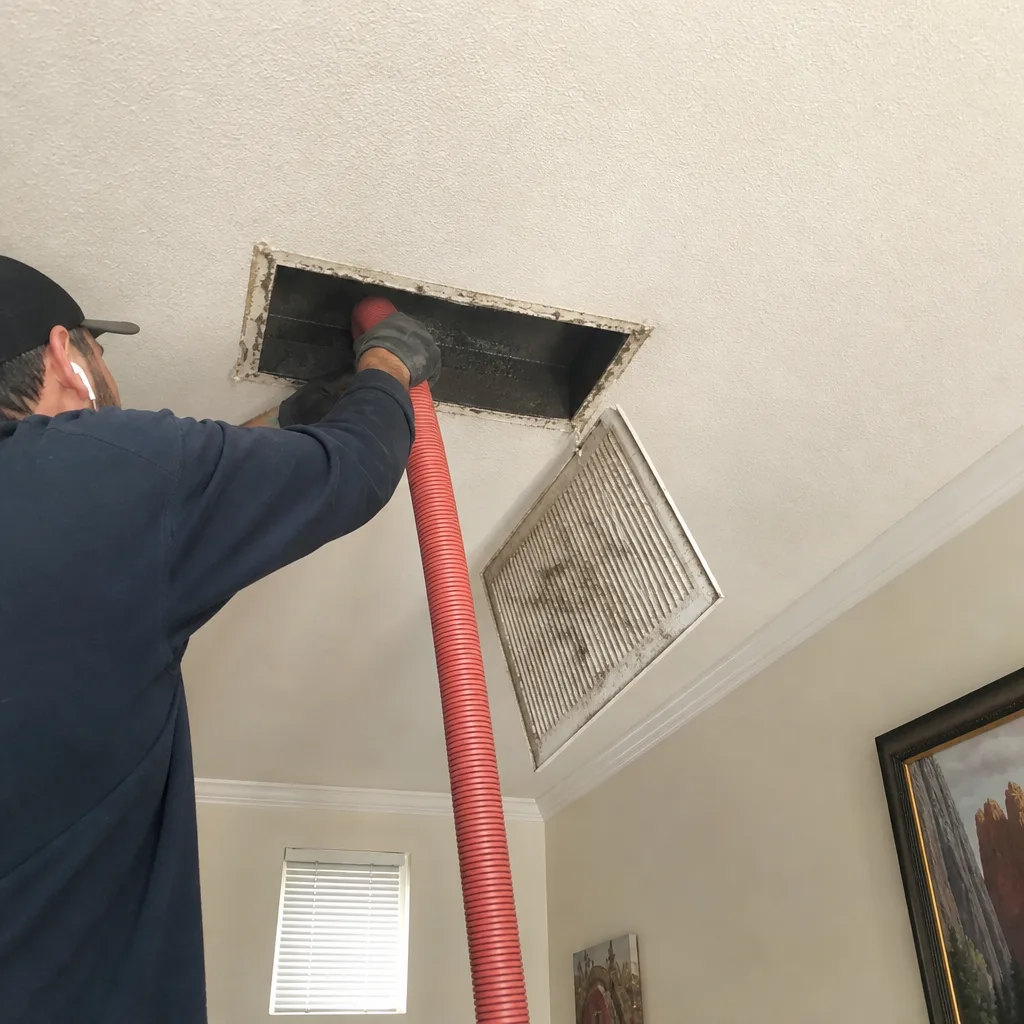 Before
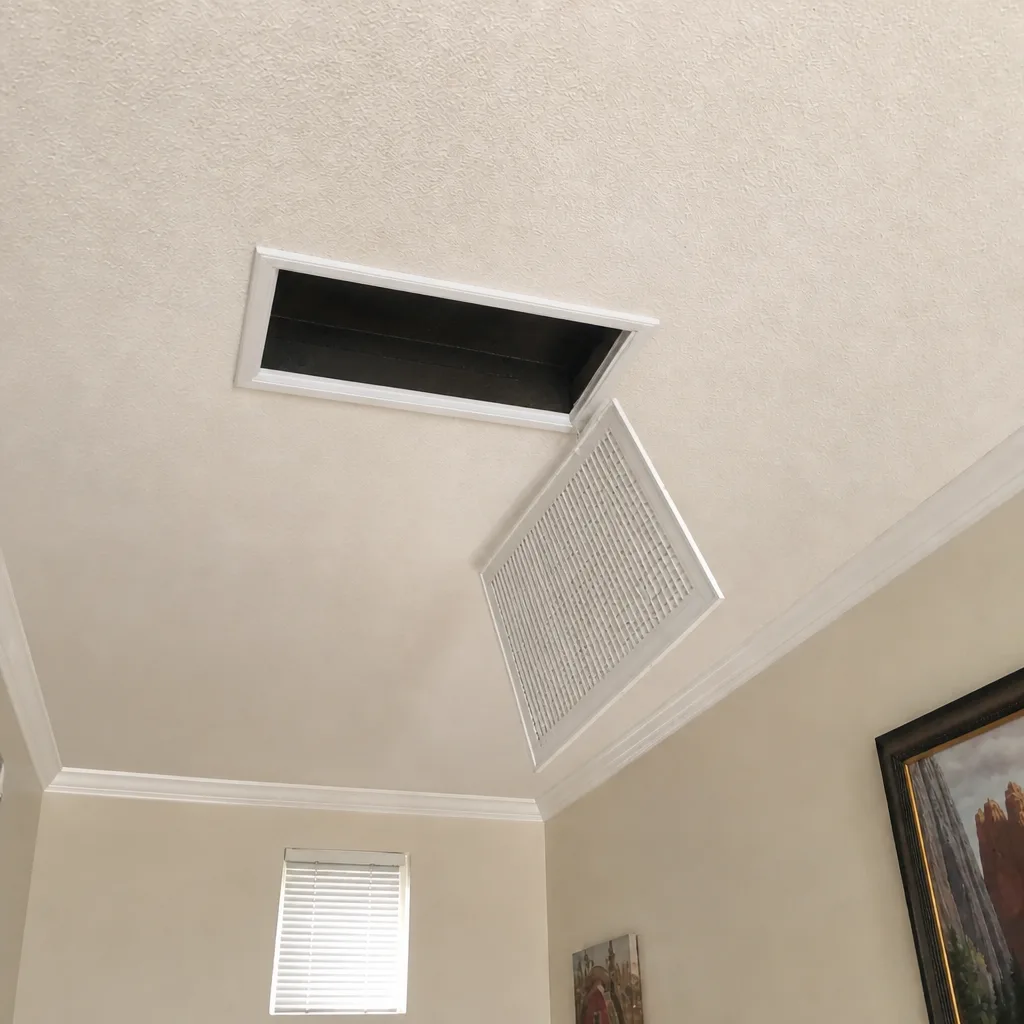 After
When to Call a Professional
Call a professional when you can see dust streaming from registers, when the house dusts faster than it used to, or when the system is pulling air from a space it shouldn’t be pulling from. Call when you’ve had a renovation and the ducts were open to it, or when a crawlspace or attic has had pest or moisture activity that spilled into the duct path. Call when the filter is clogging faster than the package calls for, or when the bower sounds heavier than it used to. And call when you’re not sure – a diagnostic walkthrough answers the question in one visit, and there’s no reason to guess. West Jordan Air Duct Cleaning offers free estimates in West Jordan – call (877) 302-8330. We answer 24/7. Fast dispatch from 7am to 7pm, Sunday through Friday.
Frequently Asked Questions
Whole-home air duct cleaning in West Jordan typically runs $350 to $650, with the written estimate setting the final price. Coil cleaning, sealing, and sanitizing are quoted separately because they’re separate jobs. Call (877) 302-8330 for a free estimate – no per-vent pricing, one flat price per system agreed before work starts.
Cheap quotes are usually narrower in scope (no coil, no cabinet, no plenums) or designed to grow on arrival once the technician is on site. Neither is dishonest everywhere, but both push the real price higher than the headline. A written scope and a flat per-system price are the only fair comparison. Call (877) 302-8330 to compare an honest estimate.
Ask for a post-cleaning verification report with before-and-after photos of your own ducts, the zone-by-zone scope of what was cleaned, and the method used. A contractor who can’t produce one hasn’t given you a way to verify. We provide one on every cleaning. Call (877) 302-8330 to see a sample report.
Most West Jordan homes need full-system cleaning every three to five years, but the right interval depends on construction activity nearby, pets, remodels, and how well the ducts are sealed. Better to evaluate the system than guess. Call (877) 302-8330 for a walkthrough and an honest assessment of whether it’s time.
Seal first, then clean. Sealing closes the leaks that pull dust into the system; if you clean first, the sealing work reintroduces dust into a clean system and you’ve paid twice. Call (877) 302-8330 and we’ll walk you through the sequencing for your specific ducts.
Yes – dryer vent cleaning is part of the full indoor-air pathway and belongs on the same maintenance cycle as the ducts. A lint-packed dryer vent is a fire hazard and a separate appointment, but it belongs to the same system. Call (877) 302-8330 for a combined estimate.
The Bottom Line
Air duct cleaning in West Jordan works when it’s treated as a full-system evaluation rather than a single-service visit. That means supply and return ducts, plenums, the air handler cabinet, and the coil all reviewed together; source-removal cleaning with negative pressure and contact agitation; duct sealing before cleaning when the system is leaking; and a post-cleaning verification report documenting before and after. West Jordan’s clay-heavy soil, active construction, and cold-snap heating cycles push more particulate into the system than the calendar would suggest, so the interval is set by the system’s condition, not by a fixed number of years. One flat price per system, in writing, before work starts. Free estimate, no per-vent pricing. Call (877) 302-8330. We answer 24/7. Fast dispatch from 7am to 7pm, Sunday through Friday, closed Saturday.
For a broader look at how we approach the full air pathway – cleaning, dryer vents, HVAC, duct sealing, and air quality – start with West Jordan Air Duct Cleaning.
Contact
If anything in this guide describes your home, the next step is a walkthrough. Call (877) 302-8330 for a free estimate. We answer 24/7. Fast dispatch from 7am to 7pm, Sunday through Friday, closed Saturday. The estimate is free, the price is set per job by the written estimate, and the scope is agreed before any work starts.
Written by the team at West Jordan Air Duct Cleaning.