
Last updated November 24, 2026
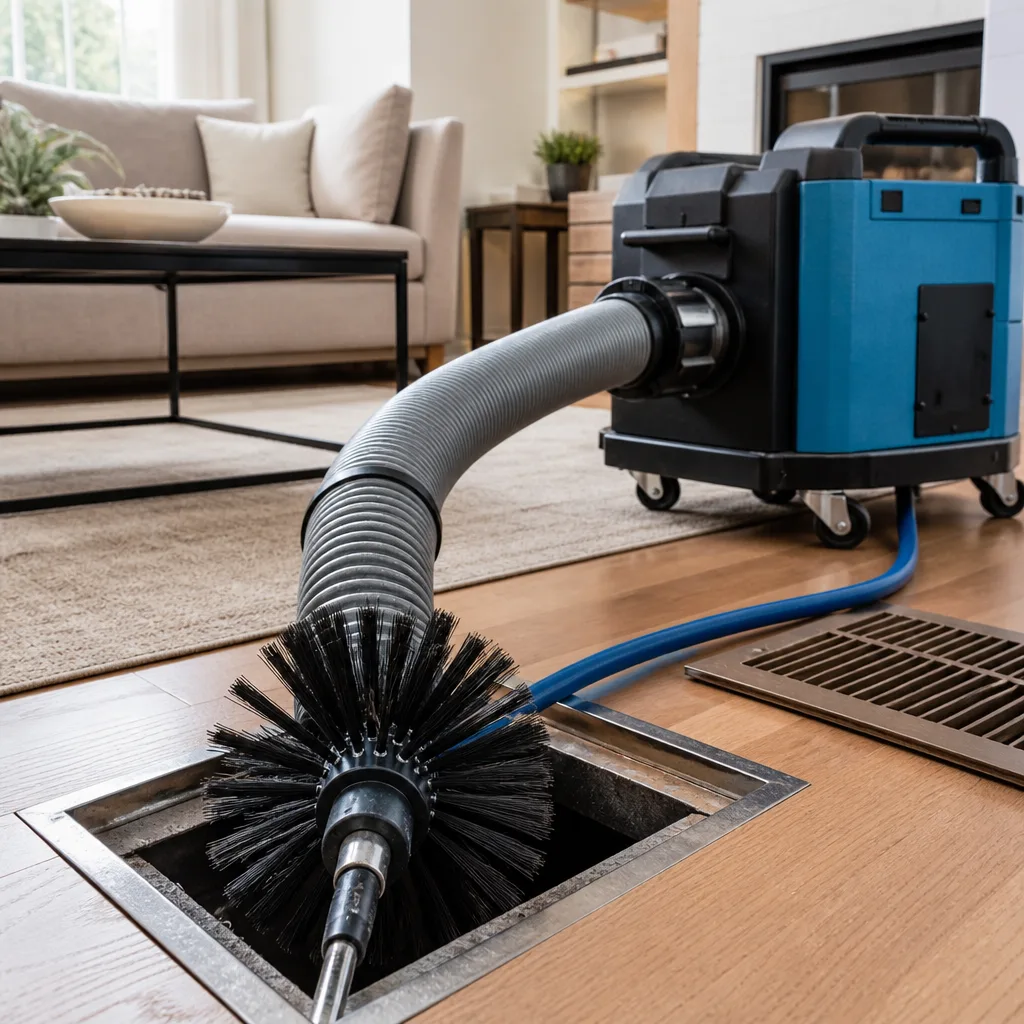 Whole-home duct cleaning
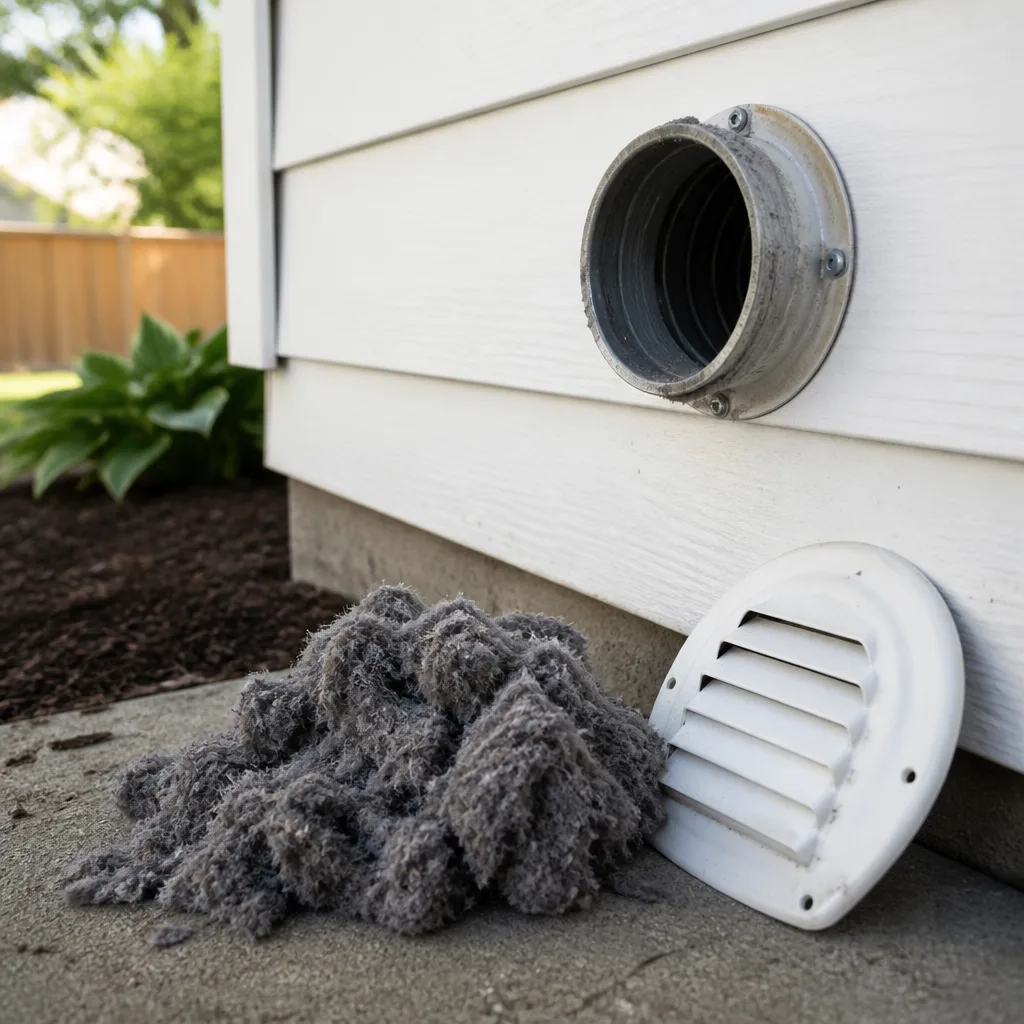 Dryer vent cleaning
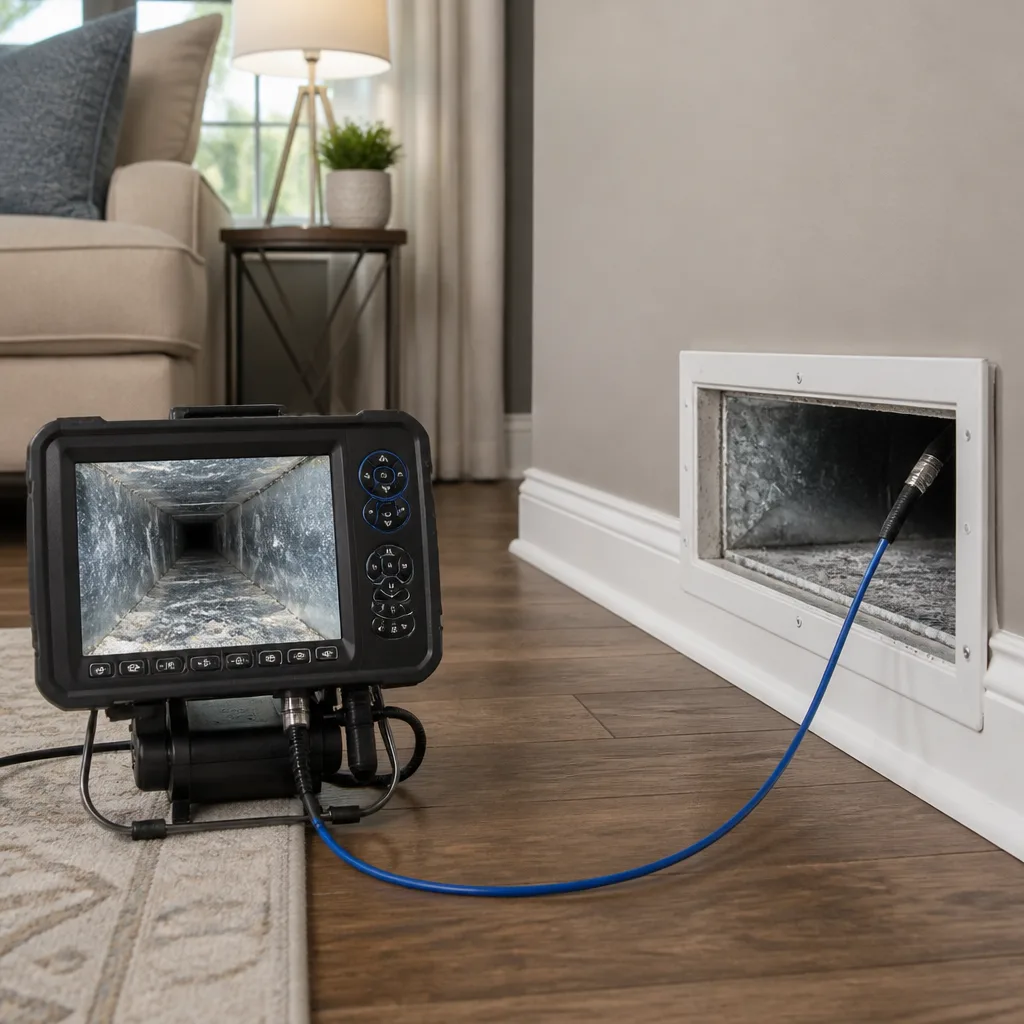 Camera inspection
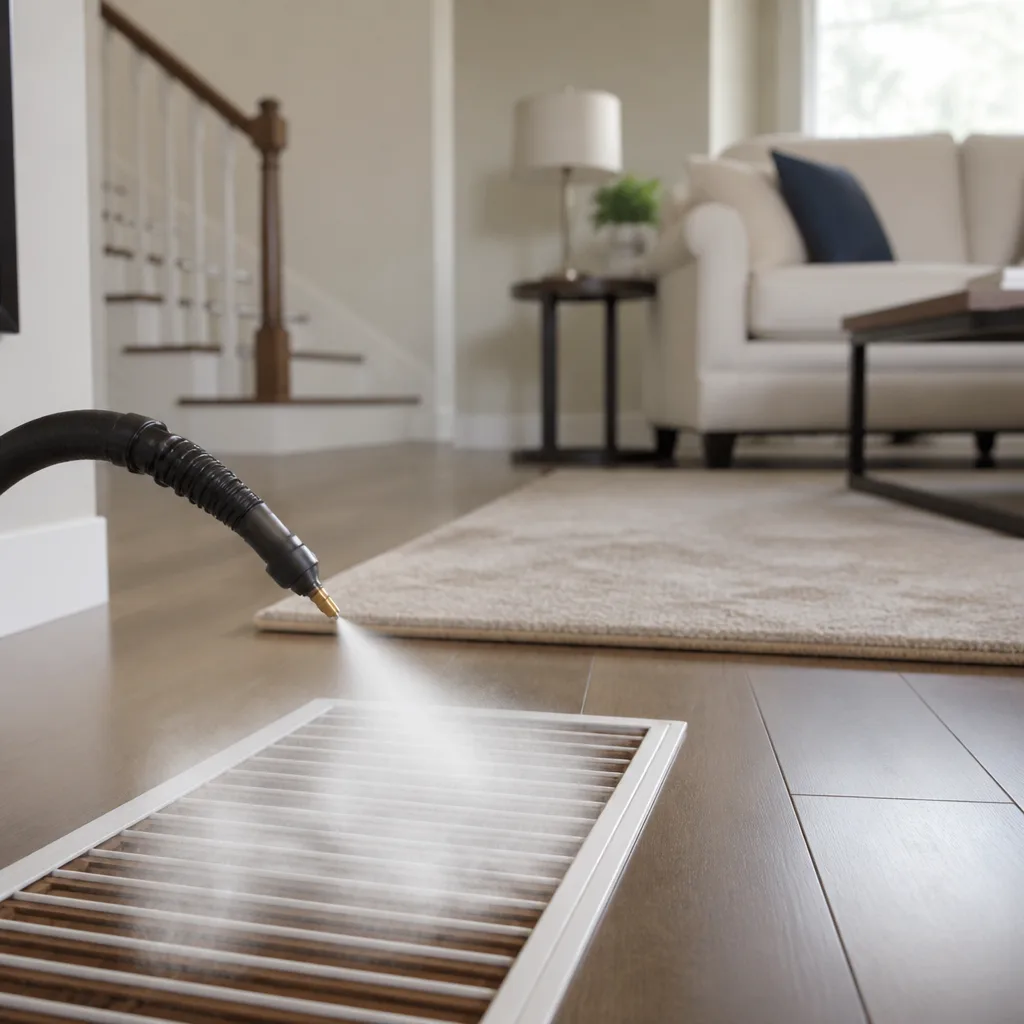 Sanitizing & deodorizing
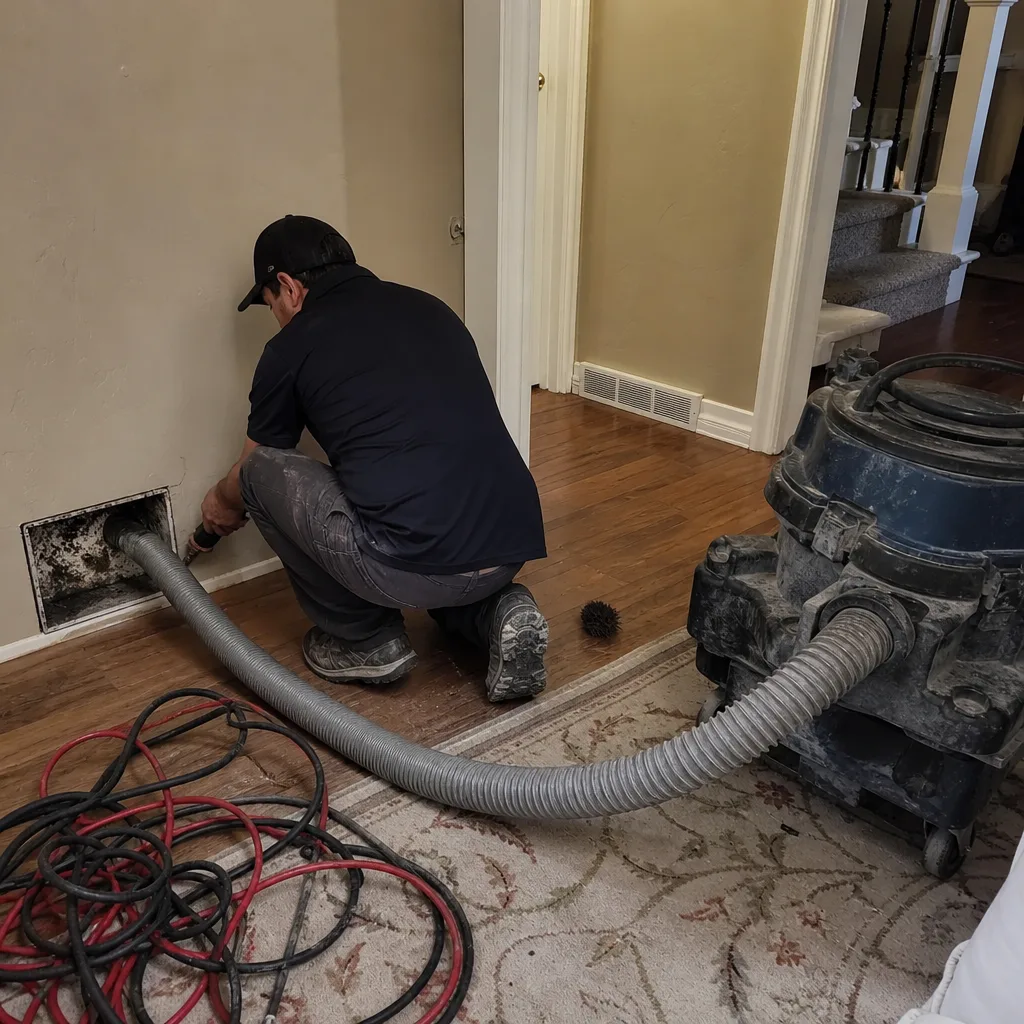
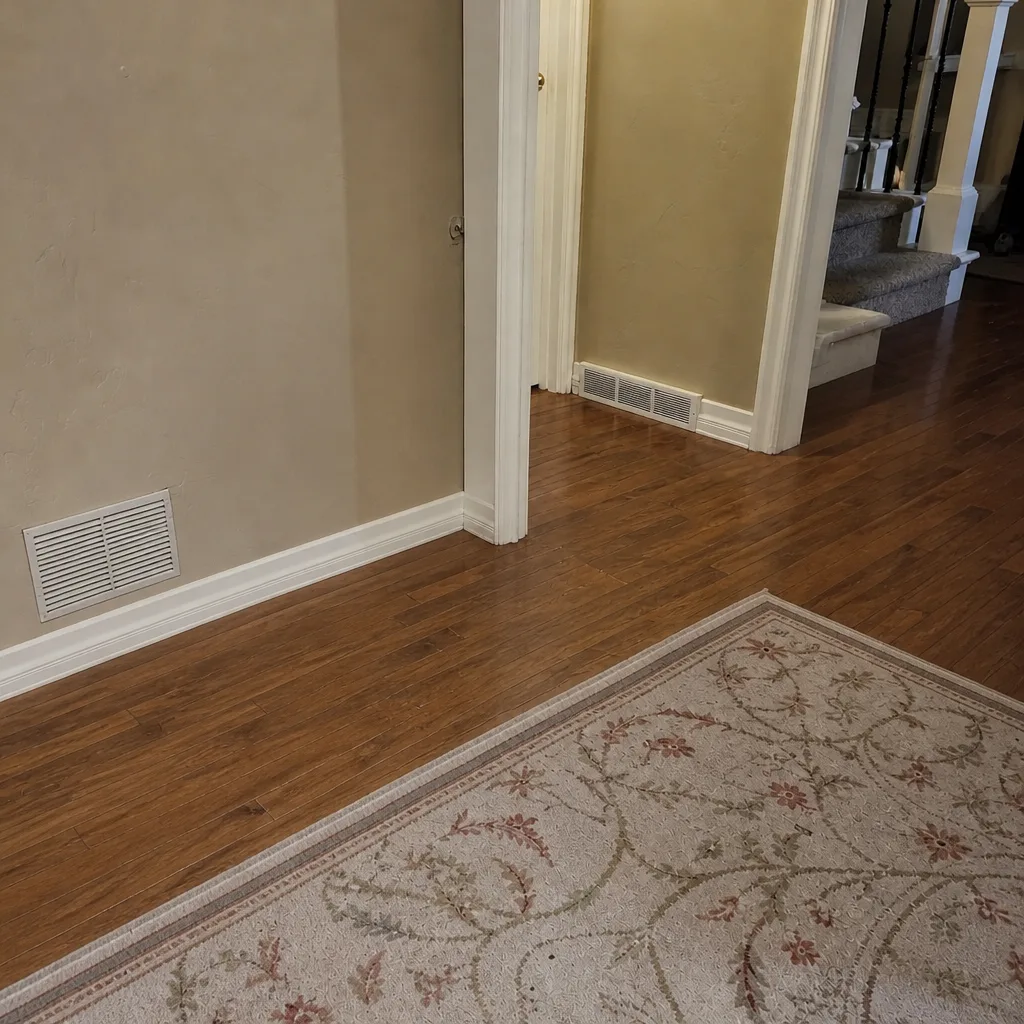
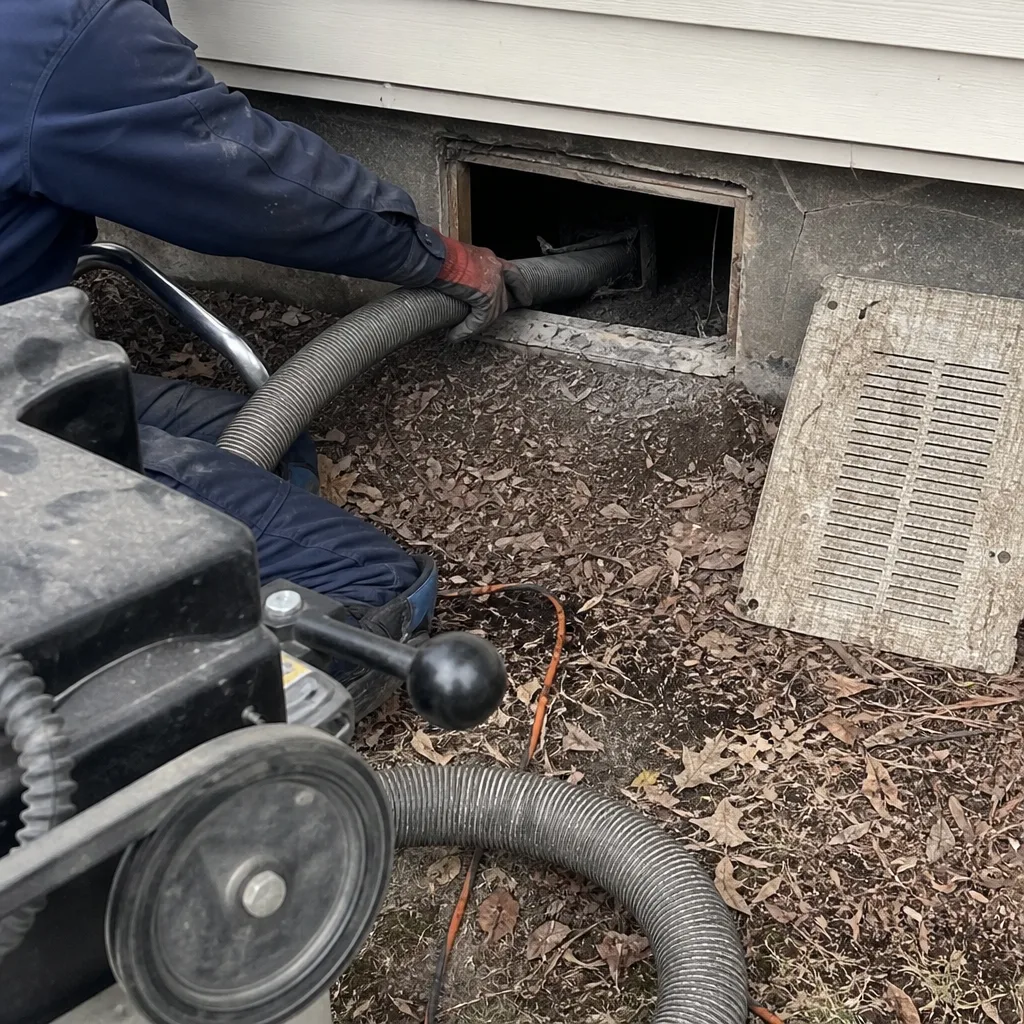
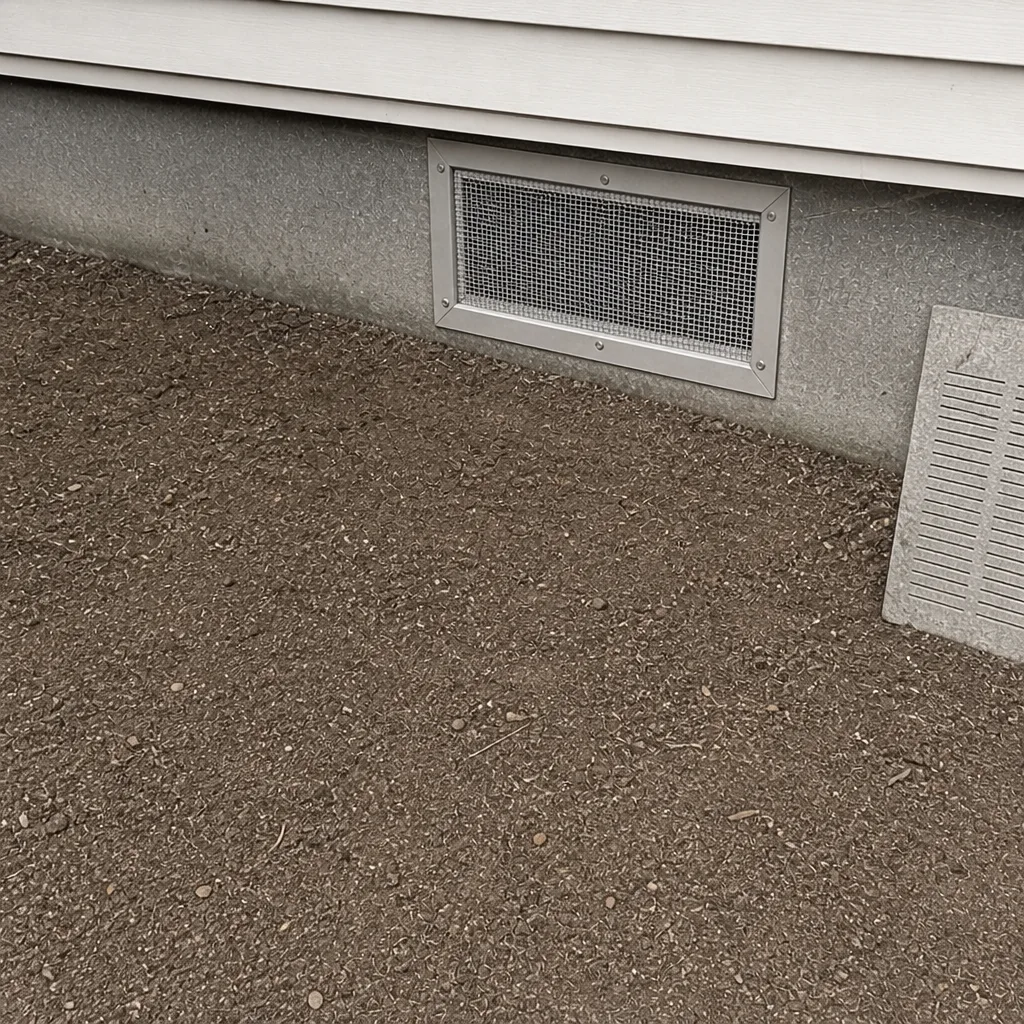
Whole-system duct and dryer vent check with before-and-after photos - you see exactly what came out of your vents
That "$99 whole-house special" is a bait ad - the real number appears once they are in your hallway, or the "clean" is a shop-vac at the register. We photograph the inside of your ducts before and after instead.
Choosing the Right Air Duct Cleaning Brand: A Buyer’s Guide for West Jordan
Most homeowners shopping for duct cleaning assume the brand on the van tells them something about the equipment inside it. It usually doesn’t. A national name brings consistent advertising, a website you’ve seen before, and a call center that answers with a script. What it doesn’t standardize is the vacuum the local operator actually rolls up your driveway, the training that technician received, or how the job gets priced once someone is standing in your hallway. In West Jordan, where summer dust and winter inversion cycles push homeowners to look at their ducts more carefully than in many parts of the country, that gap between brand image and actual equipment matters. This guide walks through how to evaluate the company behind the name: who owns the tools, who trains the technician, what the price covers, and which questions separate a full-system operator from a volume-driven one.
Quick Answer
The right air duct cleaning brand in West Jordan is the one that owns commercial-grade equipment, trains and stands behind its own technicians, quotes a flat price for the whole system rather than a per-vent teaser, and covers the full air pathway (ducts, air handler, blower, and dryer vent) in a single scope. Brand recognition tells you almost nothing about equipment quality or job accountability. The model behind the brand tells you everything.
Styles & brands we work with
- Whole-home duct cleaning
- Dryer vent cleaning
- Camera inspection
- Sanitizing & deodorizing
Table of Contents
- Franchise vs. Independent: What the Brand Name Actually Tells You
- How to Evaluate the Equipment a Company Brings to Your Home
- Reading Online Reviews the Way a Technician Would
- The Full-System Scope Question: What’s Included vs. What’s an Add-On
- Single-Service Vendors vs. Full Indoor-Air Specialists
- What West Jordan Homes Actually Face: Dust, Inversions, and Sealed Ducts
- Ten Questions to Ask Before You Book
Franchise vs. Independent: What the Brand Name Actually Tells You
A nationally franchised duct cleaning brand is a marketing license, not a quality guarantee. The franchise agreement typically covers the logo, the website, the scheduling software, and the advertising spend. It does not standardize the CFM rating of the vacuum the franchisee owns, the age of that equipment, or the method used in your home. Two franchisees operating under the same recognizable name in different parts of the Salt Lake Valley can show up with meaningfully different setups – one with a modern negative-pressure truck-mounted unit, another with an older portable rig that gets the job done at a lower airflow rating. The name on the truck tells you they bought into a system. It tells you very little about what’s bolted to the frame.
Independents have the opposite tradeoff. There’s no national ad budget or cookie-cutter website, which is why you may not have heard of a good local operator until you start asking around. But a locally-owned business lives or dies on repeat customers and word of mouth in a specific market. That tends to drive the operator toward better equipment and a broader service scope, because one angry homeowner in a tight-knit community costs more than a dozen ads. It’s not that independents are automatically better – plenty of franchise operations run excellent, well-equipped crews. It’s that the model you should evaluate is the one you can actually see: what equipment arrives, who’s driving it, how the quote is structured, and who fixes the problem if a duct gets damaged.
In our experience across West Jordan, the clearest quality signal is rarely the logo. It’s whether the operator can walk you through their equipment in specific terms and tell you what it will and won’t accomplish in your home. When you’re ready to book a technician, a service page like air duct cleaning should be the starting point, not the endpoint – use it to understand the scope, then ask the qualifying questions below.
The three things franchise structure obscures
- Equipment ownership: Who paid for the vacuum, and how recent is it? A franchisee’s equipment is their capital investment, not the brand’s.
- Training accountability: Franchise training programs vary. Ask how the specific technician who will enter your home was trained on the specific equipment being used.
- Liability for a substandard clean: If a duct is punctured or a register is left loose, is the fix handled by the local operator or routed through a corporate process? Ask before booking.
How to Evaluate the Equipment a Company Brings to Your Home
Most homeowners can’t tell a commercial-grade duct vacuum from a shop vac at a glance, and that’s exactly the gap a low-cost operator relies on. If you can ask two or three specific questions about equipment, you’ll get a much clearer read on the company than you will from any amount of marketing copy. The equipment matters because duct cleaning is fundamentally an airflow and containment process. You’re trying to move particulate out of a sealed network of pipes without redistributing it into the room where your family breathes.
Professional-grade systems are built around negative pressure – meaning the vacuum pulls air out of the duct system while the openings are either sealed or agitated in a controlled way, so dust is captured rather than blown around. A consumer-level rig running through a single hose into one register at a time cannot create that pressure differential, and it can actually stir up settled debris. That’s why containment equipment matters as much as suction. Abatement Technologies air-filtration equipment, a standard in environmental remediation, is the kind of setup that signals a contamination-conscious process rather than a surface pass.
Numbered list: What to look for in a locally-owned operator
- Commercial-grade machinery. Rotobrush and Nikro systems are professional-grade equipment standard in the trade. Ask what brand and model of vacuum they use. Vague answers or a handheld shop vac are a red flag.
- Negative-pressure capability. Ask whether the job uses negative pressure to keep dust captured inside the duct system rather than released into the room.
- Camera inspection equipment. A camera lets the technician see the actual condition of the ductwork – buildup, loose joints, crushed runs, rodent entry, mold – rather than guessing from the register.
- Containment and filtration. Air-scrubbers and filtration equipment tell you the operator thinks about where the debris goes, not just whether the ducts get scrubbed.
- Sealing equipment in the same scope. If they can seal as well as clean, they can address the small leaks that let contaminated air back into walls and returns. Cleaning without sealing is half a job.
When a company can also handle HVAC cleaning, that’s usually a sign the equipment is set up to service the air handler and coil, not just the ducts. A single-service cleaning vendor rarely has that capability, and it matters for reasons we’ll get to.
Reading Online Reviews the Way a Technician Would
Most people read reviews for a star rating. A technician reads them for technical detail. The difference between a review that says “great service, very professional, would recommend” and one that says “they showed me before-and-after photos of the inside of the return before they ran the vacuum, and the return had a crushed section near the air handler they were able to seal” is the difference between a satisfied sales experience and a genuine technical service. Both are useful, but only the second tells you what the company can actually do.
When you’re evaluating a West Jordan duct cleaning company on Google or Yelp, scan specifically for these signals:
- Named components. A reviewer who mentions the air handler, blower, coil, or specific duct sections has had a genuine technical conversation with the crew.
- Before-and-after evidence. Reviews mentioning photos of the actual ducts, taken on site, suggest the company uses proof rather than persuasion.
- Resolution of a problem. A reviewer who says something went wrong and describes how it was fixed is a stronger signal than one who only had a smooth transaction.
- Pricing transparency. References to a quoted price holding at the final invoice, rather than ballooning on site, are worth more than any number of stars.
- Repeat customers. Someone who’s used the same company twice, years apart, is describing a business built for relationship rather than one-off volume.
What to discount: generic five-word reviews, testimonials that describe only the sales pitch, and patterns of identical review language across multiple reviewers. Those are the fingerprints of review management, not service experience. And be cautious of the inverse too: a single angry review about a legitimate problem is less informative than a pattern of the same complaint.
The Full-System Scope Question: What’s Included vs. What’s an Add-On
Here’s the most common way homeowners get surprised on price, and it’s rarely deliberate deception. It’s a scope difference. Some duct cleaning companies quote a flat price that covers the ducts and registers – the visible, easy-to-reach parts – and treat the air handler, blower motor, coil, and dryer vent as separate line items once the technician is on site. Others quote the whole air pathway in one number up front. The first model is not inherently dishonest, but it does create an incentive to get in the door cheaply and then build the price on site, which is exactly the pattern most homeowners are trying to avoid.
The full system in a West Jordan home is not just the duct runs. It’s:
- The supply and return ducts, including the trunk lines and all branches.
- The air handler – the cabinet housing the blower and often the coil.
- The blower motor and fan blades, where dust accumulates and reduces airflow.
- The evaporator coil, which can collect dust and organic matter that affects both efficiency and air quality.
- The return plenums and registers, where the biggest debris loads usually sit.
- The dryer vent, which is a separate and genuinely important pathway.
When a company includes the air handler and blower in the base clean, the number you’re quoted means something. When those are add-ons, the honest answer is that you don’t know the real price until you’re standing next to a technician with a clipboard. Ask directly, in writing: “Is the air handler, blower, and coil included in this price?” Then ask whether the dryer vent is included, and if not, why not. You can see what a full-scope cleaning involves on our West Jordan Air Duct Cleaning service page, and dryer vent cleaning is worth looking at separately because it addresses a fire-safety item as well as an airflow one.
The dryer vent question
Dryer vents are the part of the air pathway most often skipped by contractors who only own duct cleaning equipment. A dryer vent is not a duct; it carries hot, lint-laden air and, when clogged, becomes a fire risk. If your duct cleaning company doesn’t offer dryer vent cleaning as part of its scope, that’s a hint that its equipment and training are narrower than the full-system story suggests. For a house in West Jordan with a dryer on an inside wall, the vent run can be long and full of bends, which is exactly where lint packs. It’s genuinely worth including.
Single-Service Vendors vs. Full Indoor-Air Specialists
A company that only cleans ducts is structurally limited. That’s not a dig at those businesses – it’s just the reality of the model. The equipment they own, the training they invest in, and the service they sell are all oriented around one task. When your problem is actually something else in the air pathway – leaks, loose joints, an underperforming air handler, a dryer vent packed with lint, or an indoor humidity issue – a single-service vendor’s honest answer has to be “that’s not what we do.” You then have to find someone else, and the two vendors may disagree about what the root cause is.
A full indoor-air specialist covers the connected system. In West Jordan, that five-service coverage typically means:
- Air duct cleaning – the core service, done with commercial-grade equipment and containment.
- Dryer vent cleaning – the other pathway in the house, and a safety item.
- HVAC cleaning – air handler, coil, and blower, which is where a lot of “dust coming from the vents” actually originates.
- Duct repair and sealing – the structural fix that many jobs require before or after cleaning.
- Air quality and sanitizing – filtration and sanitizing to address what’s left in the system.
Why scope breadth matters for your specific home: if the technician finds that a return duct has separated from its boot behind drywall, a cleaning-only vendor can clean around the gap but cannot close it. If the coil is caked with debris, a cleaning-only vendor can vacuum the ducts but cannot address the coil. If the filter housing or humidifier is a Honeywell or Aprilaire unit, a tech who services those brands will read the system correctly; one who doesn’t will describe the filter setup from memory. Guardsman-grade protective products fit into the same logic – they suggest a sanitizing process that is meant to protect what’s already in the system, not just blanket-treat it.
The tradeoff is real. A specialist is not the cheapest quote, and shouldn’t be. What you’re buying is a single visit that diagnoses and addresses the actual cause rather than a cheap visit followed by a second and third one for the parts the first company couldn’t handle.
What West Jordan Homes Actually Face: Dust, Inversions, and Sealed Ducts
West Jordan’s housing stock spans several decades of construction, from older neighborhoods built before modern duct-sealing standards to newer subdivisions off 5600 West and near the Bingham Creek and Oquirrh Shadows areas. That range matters because duct systems from different eras behave very differently. Older homes often have flex duct runs with sagging sections or partial separation at the joints. Newer construction typically has tighter ductwork but sometimes with dampers or zoning systems that add complexity. A company that only works one style of housing can miss the other.
The local climate adds a second layer. West Jordan sits in the Salt Lake Valley, where winter inversion cycles trap fine particulate in the air and furnace systems run for months at a time. That combination means the ducts in a typical West Jordan home accumulate fine dust at a steady rate through the heating season, and the HVAC system recirculates it unless the duct system is clean and the filter setup is right. Summer brings its own load – swamp cooler and A/C startups send a burst of debris through the system if the ducts have sat dormant since spring. A local operator will recognize this rhythm. One that only serves vacation markets, or a national brand without local operations insight, won’t.
This is where knowing the brands matters. Homes in West Jordan with whole-home humidifiers or higher-MERV filtration often have Aprilaire or Honeywell components, and a technician who services those systems will diagnose airflow restrictions correctly. A company that doesn’t know those brands will treat the filter housing as an obstacle rather than as part of the system. That’s part of the reason we service those brands and approach duct cleaning as one piece of the full air pathway rather than the whole job.
One more West Jordan-specific factor: the valley’s dust. Spring wind events and construction on the west side of the valley send fine dust into every crack that isn’t sealed. When a duct run has a separation – and many do, invisibly, inside walls – that dust enters the return system every time the furnace or A/C runs. A cleaning that doesn’t include sealing is a cleaning that gets undone by the next wind event. That’s why we treat duct repair and sealing as part of the same conversation as cleaning rather than as an upsell.
Ten Questions to Ask Before You Book
This is the short version of everything above, packaged as a script you can read directly to a company’s dispatcher or technician. Get the answers in writing if you can. A company that can’t answer them clearly is telling you something useful.
- What brand and model of vacuum do you use? Rotobrush and Nikro are recognized professional systems. A shop vac or unlabeled rig is not.
- Do you use negative pressure to contain debris in the duct system?
- Is the air handler, blower, and coil included in the quoted price? If not, what are the add-ons, and how much do they total?
- Is the dryer vent included or separate?
- Will I see before-and-after photos of my own ducts, not stock images?
- Can you repair and seal duct separations, or only clean?
- Who trains the technician doing the work, and on which equipment?
- If you find a duct issue, who resolves it, and how soon?
- Is the price you quote the price I’ll pay, or will it change on site?
- Are you the company that will actually do the work, or a lead-generation service that sells the job to a subcontractor?
That last question matters more than most homeowners realize. Some websites are lead brokers; the person who shows up is not the person whose name is on the website. A straightforward operator will tell you exactly who they are before they book the visit.
Common Mistakes to Avoid
- Choosing on the lowest coupon price. A low headline number usually means a narrow scope – ducts only, air handler as an add-on, dryer vent not offered. The final invoice is the number that matters, and it should be the number you were quoted.
- Assuming the logo on the truck is the equipment in the truck. Franchise branding standardizes marketing, not machinery. Ask about the actual vacuum and containment equipment.
- Booking before confirming the air handler is included. The blower and coil are where the dust often originates. If they’re not in the quote, you may get a clean duct system feeding a dirty air handler.
- Skipping dryer vent cleaning because it’s “a duct cleaning.” It’s a separate pathway and a separate risk. If a company doesn’t offer it, that tells you their scope.
- Ignoring duct sealing because cleaning sounds sufficient. In West Jordan’s dust and wind, unsealed separations undo a clean within a season. Sealing is often the difference between a result that lasts and one that doesn’t.
- Reading reviews for stars, not detail. A five-star review that says “on time and professional” tells you less than a four-star review that describes exactly what was found and fixed.
- Hiring a subcontracted lead. If the company taking the call isn’t the company doing the work, you have no direct line to whoever bears the liability if something goes wrong.
See the difference
 Before
 After
 Before
 After
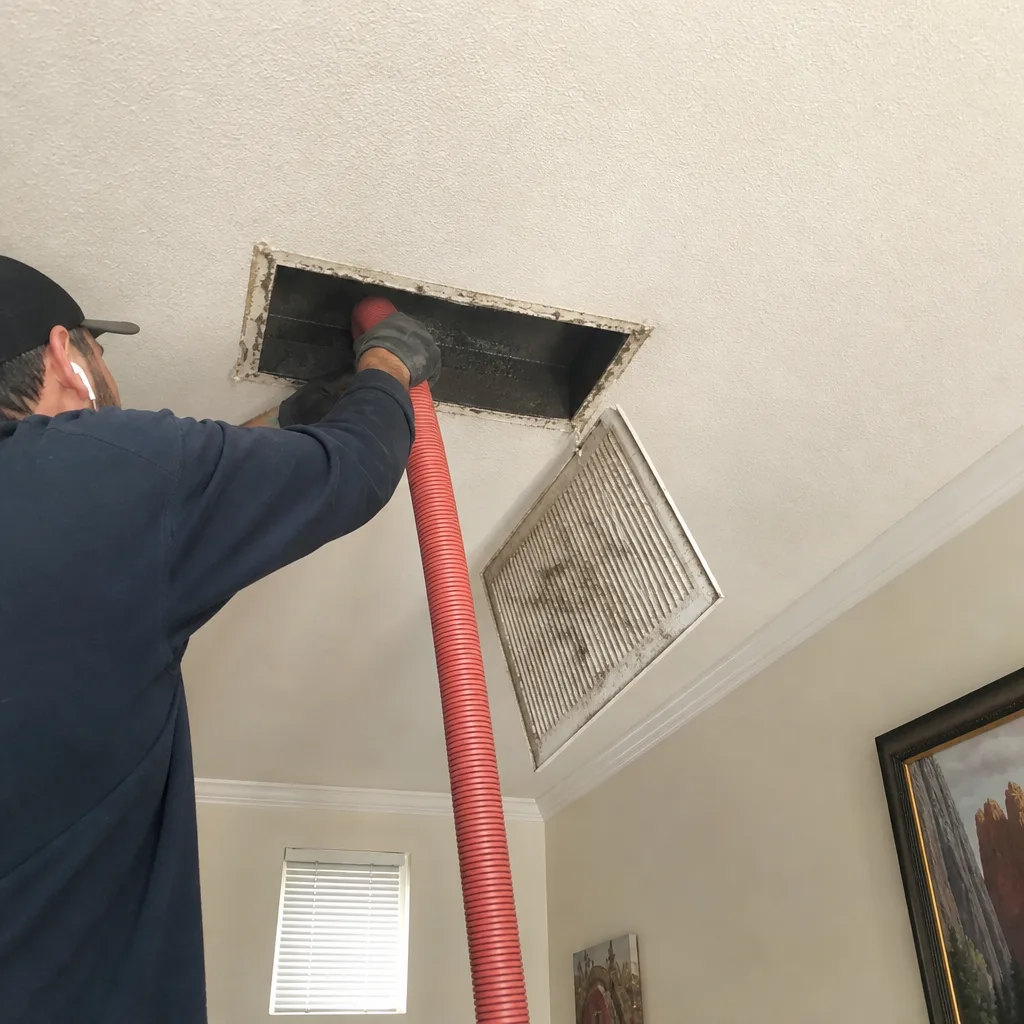 Before
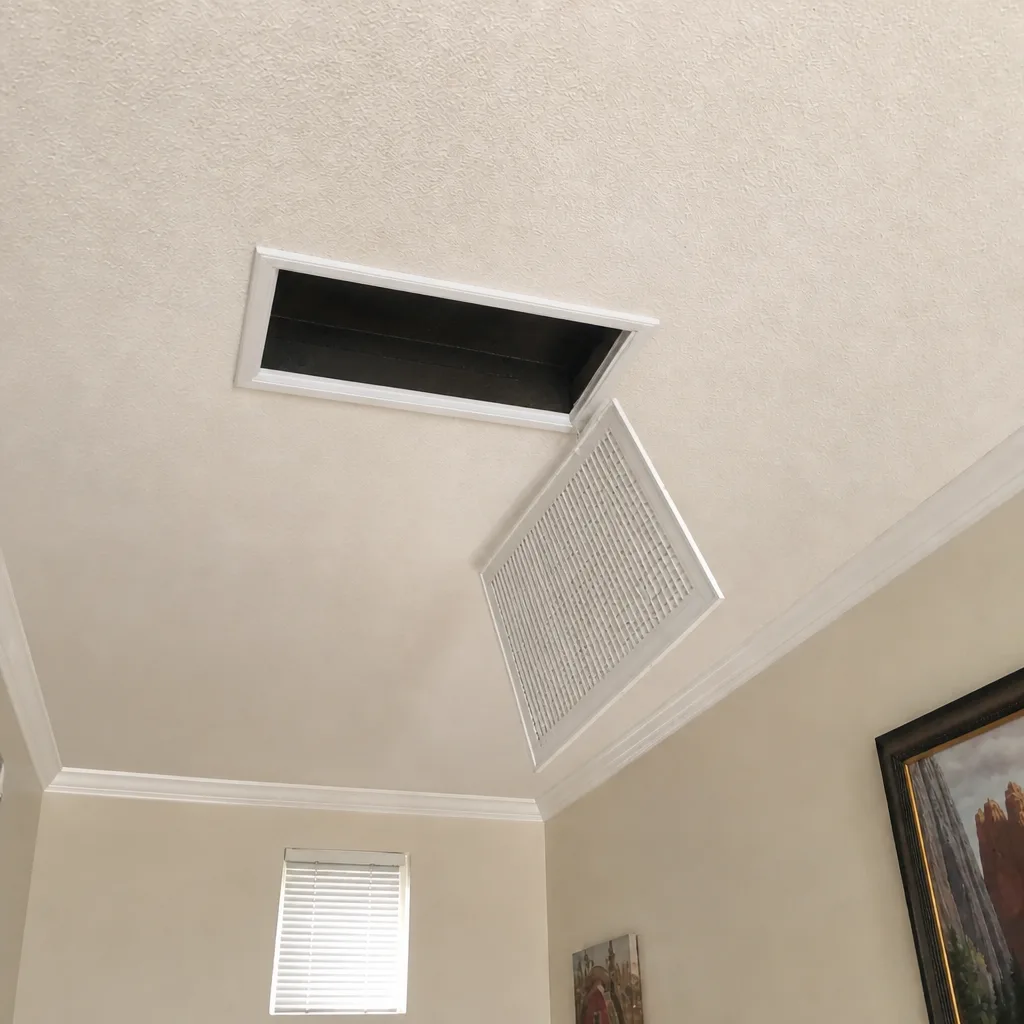 After
When to Call a Professional
Duct cleaning isn’t a calendar item – it’s a response to signs. If you’re seeing visible dust settling on surfaces shortly after cleaning, hearing whistling or whooshing at registers, noticing a musty or burnt smell when the furnace or A/C starts up, finding pest droppings in registers, or watching dust puff out of your returns when the system kicks on, the duct system is the likely culprit and it’s time for a professional inspection. Dryer vents are a separate matter: if the dryer takes two cycles to dry a load, feels hot to the touch at the top, or the exterior flap barely moves, that’s a vent issue worth having cleaned. Our technicians have up to 10 years of experience with the equipment described in this guide. If you’re in West Jordan and want a professional to take a look at the full system, West Jordan Air Duct Cleaning offers free estimates in West Jordan – call (877) 302-8330. We answer 24/7. Fast dispatch from 7am to 7pm, Sunday through Friday.
Frequently Asked Questions
Focus on four things you can ask directly: the brand and model of the vacuum, whether the air handler and blower are included in the quoted price, whether the company offers duct sealing in addition to cleaning, and whether the technician will show before-and-after photos of your own ducts. You don’t need to know what a CFM rating is to get useful answers – a company that can’t describe its equipment in specific terms is telling you something. Call (877) 302-8330 for a free estimate and ask these questions directly.
Neither model is automatically better, but the local operator tends to be easier to evaluate. A franchise name standardizes marketing, not the vacuum the specific franchisee brings to your home, and it doesn’t guarantee who trains the technician. A locally-owned operator lives on repeat customers in a specific market, which tends to favor better equipment and a broader service scope. What’s actually worth evaluating is the equipment, the training, the price structure, and who bears liability – and you can ask those questions of either type.
We quote a flat price per system rather than a per-vent price, and the price depends on the size and configuration of the system, whether the air handler and blower are part of the scope, and whether sealing is needed. That’s why we don’t publish a teaser coupon number: the written estimate is the final price, not a starting point. Call (877) 302-8330 for an exact quote – estimates are free.
Cheap quotes are usually narrow-scope quotes. They cover the visible duct runs and registers, and treat the air handler, blower, coil, and dryer vent as add-ons that get priced once the technician is on site. The other pattern to watch for is a company that does not own duct-sealing or air quality equipment, so its only service is a vacuum pass. Neither is a scam in itself, but a quote you can’t compare line-for-line against a full-system scope isn’t really a lower price – it’s a different job. Call (877) 302-8330 and we’ll walk you through what our quote covers.
Ask for before-and-after photos of your own ducts, not stock images, taken on site during the visit. A company that photographs the inside of your returns and supply boxes before running the vacuum, then again after, is doing exactly what it claims. If a company can’t provide that, you’re relying on trust alone. A full-scope operator will also explain what the camera found and what was addressed. Call (877) 302-8330 to book an estimate and ask ahead of time what documentation is provided.
Most West Jordan homes don’t need annual cleaning. Every three to five years is a reasonable rule of thumb for a typical home, with more frequent service if you’ve had renovation work, water intrusion, pest activity, or if you have pets and allergies that make dust load harder to tolerate. The valley’s inversion seasons and spring dust events add a bit to the accumulation rate, but they don’t change the underlying answer. If you’re unsure whether your system is due, a free estimate is the way to find out – call (877) 302-8330.
It depends entirely on the company. Some quote a flat price for the ducts alone and treat the air handler, blower, and coil as add-ons. Others include the whole air pathway in one number. Ask directly before booking, and get it in writing. In our experience, the air handler and blower are where a lot of the dust origination happens, so a quote that leaves them out isn’t the full picture. Call (877) 302-8330 to confirm what’s included in our estimate.
The Bottom Line
Brand recognition tells you who paid for the advertising. It doesn’t tell you who owns the vacuum, who trained the technician, or how the price will be structured once someone is in your home. In West Jordan, the companies worth evaluating are the ones that can describe their equipment in specific terms, quote the full air pathway as a single price, treat duct sealing as part of the conversation rather than an upsell, and cover the dryer vent and air handler alongside the ducts. Franchise or independent is secondary; equipment, training, scope, and accountability are the real story. Ask the ten questions in this guide. Then call West Jordan Air Duct Cleaning at (877) 302-8330 for a free estimate. We answer 24/7. Fast dispatch from 7am to 7pm, Sunday through Friday.
Written by the team at West Jordan Air Duct Cleaning.