
Last updated November 24, 2026
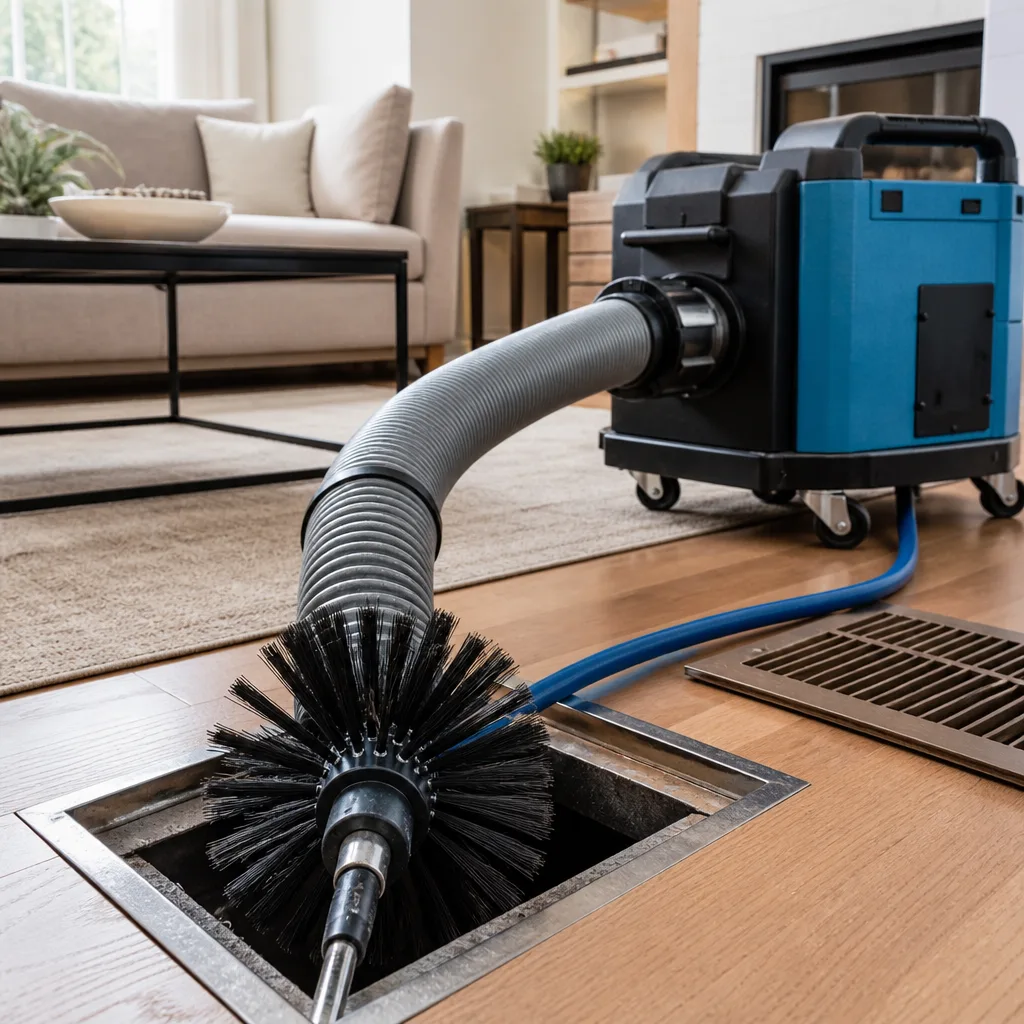 Whole-home duct cleaning
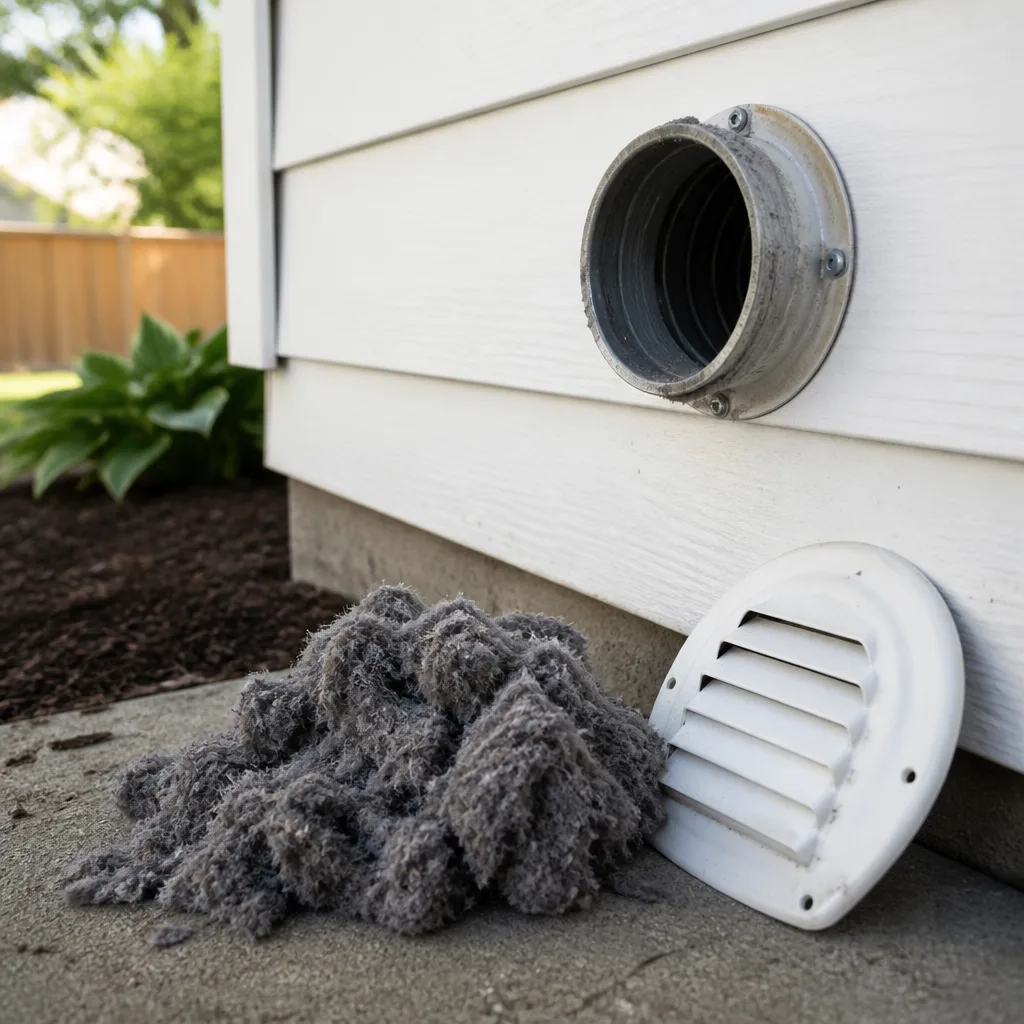 Dryer vent cleaning
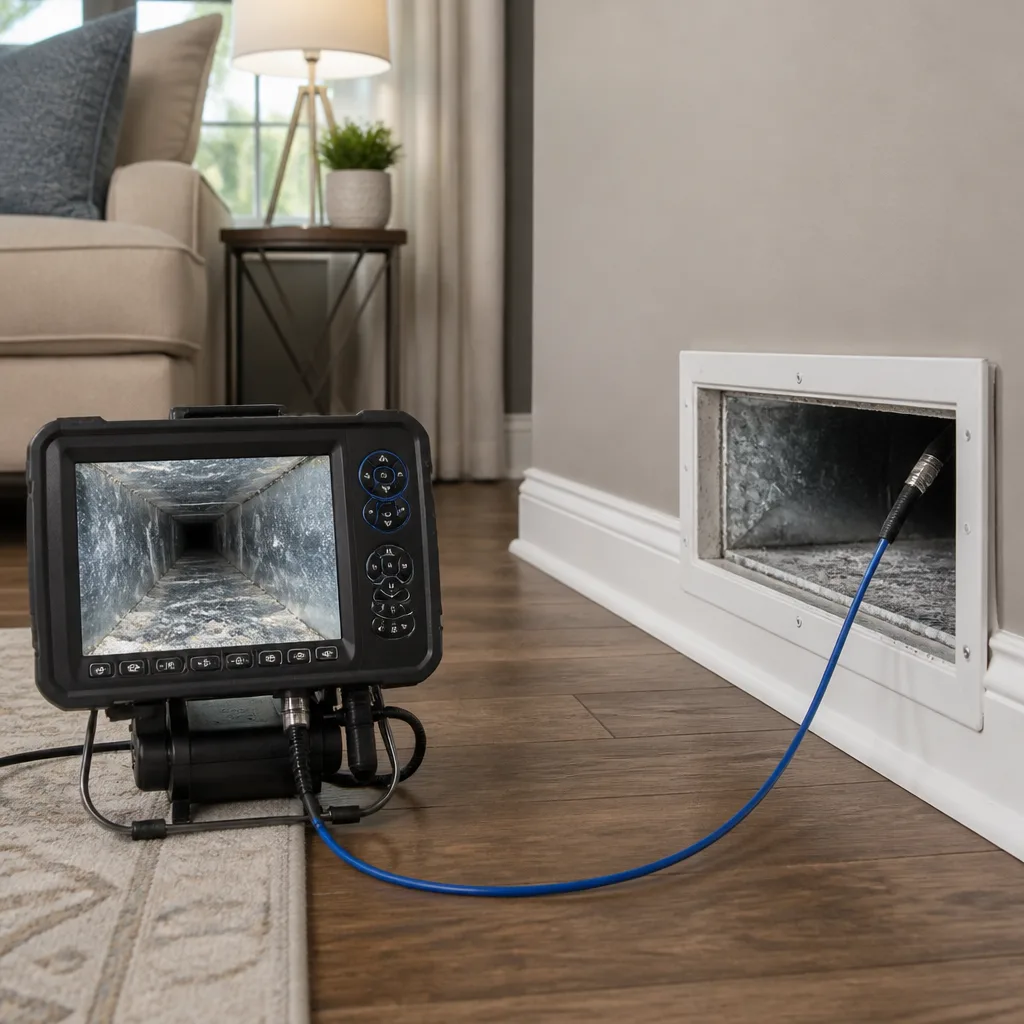 Camera inspection
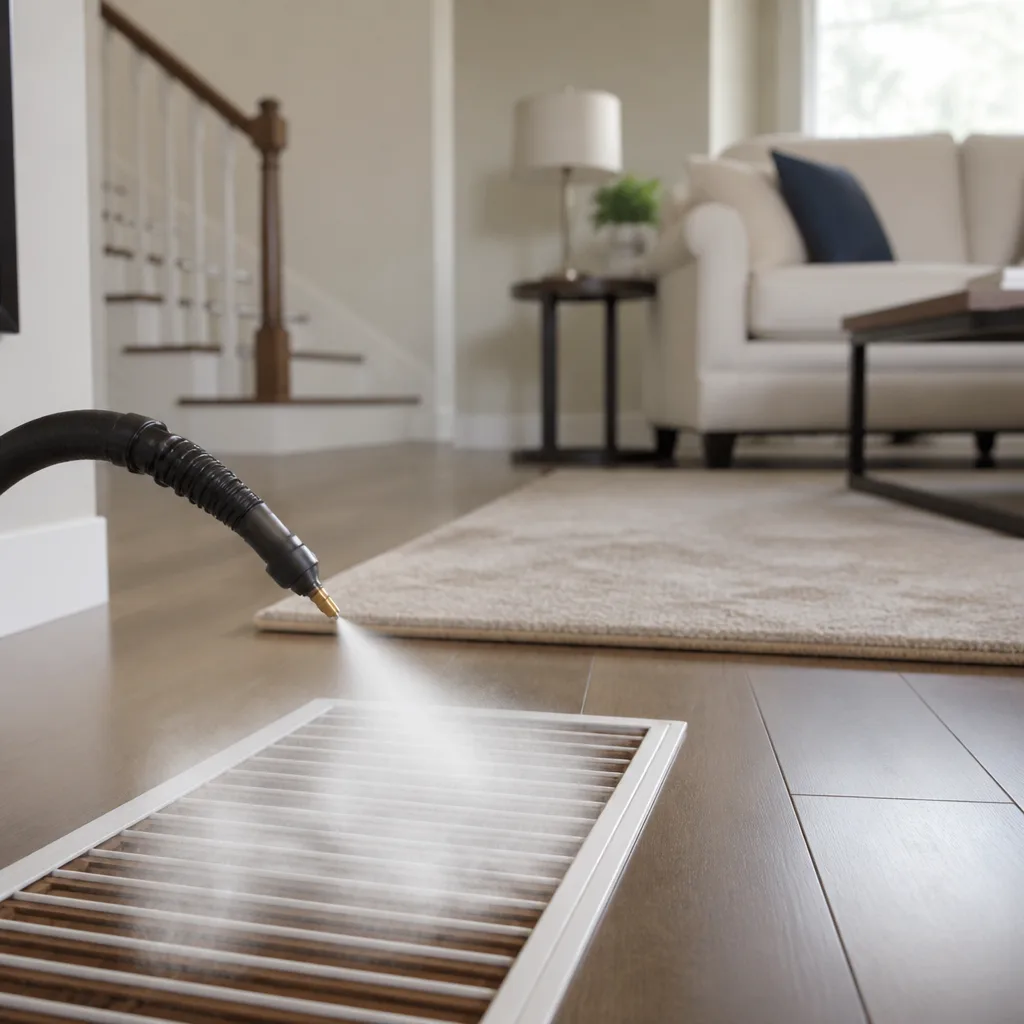 Sanitizing & deodorizing
Whole-system duct and dryer vent check with before-and-after photos - you see exactly what came out of your vents
That "$99 whole-house special" is a bait ad - the real number appears once they are in your hallway, or the "clean" is a shop-vac at the register. We photograph the inside of your ducts before and after instead.
Air Duct Cleaning Permits, Codes & Inspections in West Jordan, UT: What You Need to Know
If a contractor told you duct cleaning never involves permits, they’re right about the cleaning part and possibly wrong about everything that gets uncovered along the way. Most air duct cleaning in West Jordan really is routine maintenance, the kind of work that needs no paperwork at all. But a technician opening a ceiling to reach a run of flex duct can find a crushed section, a disconnected collar, or a joint sealed with nothing but tape that’s long since let go. The moment the fix moves from vacuuming to modifying, cutting, or resealing part of the air-handling system, the job touches Utah’s mechanical code. This guide draws that line for West Jordan homeowners: what needs a permit, what doesn’t, how the city’s building department gets involved, and how to protect yourself when a sale inspection comes calling.
Quick Answer
Routine air duct cleaning in West Jordan does not require a permit, because cleaning and vacuuming ductwork is classified as maintenance under Utah’s mechanical code. A permit and inspection generally become part of the picture only when the work modifies the system itself: cutting new access panels into rigid ductwork, replacing duct board or lined sections, reconnecting or rerouting duct runs, or replacing an air handler, furnace, or water heater flue connection. Sealant and encapsulant application inside existing ducts is normally maintenance. When in doubt, the West Jordan City building department can confirm whether your specific scope needs a permit before work starts.
Styles & brands we work with
- Whole-home duct cleaning
- Dryer vent cleaning
- Camera inspection
- Sanitizing & deodorizing
Table of Contents
- What Utah’s Mechanical Code Says About Ductwork
- Where Cleaning Ends and Permitted Work Begins
- West Jordan’s Building Department: Who Has Jurisdiction
- Sealant, Duct Board, and Liner: What Triggers a Permit
- What Happens If Unpermitted Duct Work Turns Up During a Sale
- The Scope-of-Work Letter That Protects Both Sides
- How West Jordan’s Climate and Housing Shape the Work
- How to Verify a Contractor’s Scope Before You Sign
What Utah’s Mechanical Code Says About Ductwork
Utah adopts the International Mechanical Code as the basis for its statewide mechanical requirements, and local jurisdictions like West Jordan enforce it through their own building departments. The IMC treats duct systems as part of the mechanical system: it specifies how ducts must be supported, how joints must be sealed, what materials are allowed for duct board and flexible duct, and how much leakage is acceptable on different parts of a system. None of that governs a vacuum truck.
Here’s what matters to a homeowner. The code’s duct provisions come into play when ducts are installed, altered, or replaced. They’re written for new construction and for modifications, not for maintenance. That’s the framework you need to hold in your head: a technician pulling debris out of a return trunk is performing maintenance, while the same technician cutting a new access hole into that trunk to reach a section and then patching it with mastic and tape is performing a modification that may fall under the mechanical code’s sealing and access requirements.
- Installation and replacement of ductwork and duct components is permitted mechanical work in most Utah jurisdictions.
- Alteration of an existing duct run, including rerouting or resizing, generally falls under the same permit requirements.
- Cleaning and maintenance of an existing, intact system is not permitted work.
- Sealing existing joints with mastic, tape, or aerosol sealant is typically treated as maintenance, but the definition gets murky when the sealing is part of a larger modification.
- Access panels cut into rigid ductwork are a gray area that many jurisdictions treat as a modification because you’re cutting into the system and creating a new closure that must itself be sealed.
We always recommend confirming the specific scope with the West Jordan City building department rather than assuming, because the code sets the floor and the local department interprets it. Our technicians have up to 10 years of experience between them, and the single most common disagreement we see in the field is between what a homeowner thinks “cleaning” covers and what the code considers an alteration.
Where Cleaning Ends and Permitted Work Begins
This is the section most homeowners need. In our experience, the confusion almost always starts when the technician finds something during cleaning that can’t be cleaned around. Here is how to think about it, broken into the two categories.
Routine maintenance (no permit)
- Vacuuming and agitation of all duct runs, supply and return, with a negative-pressure setup.
- Cleaning of registers, grilles, and diffusers, including removal and reinstallation for access.
- Cleaning of the air handler, blower, and evaporator coil as part of the same visit.
- Replacing filters and confirming they’re correctly sized for the cabinet.
- Applying sealant or encapsulant to the interior of existing, intact ductwork to lock down residual dust and microbial growth.
- Cleaning a dryer vent and confirming the transition duct meets current requirements.
Work that may need a permit
- Cutting new access panels into rigid sheet metal or duct board where none exist.
- Replacing a section of duct board or internal duct liner that has been damaged or has failed.
- Reconnecting a disconnected duct run that has pulled apart at a collar or fitting, particularly if it involves cutting back and re-fitting.
- Rerouting or resizing ductwork to fix a static-pressure or airflow problem.
- Replacing the air handler, furnace, or water heater, which brings flue and combustion-air connections into the scope.
The practical takeaway: if the work involves the system staying essentially as it is and just getting cleaner, no permit. If the work changes the system’s physical configuration, ask the city before anyone opens a ceiling. Book air duct cleaning on its own and there’s usually no permit question at all, because the job stays cleanly inside the maintenance category.
West Jordan’s Building Department: Who Has Jurisdiction
West Jordan is its own jurisdiction for building permits, and the city’s building department is the authority you’d call to confirm whether a duct modification needs a permit and inspection. Salt Lake County covers unincorporated areas around the city, but if you’re inside West Jordan’s limits, the city is your source of truth. That distinction matters because requirements can differ from neighboring cities, and a contractor who does most of their work in another valley municipality may not have the local interpretation right.
Here’s the sequence we recommend for any project that might cross into permitted work:
- Ask the contractor for a written scope of what will be cleaned versus what will be repaired or modified. This is the document the department will ask for.
- Call the West Jordan City building department with that scope in hand and ask directly: does this scope require a mechanical permit?
- If a permit is required, confirm who pulls it. In most cases the licensed contractor pulls the permit and the inspection is arranged as part of the project.
- Keep the permit number and the final inspection record with your home files.
- If the department says no permit is needed, note the date and the person you spoke with in case the question ever comes up again.
One detail worth knowing for homes in West Jordan’s older subdivisions off 7800 South and Redwood Road: duct systems from earlier construction eras sometimes used materials or sealing methods that don’t meet today’s code, and a repair on those systems has to meet current standards even though the original installation was legally grandfathered. That’s a conversation to have with the city, not with the contractor.
Sealant, Duct Board, and Liner: What Triggers a Permit
The distinction here is narrower than most people assume, and it’s worth understanding precisely because it comes up during almost every thorough cleaning visit.
Encapsulant and sealant application to the inside of existing, structurally sound ductwork is generally treated as maintenance. The system isn’t changing shape; you’re coating the interior with a product designed to bind residual dust and biological material to the duct surface. This is the step we take at the end of a cleaning so the system stays clean longer, and it’s performed with Guardsman-grade protective products appropriate to residential HVAC. When we do air quality and sanitizing work, this is often the final stage, and it usually doesn’t require a permit.
Duct liner replacement is different. The liner is a physical component attached to the interior of the duct, and if it’s torn or disbonded, replacing it is a mechanical repair. That repair generally requires a permit because you’re replacing a component of the system.
Duct board repair is different again. Duct board is the rigid fibrous material used for box plenums and trunk runs. Replacing a section of it means cutting out the damaged piece, fabricating and fitting a new one, and sealing it back into the system. Most jurisdictions treat this as a mechanical modification, and a permit and final inspection are the typical expectation.
- Sealant application to intact ducts: maintenance, generally no permit.
- Duct liner replacement: mechanical repair, generally requires a permit.
- Duct board replacement: mechanical modification, generally requires a permit.
- Access panel cut into rigid ductwork: gray area; confirm with the West Jordan City building department.
- Aerosol sealing as part of a system-wide sealing project: depends on scope; if it involves new penetrations or re-routing, expect a permit.
Our HVAC cleaning covers the air handler and coil alongside the ducts, and it’s during that work that we get our best look at the condition of the liner and duct board. That’s when a repair recommendation usually first surfaces, and it’s the right moment to have the permit conversation.
What Happens If Unpermitted Duct Work Turns Up During a Sale
This is the scenario nobody wants to deal with a week before closing: a buyer’s home inspector notices new duct board, a fresh access panel, or a reconnected run with none of it on the seller’s permit history. The inspector doesn’t issue a verdict, but they flag it, the buyer’s agent asks for documentation, and the transaction gets held up while the seller figures out what happened.
Here’s the good news. Unpermitted work is almost never a dead end, and the fix is usually several steps of paperwork and a physical inspection rather than demolition.
How to retroactively document remediation
- Identify what was actually done. Get a written description from whoever performed the work, with dates and materials.
- Call the West Jordan City building department and ask about their process for a retroactive or post-construction permit. Different departments call it different things, but the mechanism exists in most Utah jurisdictions.
- Have the work inspected if the department requires it. The inspector looks at the condition of the work, not at whether it was done under a permit at the time.
- Correct any deficiencies the inspector identifies, typically sealing, support, or material issues.
- Obtain a final inspection record and keep it with your home file, along with the original scope of work and the contractor’s invoice.
We’ve seen this go smoothly when the seller gets ahead of it and produces documentation, and badly when they try to argue that no permit was ever needed. The city’s record is the one that matters. If the work was genuinely maintenance, the retroactive permit process usually isn’t required, but a scope-of-work letter from the contractor is what makes that argument stick.
One more piece of the picture: unpermitted duct work in and of itself rarely triggers an insurance or safety concern, but duct work that was done incorrectly and affects combustion-air supply or flue venting absolutely does. That’s when a $200 question becomes a much larger one, and it’s why we treat the air handling and venting side of any duct job as a separate, more serious scope. If your system includes a gas appliance, that’s a domain where only a qualified professional should be touching anything.
The Scope-of-Work Letter That Protects Both Sides
If you take one piece of practical advice from this guide, make it this one. Before any duct cleaning project begins, ask your contractor for a written scope-of-work letter that separates cleaning from modification. It takes a few minutes to produce, and it protects you as the homeowner and the contractor equally.
The letter doesn’t need to be long. It needs to make four things clear:
- What will be cleaned. Every duct run, the air handler, registers, and grilles, in plain language.
- What will be modified or repaired, if anything, in a separate list. Be specific: “replace 8-foot section of duct board at return plenum,” not “repair ducts.”
- Whether the modification requires a permit, and if so, who pulls it and who arranges the inspection.
- What happens if the technician discovers additional issues during cleaning, including how the homeowner will be notified and how the scope will be amended in writing before further work begins.
That last point is the one that matters most, because it’s where the relationship between contractor and homeowner either works or doesn’t. A technician who finds a problem mid-job should stop, photograph the issue, and put the recommendation in writing before doing anything about it. That’s how you avoid a surprise invoice and a permit question you can’t answer.
We provide a scope letter as a matter of course on any job that involves duct repair and sealing, because the letter and the modification work go together. Dryer vent work is a separate scope altogether and rarely fields a permit question, so if that’s your project, dryer vent cleaning has more on the specific requirements for that transition duct.
How West Jordan’s Climate and Housing Shape the Work
West Jordan’s climate does something to duct systems that coastal and humid climates don’t. The combination of dry summers and cold, occasionally snowy winters means systems here run heating and cooling with wide swings in temperature and low indoor humidity for much of the year. That stress pattern interacts with duct materials in predictable ways.
Flexible duct in a West Jordan attic takes the worst of it. Summer attic temperatures can push well above the outdoor air temperature, and the outer jacket of flex duct can degrade faster than in milder climates. When the jacket fails, the insulation loses R-value and the duct can sag, pinching the interior and reducing airflow. In winter, the same attic swings cold, and any ductwork routed through unconditioned space becomes a candidate for condensation and, over time, joint failure. That’s a mechanical condition, not a cleaning issue, and it’s exactly the kind of thing a technician finds on a thorough walk-through.
Housing stock matters too. West Jordan has a wide range of construction eras, from mid-century homes to newer builds on the city’s west side near the Oquirrh foothills, where the wind and dust load is different from the neighborhoods closer to the Jordan River. Newer construction tends to have tighter duct systems and better-sealed joints; older homes may have duct board that’s seen decades of thermal cycling and is getting brittle. Both can be cleaned. Only one is likely to produce a repair recommendation during cleaning, and the scope-of-work letter is how you tell which is which.
For the air-quality side of the system, we service Honeywell and Aprilaire components, because these are the filtration and humidity systems most often found in West Jordan homes, and understanding them is a different skill set from understanding the ducts. A home with a whole-house humidifier tied into the HVAC system has an added component in the air pathway that a duct cleaning needs to account for, and it’s part of why a full-system walk-through matters more than a pure vacuum job.
If you’re thinking about the air pathway in a West Jordan home and want to understand the full scope of what a professional visit covers, start with West Jordan air duct cleaning for the overall picture.
How to Verify a Contractor’s Scope Before You Sign
The best protection against a permit problem is a contractor who’s already thought about permit problems. Here’s how to tell, before you hire anyone, whether that’s the case.
- Ask what equipment they use. Commercial-grade equipment like Rotobrush and Nikro systems is what a professional-grade duct cleaner brings to a job, and it indicates a technician who treats ductwork as an engineered system rather than a vacuum target. The same is true of contamination-conscious equipment like Abatement Technologies air-filtration units, which is standard in environmental remediation work.
- Ask for a written scope before you sign, and be specific about what “cleaning” means in their contract. If the written scope doesn’t separate cleaning from repair, ask them to revise it.
- Ask how they handle discovery mid-job. A contractor who stops, photographs, and puts a recommendation in writing before doing more work is a contractor who respects the permit line.
- Confirm they’ll pull permits when required. If the scope involves duct board or liner replacement, ask directly whether they’ll pull the mechanical permit or expect you to. The answer should be immediate and clear.
- Check their familiarity with the West Jordan City building department and its specific process. A contractor who works here regularly should know how the department handles retroactive permits and inspections.
- Ask about working with your insurer if a repair is tied to an insurance claim. You’ll want to know the process before any work begins.
None of these questions are adversarial. A contractor who works out here regularly and has done these conversations before will answer them without friction, and the answers themselves will be the best reference you get. The local pro we connect you with is licensed and insured as their state requires, and the work is done under one flat price per system agreed before work starts, with before-and-after photos of your own ducts so you can see the work that was done.
Common Mistakes to Avoid
- Assuming cleaning never involves a permit and never asking. Cleaning almost never does, but the disconnect is when a technician recommends a repair mid-job and no one checks the permit requirement before it starts. Ask the question at the scope stage, not after the work is done.
- Letting a contractor modify ductwork without a written scope. “We’ll fix whatever we find” is not a scope, and it leaves you with no documentation and no way to answer a permit question later. Get it in writing before anyone opens a ceiling.
- Paying per-vent for what should be a whole-system job. Per-vent pricing is how the gap between a low advertised number and the actual invoice opens up. We price per system, one flat price agreed in writing before work starts, so the number you agree to is the number you pay.
- Confusing duct sealing with duct repair. Sealant application inside intact ducts is generally maintenance; liner and duct board replacement are generally permitted mechanical work. Treating the two as the same thing is where permit questions get lost.
- Treating a sale inspection as the first time to care. If you’ve had duct modification done and don’t have documentation, get the scope-of-work letter and permit records organized now, not during a transaction.
- Hiring on price alone and skipping the equipment question. A consumer-grade vacuum setup will not clean a duct system fully, and no amount of cleaning substitutes for understanding the system’s condition. Ask what equipment is coming to your home.
- Forgetting the dryer vent entirely. It runs through the same conditioned space, and its condition matters more than most people realize. If your dryer vent hasn’t been checked, it’s worth a separate look.
See the difference
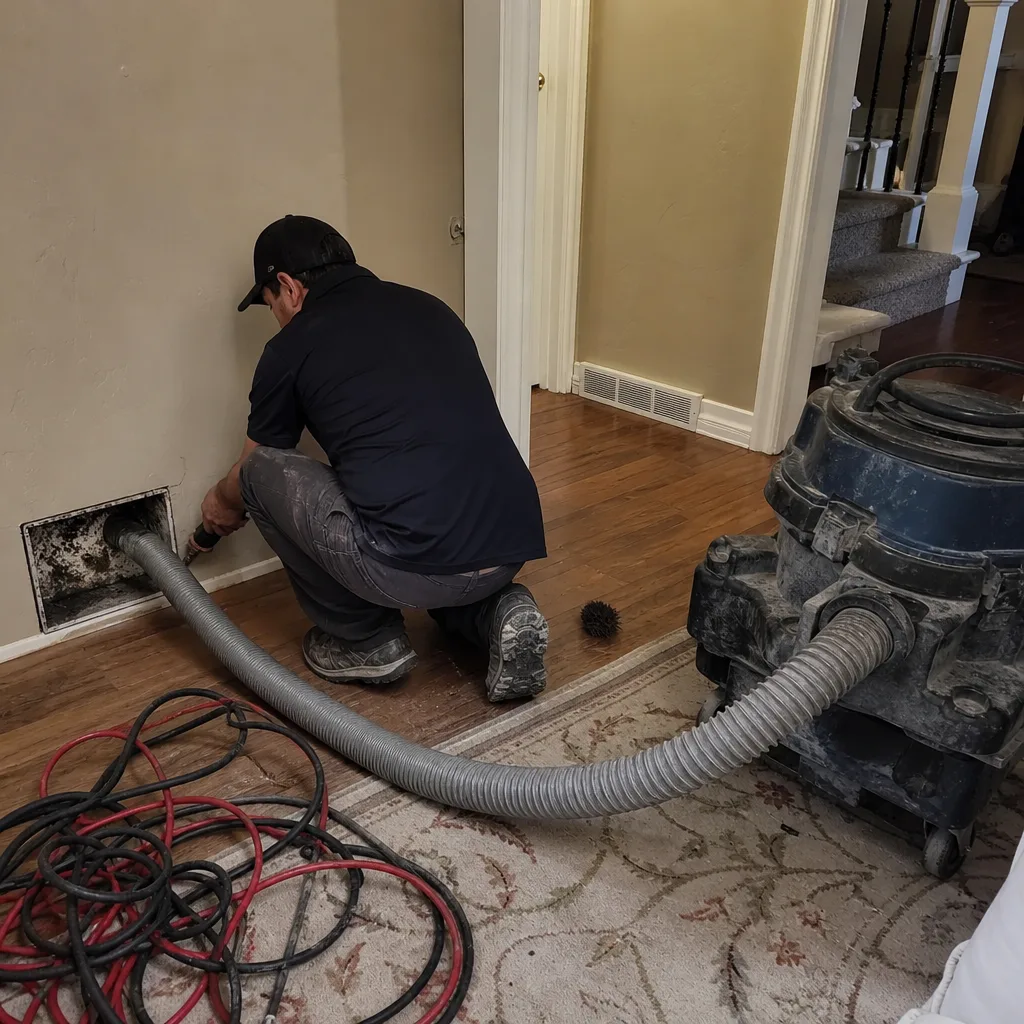 Before
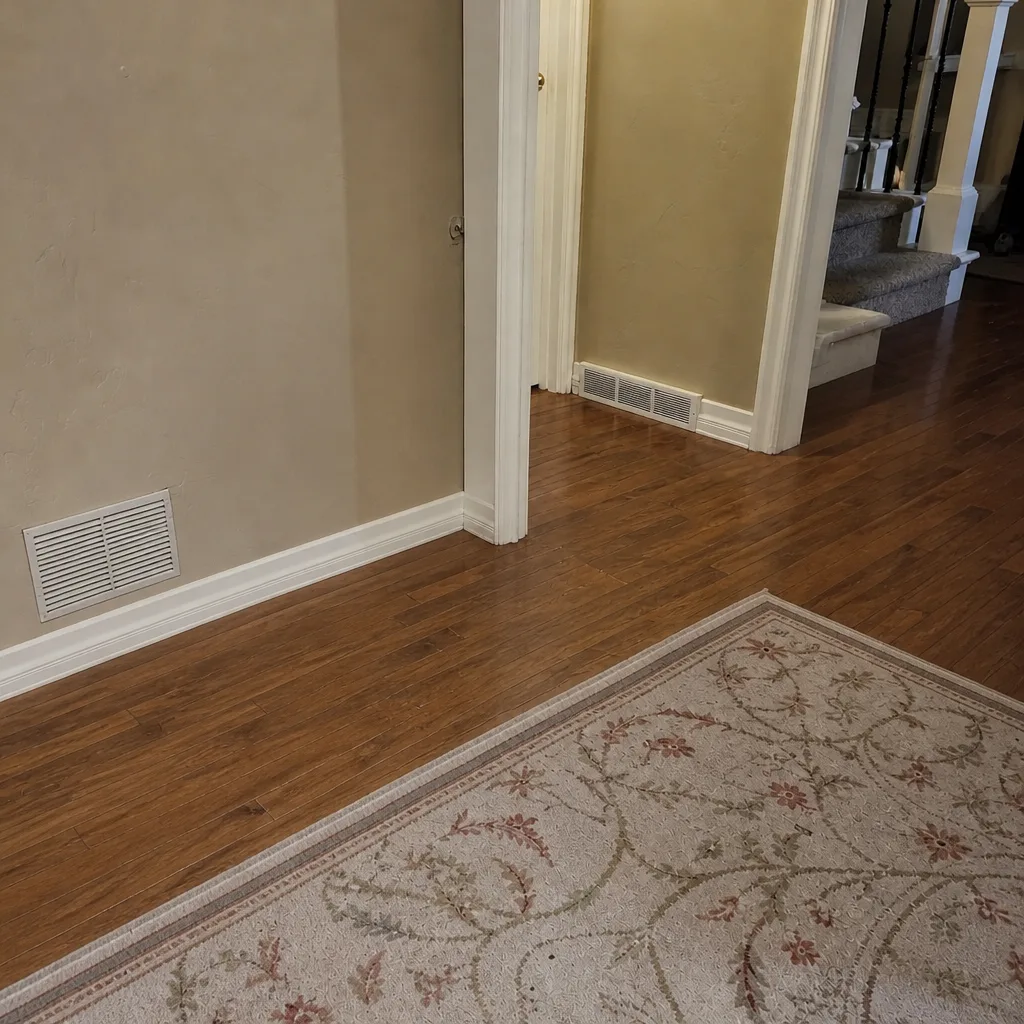 After
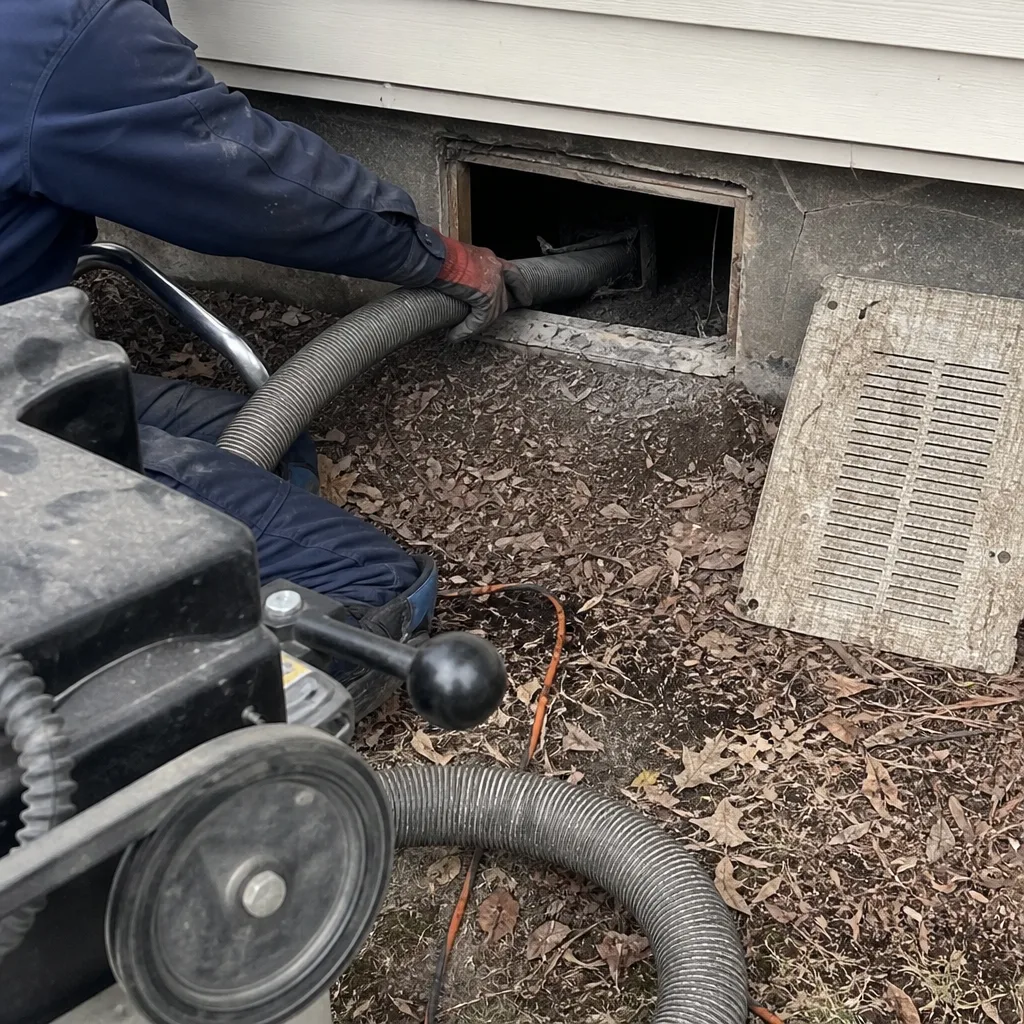 Before
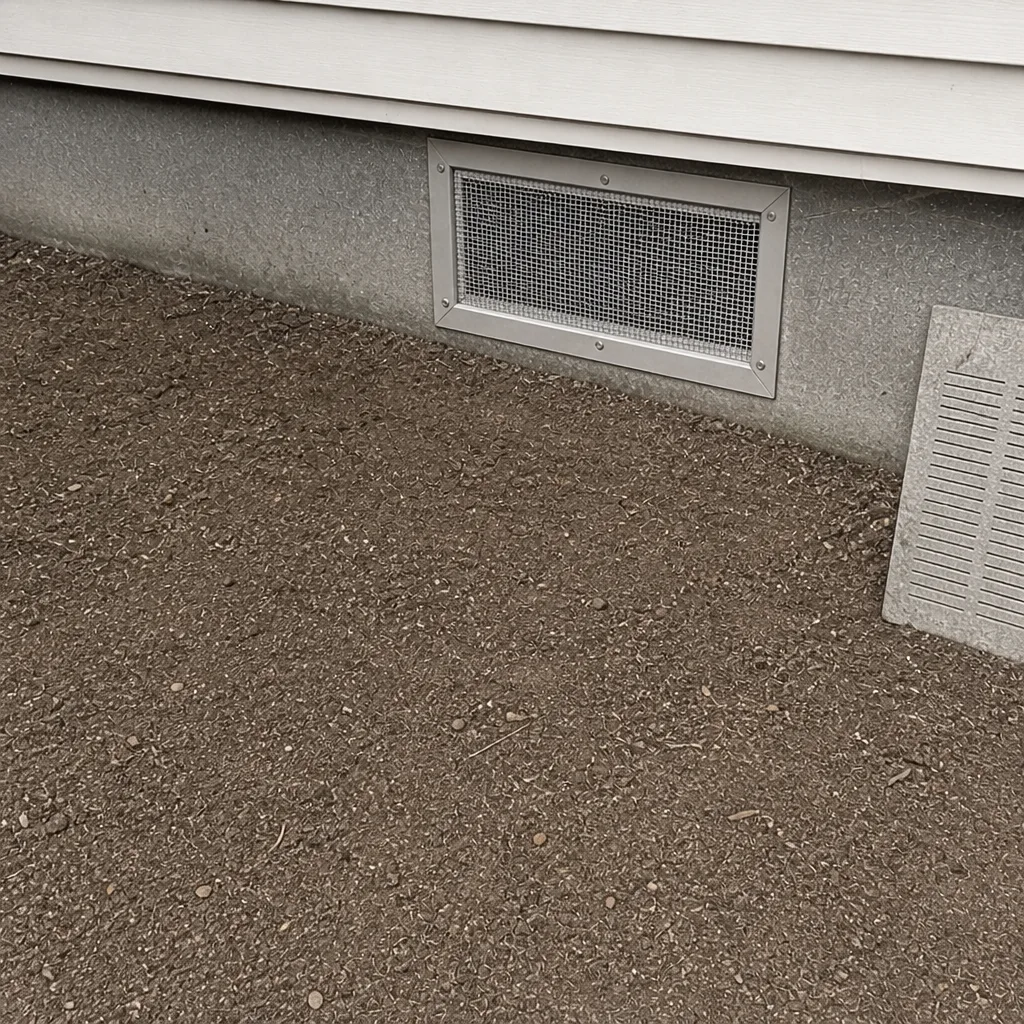 After
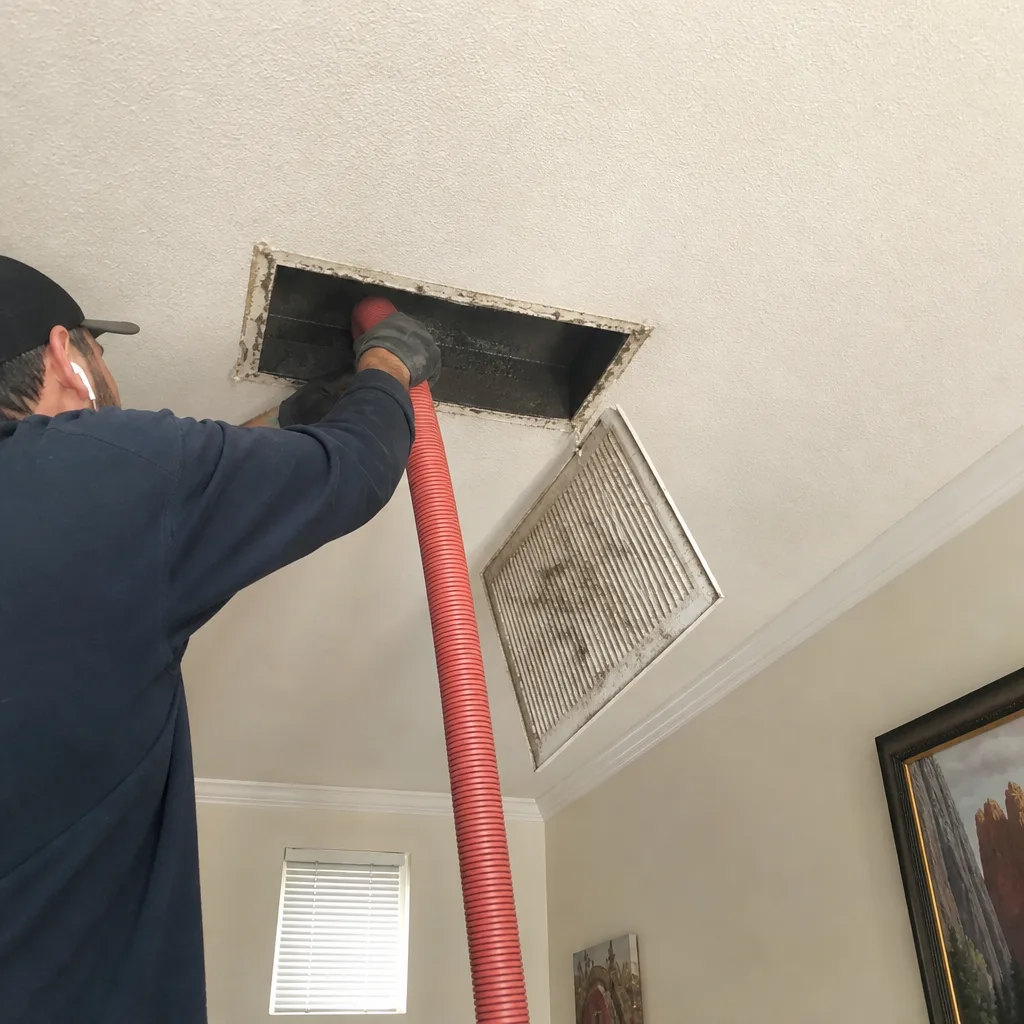 Before
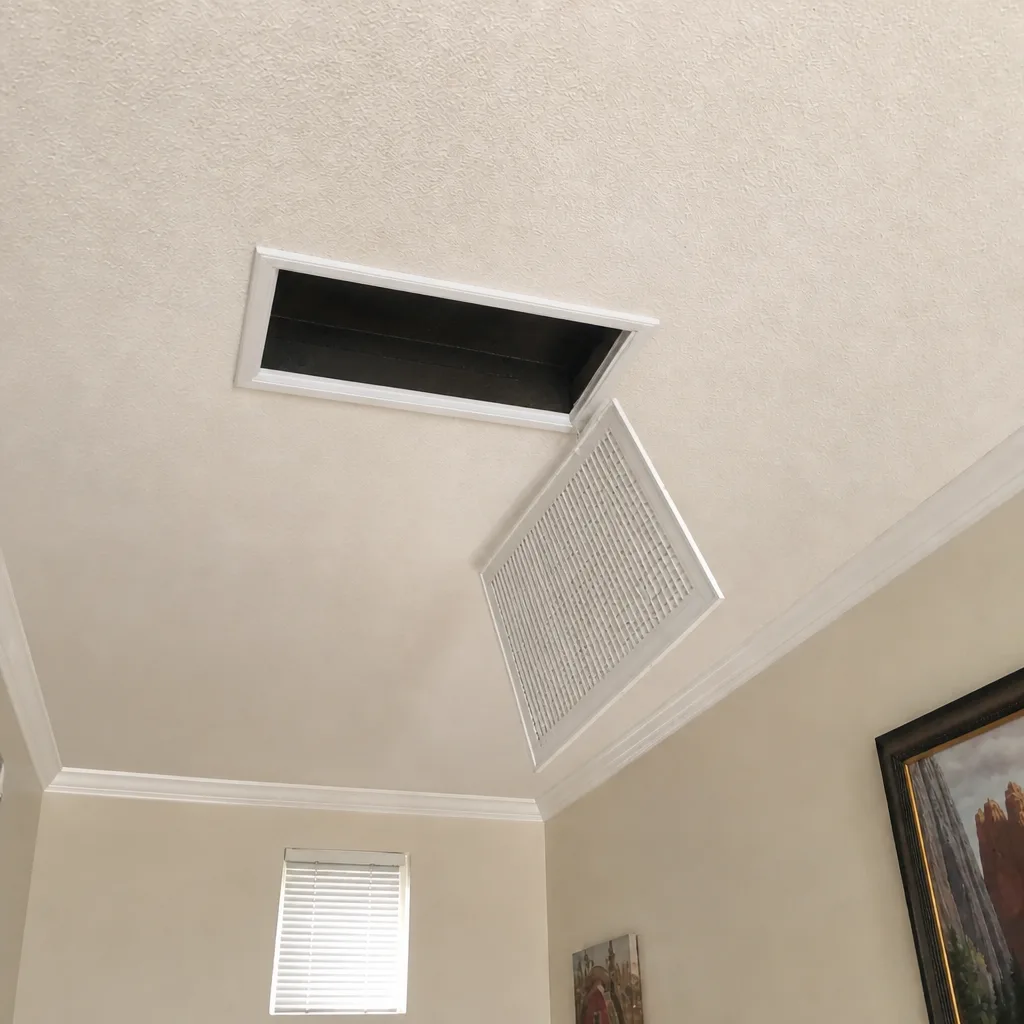 After
When to Call a Professional
Call a professional any time the issue involves the air-handling system itself, not just its cleanliness. If you’ve noticed a drop in airflow to certain rooms, a persistent dust problem after a filter change, a duct run that’s visibly kinked or pulled apart in the attic, or a musty smell that returns within weeks of cleaning, the next step is a walk-through by someone who can tell the difference between a cleaning problem and a repair problem. The same is true if a sale inspection has flagged duct work, or if you’ve inherited a home with duct modifications and no paperwork. West Jordan Air Duct Cleaning offers free estimates in West Jordan. Call (877) 302-8330. We answer 24/7. Fast dispatch from 7am to 7pm, Sunday through Friday, so a walk-through can usually be booked into the next opening.
Frequently Asked Questions
No. Routine air duct cleaning in West Jordan is treated as maintenance and does not require a permit. Cleaning, vacuuming, register and grille removal, blower and coil cleaning, and interior sealant application on intact ducts all fall outside permitted work. A permit becomes relevant only when the job moves from cleaning to modifying the duct system itself, such as replacing duct board or liner, cutting new access panels into rigid ductwork, or rerouting a run.
Any work that changes the physical configuration of the duct system, or replaces a component of it, generally triggers a mechanical permit under Utah’s code requirements. Examples include replacing a section of duct board, replacing internal duct liner, cutting new access into rigid sheet metal where none exists, and reconnecting a duct run that has separated. The city building department has the final say on any specific scope, and a quick call to confirm before work begins is worth the time.
Applying sealant or encapsulant to the interior of existing, intact ductwork generally does not require a permit. The system isn’t changing shape, and the work is treated as maintenance and part of a standard cleaning. Duct sealing that involves new penetrations, rerouting, or replacing duct board, however, moves into mechanical modification and generally does require a permit. If the sealing is part of a larger repair scope, treat it as permitted work.
Contact the West Jordan City building department and ask about their retroactive permit process. In most cases you can obtain a post-construction permit, have the work inspected, correct any deficiencies, and get a final inspection record to provide to the buyer. The key is to produce documentation before the transaction stalls. A scope-of-work letter from the contractor who did the work, along with their invoice and any photos they have, makes the process much smoother.
A scope-of-work letter should clearly separate cleaning from modification. It should list every duct run and component being cleaned, separately list any repair or modification being recommended with specific measurements or materials, state whether a permit is required and who will pull it, and explain the process for notifying the homeowner if additional issues are discovered mid-job. Get it in writing and signed before work begins, and keep it with your home’s maintenance records.
There’s no single answer that fits every home, but a reasonable default is every few years, sooner if you’ve had renovation work, a pest issue in the ductwork, visible debris at the registers, or a persistent dust or allergy problem that doesn’t improve with filter changes. Homes with construction-era duct board or poorly sealed flexible runs may benefit from a condition inspection more often, whether or not cleaning is needed. Call (877) 302-8330 for an exact quote. Estimates are free.
The Bottom Line
Air duct cleaning itself is maintenance and needs no permit. What needs attention is the line where cleaning crosses into modification: cutting new access, replacing duct board or liner, rerouting runs, or reconnecting separated ducts. That work is governed by Utah’s mechanical code and enforced through the West Jordan City building department, and it’s the work most often missed when a homeowner is deciding what to authorize. Get a written scope-of-work letter before the job begins, confirm with the city whether your scope needs a permit, and keep the permit and inspection records with your home’s files. Do that, and the permit question becomes a non-issue whether you’re cleaning ducts this month or selling the house next year. Call (877) 302-8330. We answer 24/7. Fast dispatch from 7am to 7pm, Sunday through Friday.
Written by the team at West Jordan Air Duct Cleaning.