
Last updated November 24, 2026
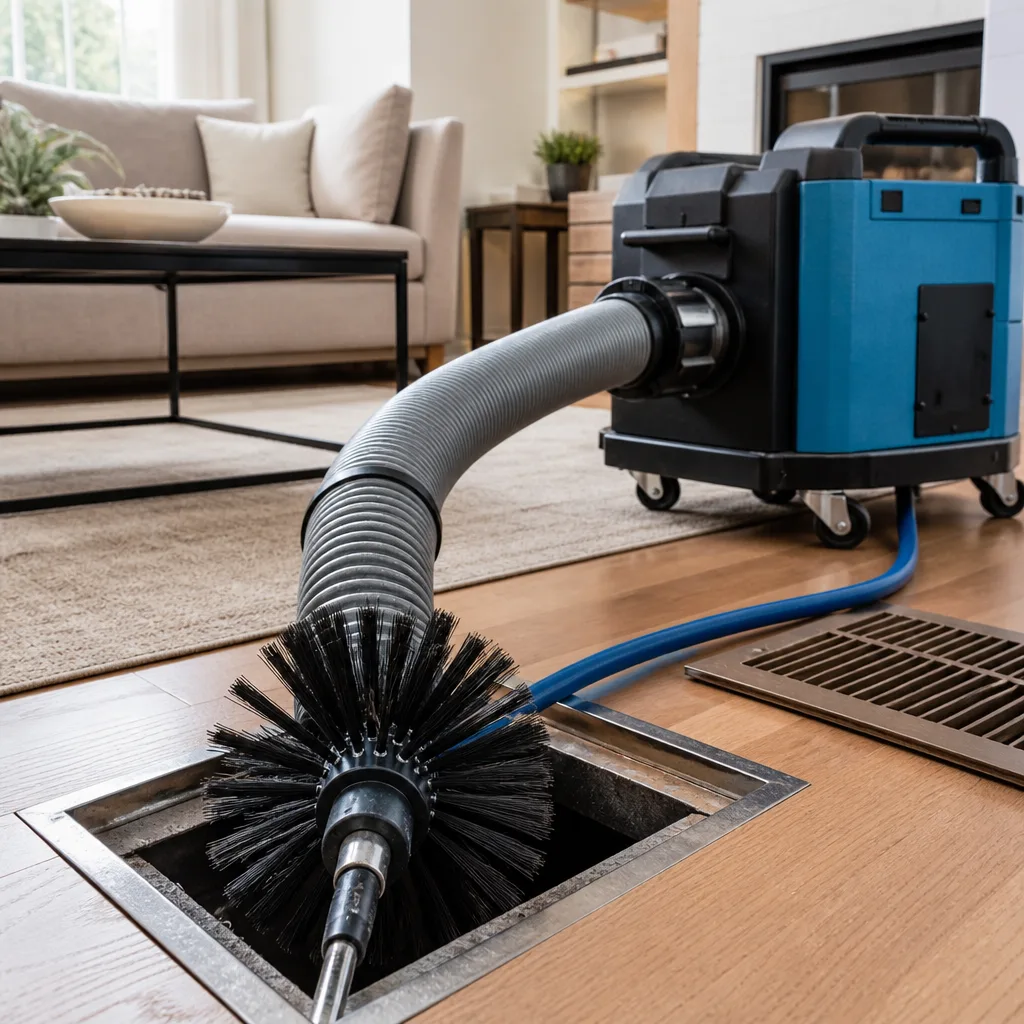 Whole-home duct cleaning
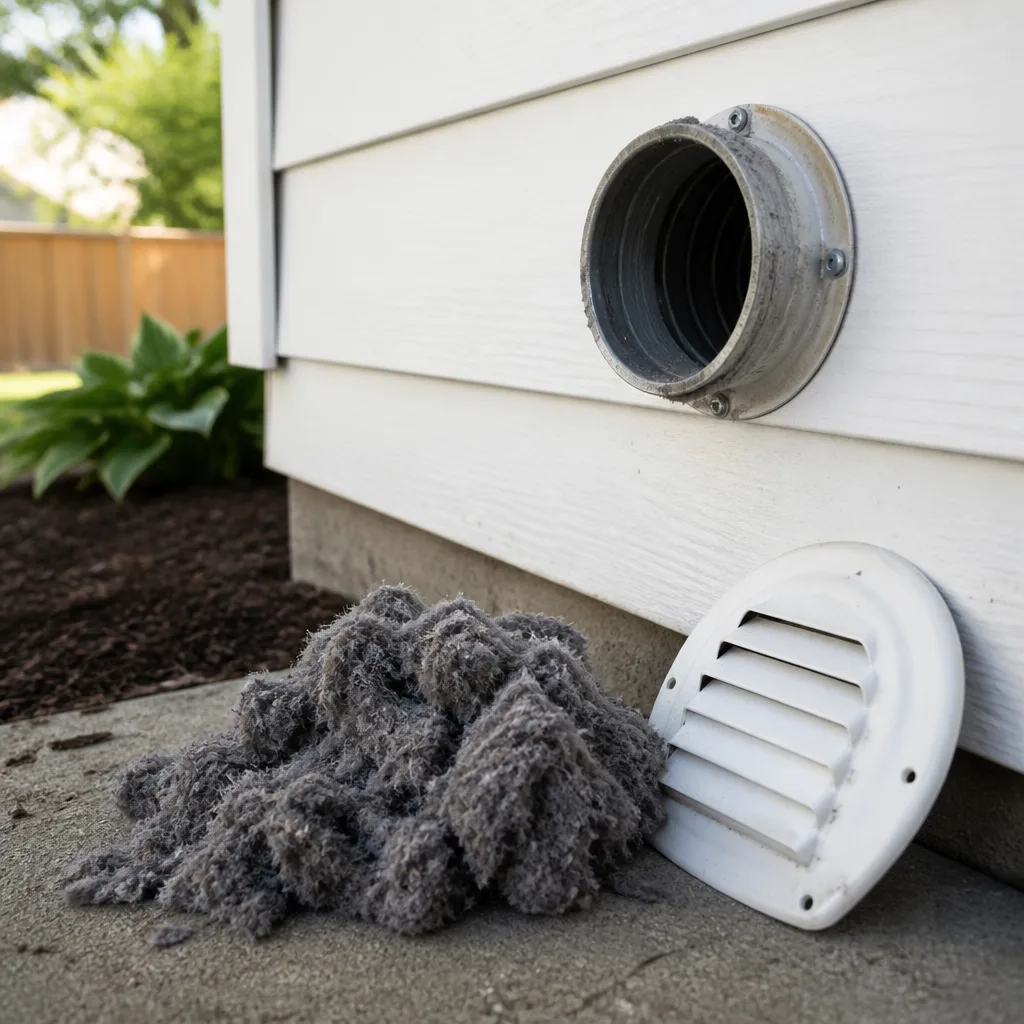 Dryer vent cleaning
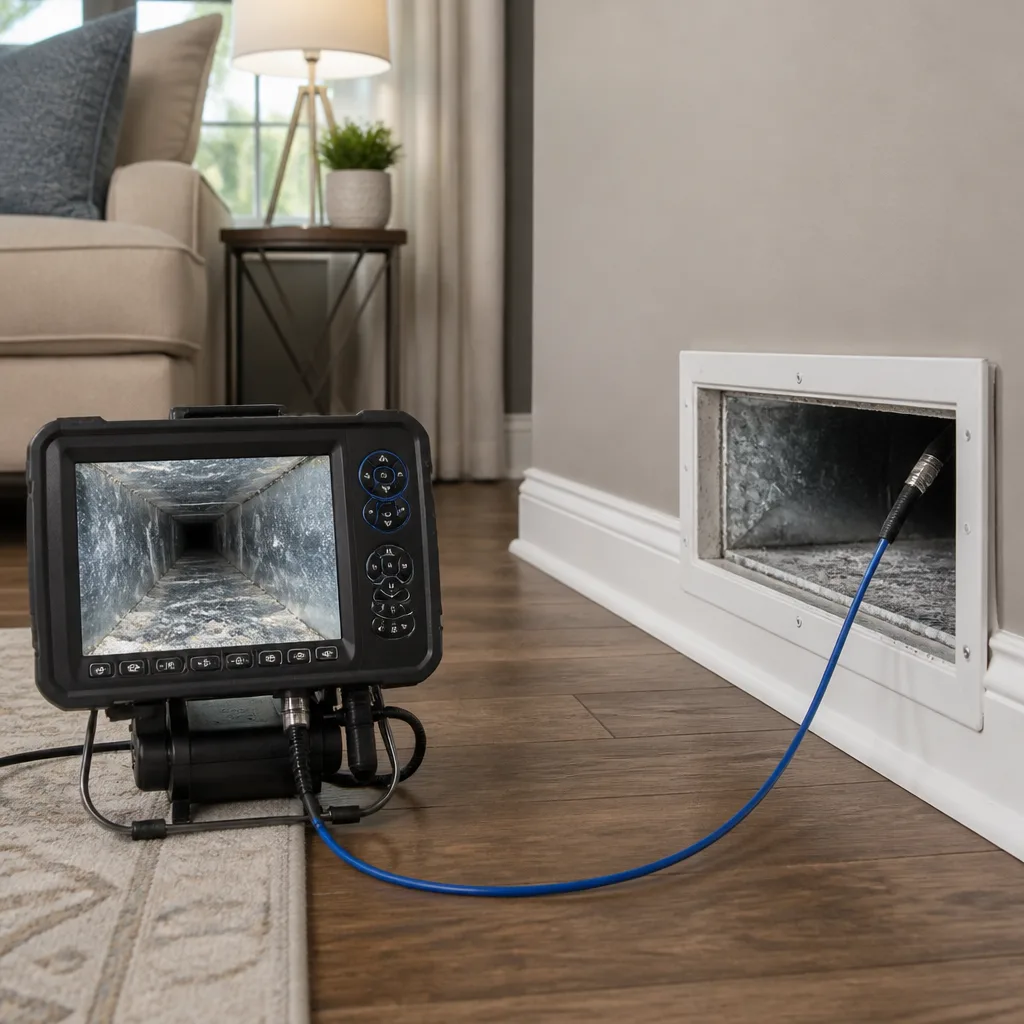 Camera inspection
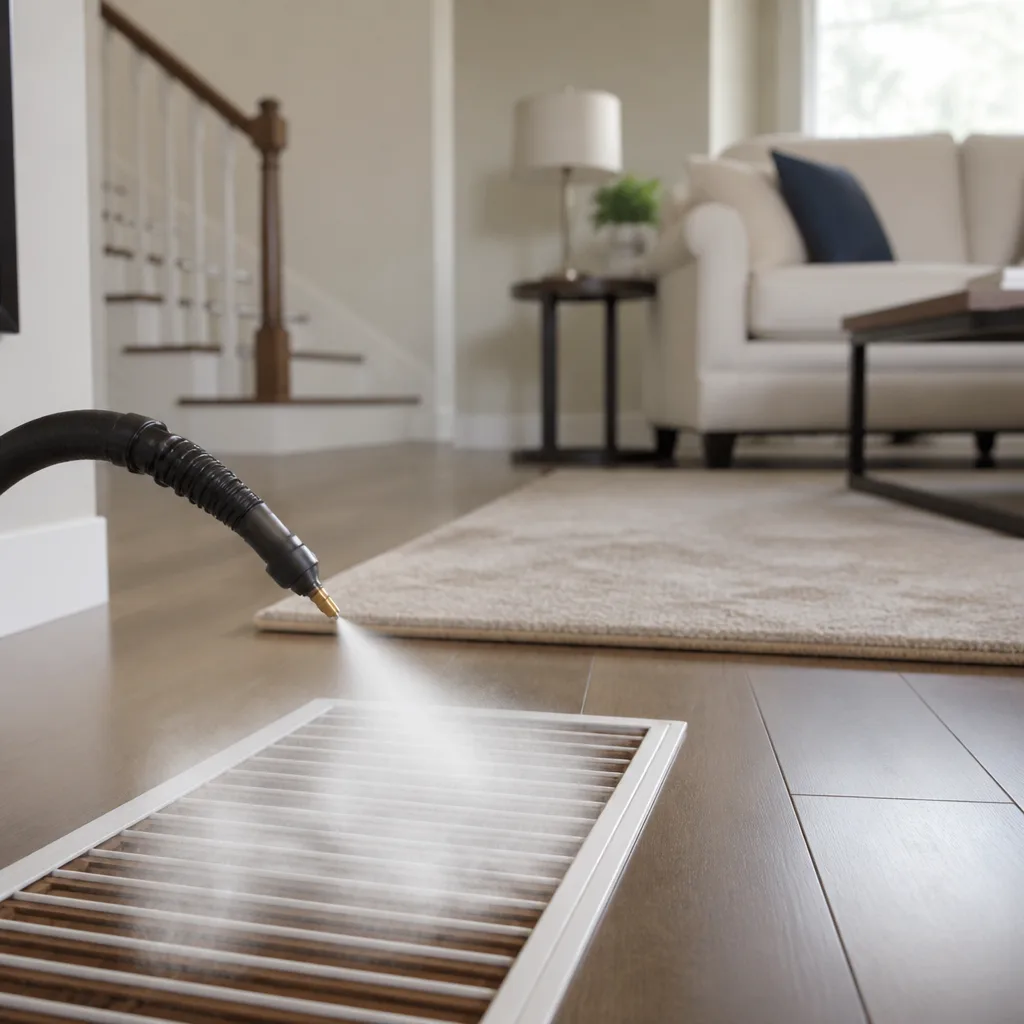 Sanitizing & deodorizing
Whole-system duct and dryer vent check with before-and-after photos - you see exactly what came out of your vents
That "$99 whole-house special" is a bait ad - the real number appears once they are in your hallway, or the "clean" is a shop-vac at the register. We photograph the inside of your ducts before and after instead.
Air Duct Cleaning Cost Breakdown: The West Jordan Homeowner’s Reference for 2026
A $149 whole-house duct cleaning offer in West Jordan almost certainly means a consumer-grade portable vacuum, no air handler access, and a per-vent upsell model. The advertised price is a door-opener, not a deliverable. That’s the uncomfortable truth behind the pricing spread you’ll see when you start calling around: quotes for what sounds like the same job land anywhere from $150 to $800, and the gap isn’t random. It maps almost perfectly onto equipment capability and scope. This guide breaks down exactly what drives that range, what each add-on should cost separately, how West Jordan’s housing stock affects the number, and how to compare two quotes line by line so you’re comparing identical scopes rather than headline prices.
Quick Answer
Air duct cleaning in West Jordan typically costs $150 to $800 for a full-system job, with most single-family homes falling in the $350 to $550 range once supply and return lines, the air handler, and a camera inspection are included. The low end of that range usually reflects consumer-grade portable equipment and supply-only cleaning, while the high end reflects truck-mounted or high-CFM equipment, multiple technicians, full-system scope, and add-ons like sanitizing or duct sealing. The written estimate you receive before any work starts is the price you pay – not a coupon figure that grows once the technician is on site.
Styles & brands we work with
- Whole-home duct cleaning
- Dryer vent cleaning
- Camera inspection
- Sanitizing & deodorizing
Table of Contents
- What Actually Drives Air Duct Cleaning Cost in West Jordan
- Truck-Mounted vs. Portable Equipment: The CFM Difference
- Per-Vent Pricing vs. Flat-Rate Full-System Pricing
- Add-On Services and What Each Should Cost Separately
- West Jordan-Specific Cost Factors: Home Age, Layout, New Construction
- How to Compare Quotes: The Line-Item Template Every Quote Should Itemize
- Why Some Quotes Are So Much Cheaper
- Common Mistakes to Avoid
- When to Call a Professional
- Frequently Asked Questions
- The Bottom Line
What Actually Drives Air Duct Cleaning Cost in West Jordan
Four things move the price more than anything else: the equipment brought into the home, the number of technicians on the job, whether the scope covers the return side and the air handler or just the supply runs, and whether a camera inspection is included. Most homeowners compare quotes on the headline number alone, which is exactly why the ranges look so chaotic.
When you look at an air duct cleaning quote in West Jordan, here’s what each of those drivers should translate to on paper:
- Equipment: A truck-mounted or high-CFM portable unit with a HEPA filtration stage costs the operator real money to run. A shop-vac rig costs almost nothing. That difference is the single widest gap in the whole price range.
- Technician count: Two technicians working simultaneously – one at the air handler, one moving through the vents – compresses a job from a full day into a few hours and produces a more complete result. It also costs more, and it should.
- Full-system scope: Supply-only cleaning leaves the return ducts and the air handler untouched, which is where a large share of accumulated debris sits. Full-system scope means opening the air handler, cleaning the blower compartment, and treating the return runs.
- Camera inspection: A push camera inside the ductwork verifies condition and catches things a vacuum can’t reach – collapsed flex runs, loose joints, rodent entry, or drywall dust in a newer home. Skipping it is how “cleaning” becomes guesswork.
In our experience working with West Jordan homes, the most common surprise is how much of the price gap collapses once you ask two questions of every bidder: What equipment are you bringing in, and does your scope include the air handler and the returns? The answers tell you whether you’re comparing two different services or two versions of the same one.
Truck-Mounted vs. Portable Equipment: The CFM Difference
CFM – cubic feet per minute of airflow through the vacuum – is the number that separates real duct cleaning from surface vacuuming. A consumer-grade portable unit typically moves a few hundred CFM at the hose. A truck-mounted or heavy commercial portable with a HEPA stage moves several times that. That airflow is what actually dislodges debris from the length of a duct, not just the opening a hose can reach.
Think about what a duct run looks like from the inside: a long, sealed tube with turns, joints, and branch connections. A low-CFM vacuum can pull the loose dust at the register, but it can’t create the negative pressure along the full length of the run that pulls settled debris back toward the collection point. That’s why a cheap “cleaning” can leave visual traces of dust in the same registers within weeks. The debris was never fully removed; it was disturbed.
This is also where the equipment brands matter, and where a serious operation shows it. Commercial-grade systems – the class of equipment used in environmental remediation work, and the category West Jordan Air Duct Cleaning works with – combine high airflow with HEPA filtration so that what gets dislodged gets captured, not pushed into your breathing space. Familiarity with the air-quality side of the system matters too: if a company services Honeywell and Aprilaire components, the technician understands filtration and humidity control, not just vacuuming.
Here’s a practical rule: if a bidder can’t tell you what equipment type and what CFM capacity they’ll be running, the price they quoted is only half a price. The scope that equipment allows is the other half.
Per-Vent Pricing vs. Flat-Rate Full-System Pricing
A per-vent price looks cheaper until you multiply it. A 2,400-square-foot West Jordan house often has 12 to 20 supply vents plus several returns, and per-vent quotes usually exclude the returns and the air handler entirely. Run the math on a “low” $25-per-vent quote across 16 vents and you’re near $400 – for supply-side work only – before anyone touches the returns or the blower compartment.
There’s a deeper structural problem with per-vent pricing: it pays the company more every time a technician counts another vent. That creates an incentive to find vents. A flat, full-system price removes that incentive. The scope is the house, not the register count.
Neither model is dishonest by itself – per-vent pricing can be legitimate for small homes with a handful of runs. What matters is whether the quote itemizes the system boundaries. When you compare models, ask for these in writing:
- Number of supply runs and number of return runs included.
- Whether the air handler and blower compartment are in scope.
- Whether the price is flat for the house or scaled per register.
- What happens to the price if the technician counts one more vent than the estimate assumed.
If the fourth question produces a shrug, you’ve found a quote that’s designed to move. A flat price per system, agreed before any work starts, is the honest structure – and it’s the one that makes the estimate and the invoice match.
Add-On Services and What Each Should Cost Separately
Add-ons are where honest pricing and padded invoices part company. Each add-on below has a legitimate price justification when it’s actually needed – and every one of them should be quoted as a separate line, with a separate reason, before the job begins. Here’s the typical range for each in the West Jordan market:
- Dryer vent cleaning: typically $100 to $200. A separate pathway from the HVAC ducts, and a genuine safety item – lint accumulation is a fire risk. Cleaning it is a short, distinct job, and bundling it with duct work is common practice when it’s priced as its own line. If your last dryer vent cleaning was more than a couple of years ago, it’s worth asking about; see our page on dryer vent cleaning.
- Coil cleaning (evaporator and condenser): typically $100 to $250 depending on access. Dirty coils drive up energy use and can freeze the system in summer. Coil cleaning is often folded into a proper HVAC cleaning scope, but it should be itemized so you can see what you’re paying for.
- Sanitizing / antimicrobial application: typically $100 to $250. Worth it after confirmed microbial growth, water intrusion, pest activity, or a long period of stale air. Not necessary on every job, and a company that insists it is on every job is upselling. Professional-grade protective products should be part of the process when sanitizing is done – ask what product and what application method is used.
- Duct sealing: typically $250 to $600 depending on the number of leaks and the accessibility of the runs. This is the add-on with the clearest long-term payoff, because unsealed ducts lose conditioned air into crawlspaces and wall cavities. It also attacks the root cause of contamination re-entering a home, rather than just cleaning around it. Duct repair and sealing together belong with the cleaning when the ducts are structurally compromised – see West Jordan Air Duct Cleaning for how that combines.
A competent company prices these as discrete items, explains when each one is warranted, and lets you decline. Not every home needs all four. A well-scoped cleaning on solid, sealed ductwork may need none of them.
West Jordan-Specific Cost Factors: Home Age, Layout, New Construction
West Jordan has a housing mix that pushes prices in both directions, and it’s worth understanding which category your home falls into before you call.
Pre-2000 homes. Many of West Jordan’s older homes – especially in neighborhoods built through the 1980s and 1990s – have more complex duct runs than the newer subdivisions. That can mean original flex duct with sagging or collapsed sections, retrofitted additions where the ducts were extended with mismatched materials, or systems where the return path is less direct than a modern design. Cleaning those runs takes longer, requires more careful equipment handling, and often reveals a leak or loose joint that needs sealing. Expect the upper-middle of the range, and budget for camera inspection as a near-necessity rather than an optional extra.
New construction and drywall dust. A recently built or renovated West Jordan home presents a different problem: fine drywall and construction dust that settles into every duct, register, and blower compartment. It’s fine-grained, it clings, and it’s not something a homeowner should try to flush out with a shop vac. Post-construction remediation is a defined scope – it costs less than a full older-home cleaning because the ducts are new and accessible, but it requires the right filtration so the dust doesn’t get redistributed. If you just moved into a new build, don’t skip it; the dust has to go somewhere, and without cleaning, it goes into your air.
Two-story layouts. West Jordan’s two-story homes carry a labor premium. The upper floor’s ducts run through a second-story chase, and reaching the air handler and upper branches often takes longer, adds ladder work, and requires a second technician to avoid contaminating the connection points. That’s a legitimate cost. If a quote on a two-story home comes in at the same price as a single-story, ask how the upper-floor runs are being reached.
Utah’s dry, dusty summers and valley dust. Wasatch Front dust loads the return side of the system over time, and a house that runs the air conditioner hard from June through September collects it faster. Homes near construction activity or open fields see it most. That’s an argument for keeping up with filter changes and for a full-system cleaning on a reasonable cadence, not for cleaning every year.
How to Compare Quotes: The Line-Item Template Every Quote Should Itemize
The single best defense against a mismatched comparison is demanding identical line items from every bidder. Here’s the template – hand it to each company and ask them to fill it in. A quote that can’t fill it in is telling you something.
- Equipment type and CFM: truck-mounted, high-CFM commercial portable, or consumer-grade portable? What filtration stage is used?
- Technician count: how many people on-site, and roughly how long will the job take?
- Supply runs included: number of supply registers cleaned.
- Return runs included: number of return registers cleaned.
- Air handler and blower compartment: in scope or not?
- Camera inspection: included, optional, or not offered?
- Add-ons itemized: dryer vent, coil cleaning, sanitizing, duct sealing – each with its own price and the reason it’s recommended.
- Before-and-after photos: will you receive images of your own ducts, and are they included in the base price?
- Total price and guarantee: is the price flat per system, and what is the satisfaction guarantee in writing?
Line-item six is worth special attention. Most homeowners have never seen the inside of their ductwork. A camera inspection produces evidence: before shots, after shots, and a record of what was actually found. A company willing to show you the inside of your own ductwork is a company that expects to be judged on the work. If a bidder offers no camera and no photos, the “cleaning” you’re buying is unverifiable – and unverifiable work is where low quotes make their margin.
Why Some Quotes Are So Much Cheaper
The industry’s bait-and-switch reputation exists for a reason. A headline figure well below the honest range isn’t usually a better operator; it’s a different business model. Here’s what tends to sit behind a very low quote:
- A consumer-grade portable vacuum with the CFM to reach register openings only.
- Supply-side scope only – the air handler and returns untouched.
- No camera inspection, so nothing is verified or documented.
- A per-vent model that expands the count once the technician is on-site.
- A sanitizing or “sealing treatment” that gets pitched as mandatory once the technician is in the door.
None of these is a scam by definition. But together they explain why a “cheap” job can end in an invoice larger than an honest full-system quote would have been. The way to close that gap is simple: one flat price per system, agreed in writing before the work starts, with a scope that names what equipment is used and what’s included. No per-vent teaser. No surprises. That’s the model a homeowner should hold every bidder to.
See the difference
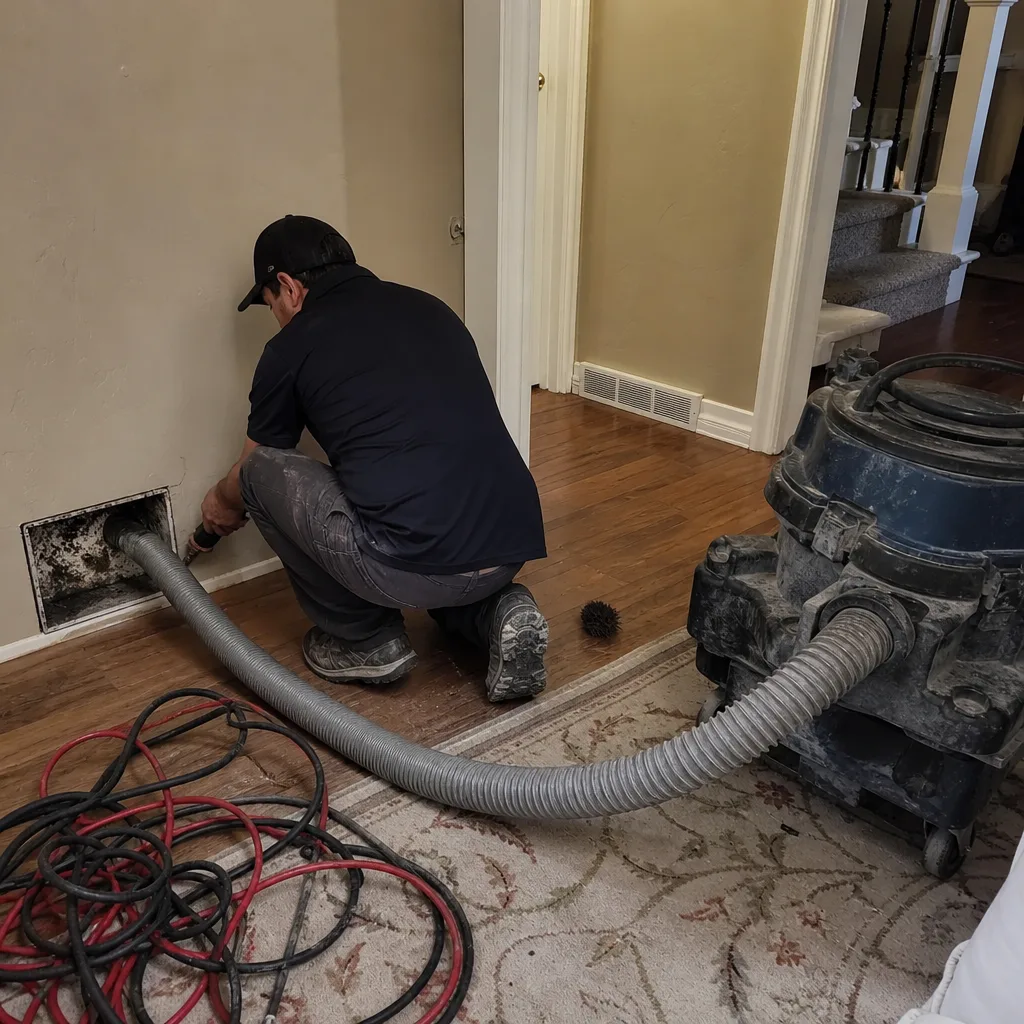 Before
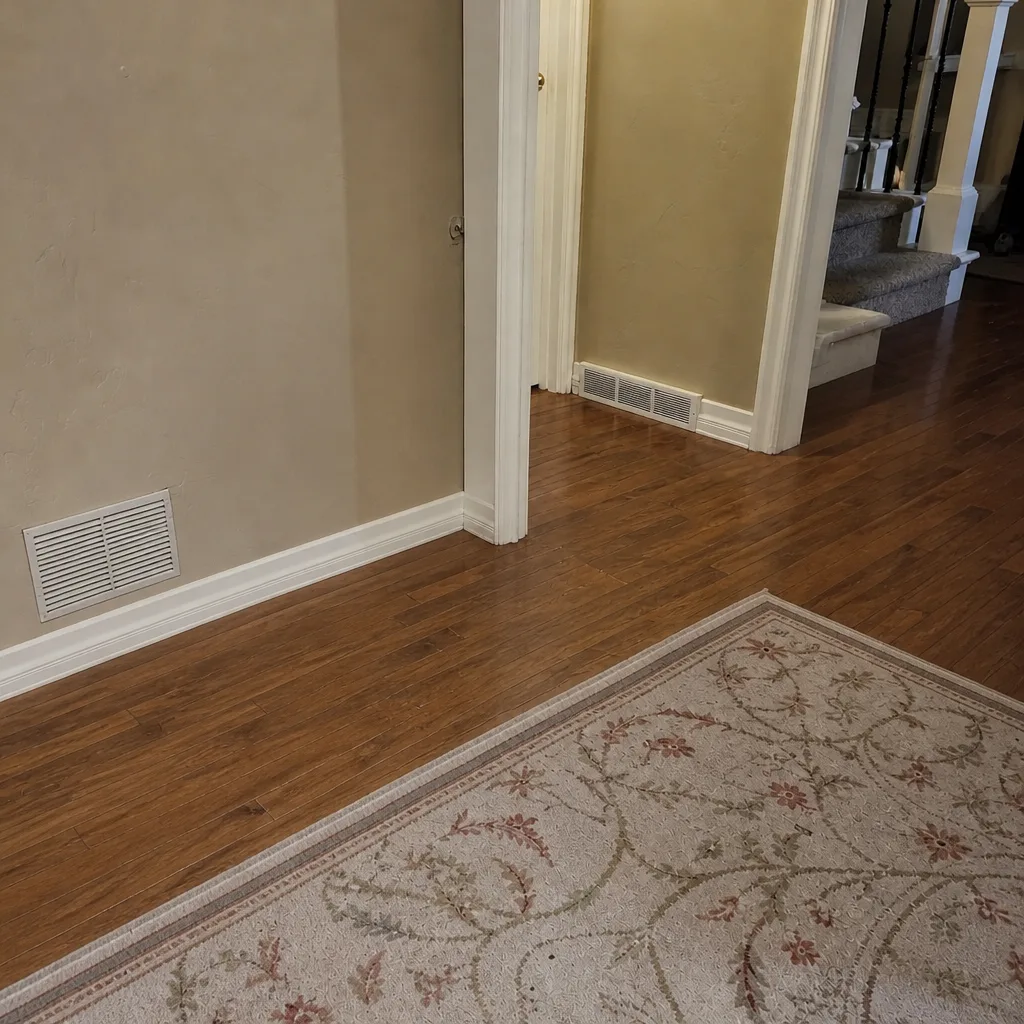 After
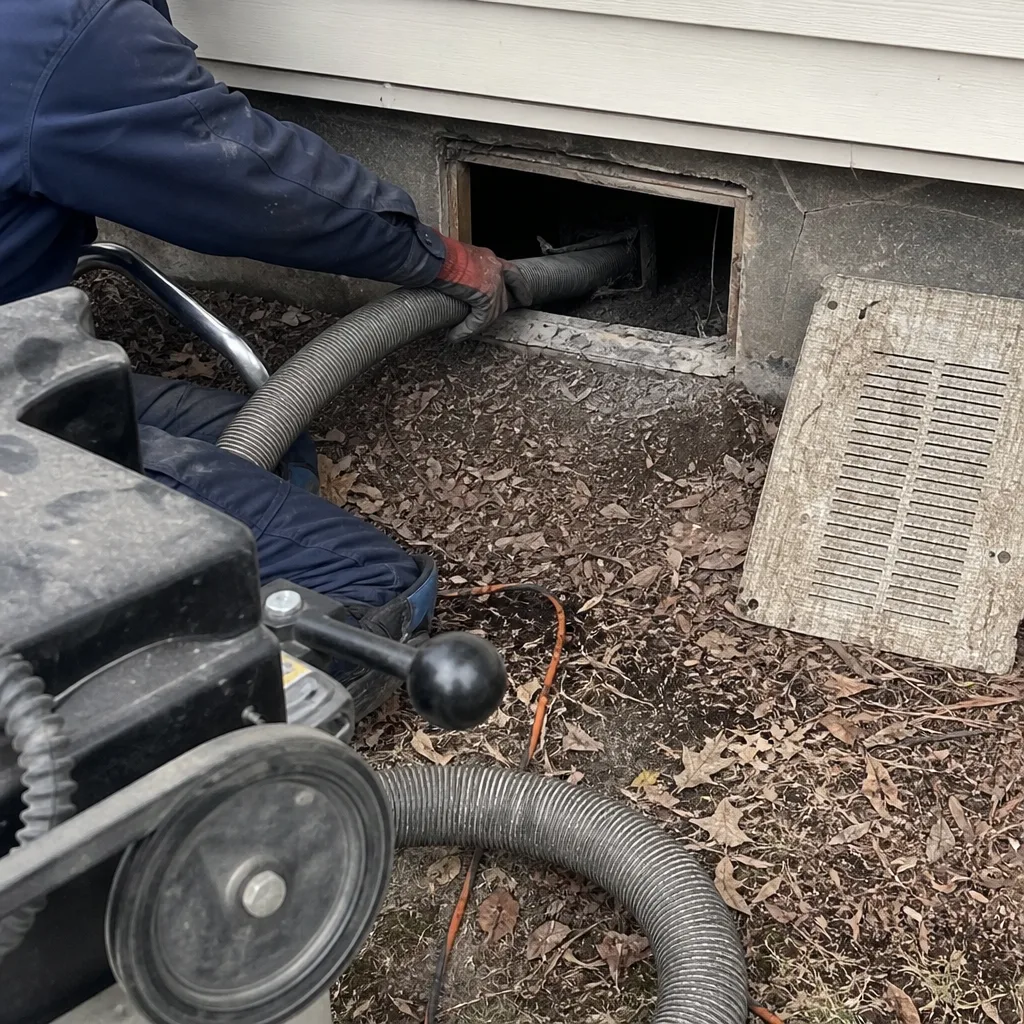 Before
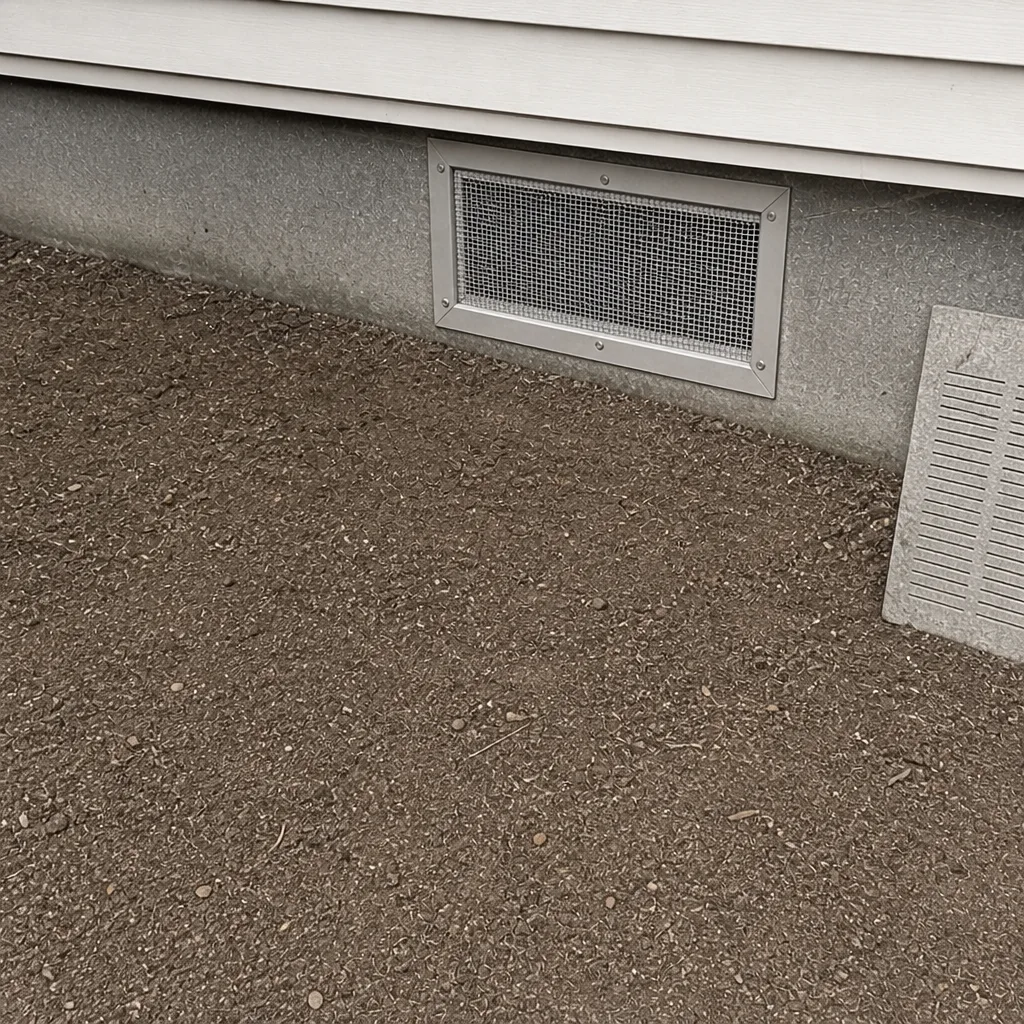 After
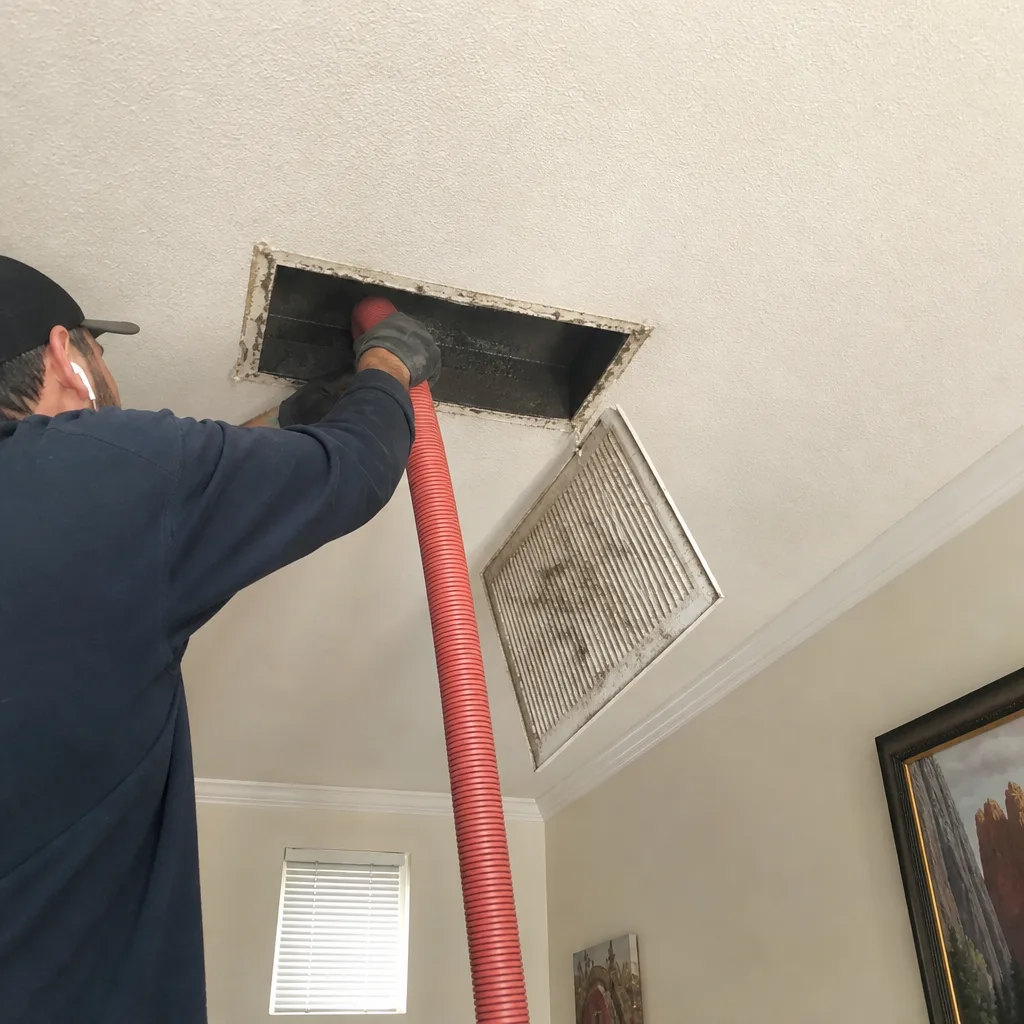 Before
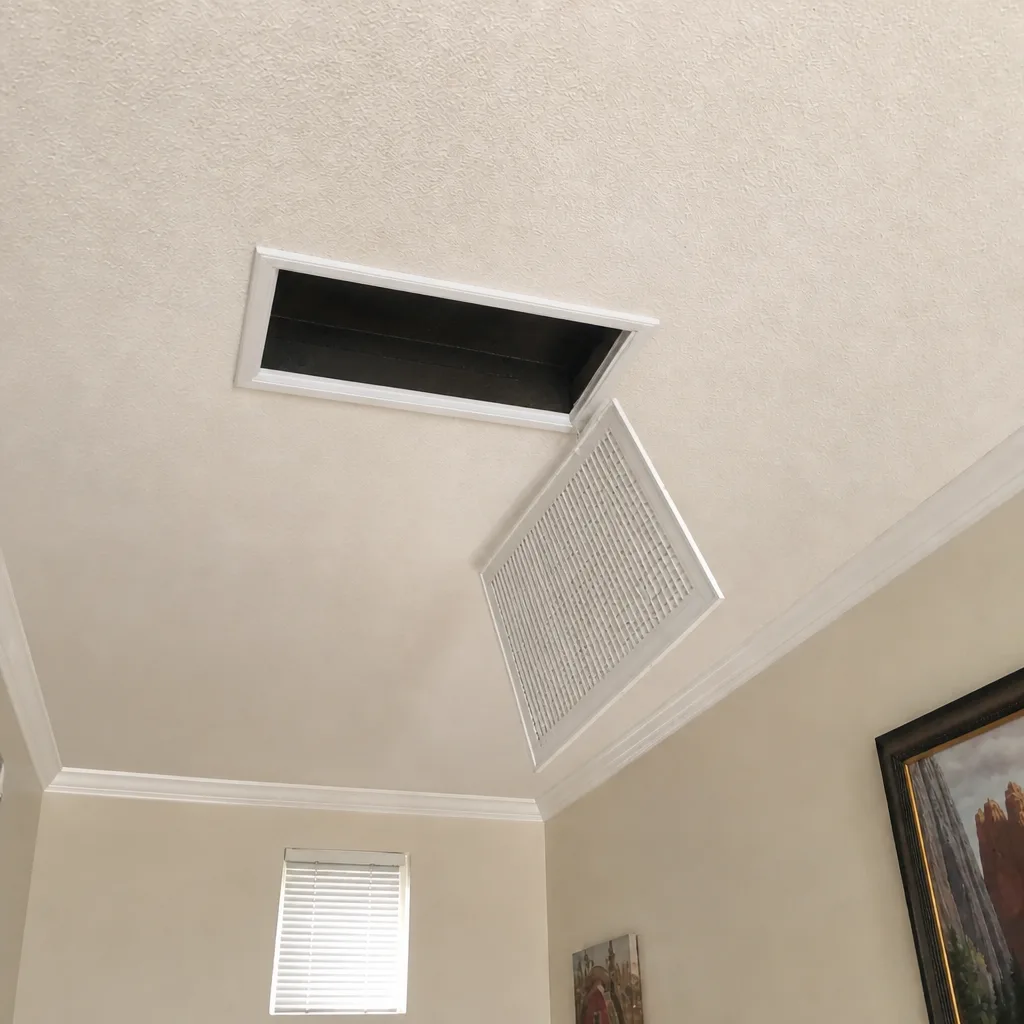 After
Common Mistakes to Avoid
- Comparing headline prices without comparing scopes. A $199 quote and a $450 quote are often not the same job. Ask for the line items before you decide either one is a deal or a ripoff.
- Assuming a low per-vent price is a per-vent total. Multiply it by your actual vent count, add the returns, and add the air handler. Then compare that number to a flat full-system quote and see if the “deal” holds up.
- Skipping camera inspection to save money. In a West Jordan home built before 2000, the camera is what catches a collapsed flex run or a loose joint – the things that matter more than the cleaning itself.
- Cleaning without addressing leaks. Cleaning ducts that leak conditioned air into a crawlspace is a job that will need repeating sooner. Duct sealing is the step that turns a cleaning into a fix.
- Accepting a same-day “emergency” duct cleaning pitch. Duct cleaning is a scheduled job. Urgency as a sales tactic is a sign the caller is being worked, not helped.
- Not asking for before-and-after photos of your own ducts. Without images of your specific system, you have no way to know the work was done. Ask, and make it a condition of the estimate.
- Overpaying for sanitizing on a system that doesn’t need it. Sanitizing has a real place: after pest activity, water intrusion, or confirmed microbial growth. On a clean, dry, well-maintained system, it’s optional.
When to Call a Professional
Not every home needs a full-system cleaning, and we’d rather tell you that than sell you one you don’t need. Call a professional when you notice visible dust blowing from registers shortly after cleaning, when a musty or stale smell lingers after filter changes, when you’ve had renovation or construction dust, after any pest activity or water intrusion in the ductwork, when the dryer takes noticeably longer than it used to (that’s a dryer-vent signal), or when a technician has flagged visible leaks, sagging flex runs, or disconnected joints. If you’re a new West Jordan homeowner inheriting a system of unknown history, a camera inspection is a reasonable first step before committing to a full cleaning. A trained professional should also handle the air handler and blower compartment – that’s a hard-wired component and not a homeowner job. West Jordan Air Duct Cleaning offers free estimates in West Jordan – call (877) 302-8330.
Frequently Asked Questions
Air duct cleaning in West Jordan typically runs $150 to $800 for a full-system job, with most homes landing between $350 and $550. The number depends on equipment type, technician count, whether the air handler and returns are in scope, and whether a camera inspection is included. The written estimate sets the final price, and it should be one flat price per system agreed before the work begins. Call (877) 302-8330 for an exact quote – estimates are free.
Low quotes usually reflect lower-capability equipment, a smaller scope (supply side only, no air handler), a per-vent model that expands once the technician is on-site, or paid add-ons pitched as mandatory. None of that is inherently dishonest, but it means you’re comparing different services. Ask each bidder what equipment they run, whether the air handler is included, and what the price does if they count more vents than expected. The answer tells you what you’re really being quoted. Call (877) 302-8330 for an exact quote – estimates are free.
Ask for before-and-after photos of your own ductwork, and make camera inspection part of the scope. Images of your specific runs – before and after – are the clearest proof, and a company that expects to be judged on the work will provide them without being asked. If a bidder won’t document the job, that’s the signal. Call (877) 302-8330 for an exact quote – estimates are free.
Most West Jordan homes don’t need it every year. Every three to five years is a reasonable baseline for a typical home, tightened after renovation dust, pest activity, water intrusion, or if filters are loading unusually fast. Homes that just changed hands or finished construction should have it done once and then follow the baseline. Call (877) 302-8330 for an exact quote – estimates are free.
Yes, typically. The upper floor’s runs are harder to access, often require additional ladder work, and usually require a second technician to avoid contaminating connection points. That’s a legitimate labor premium, not padding. If a quote on a two-story West Jordan home matches a single-story quote exactly, ask how the upper-floor runs will be reached. Call (877) 302-8330 for an exact quote – estimates are free.
Not necessarily. Sanitizing is warranted after pest activity, water intrusion, or confirmed microbial growth – typically $100 to $250 as a separate line. Duct sealing is the higher-value add-on for most homes, typically $250 to $600, because it stops conditioned air leaking from unsealed runs and reduces re-contamination. A well-scoped cleaning on sealed ductwork may need neither. Call (877) 302-8330 for an exact quote – estimates are free.
The Bottom Line
The wide range for duct cleaning in West Jordan isn’t noise – it’s information. A $150 quote and an $800 quote usually describe different equipment, different scope, and different degrees of verification. The way to read that spread is to demand a full-system scope, ask what equipment is being run, ask whether the air handler and returns are included, and insist on camera inspection with before-and-after photos. When you compare on line items rather than headline numbers, the honest quote usually looks like the better deal before you’ve written a check. One flat price per system, agreed in writing, is the standard to hold every bidder to – and the one we hold ourselves to.
Call (877) 302-8330 for a free estimate. We answer 24/7. Fast dispatch from 7am to 7pm, Sunday through Friday. Our technicians have up to 10 years of experience, and the local pro is licensed and insured as their state requires.
Written by the team at West Jordan Air Duct Cleaning.