
Last updated November 24, 2026
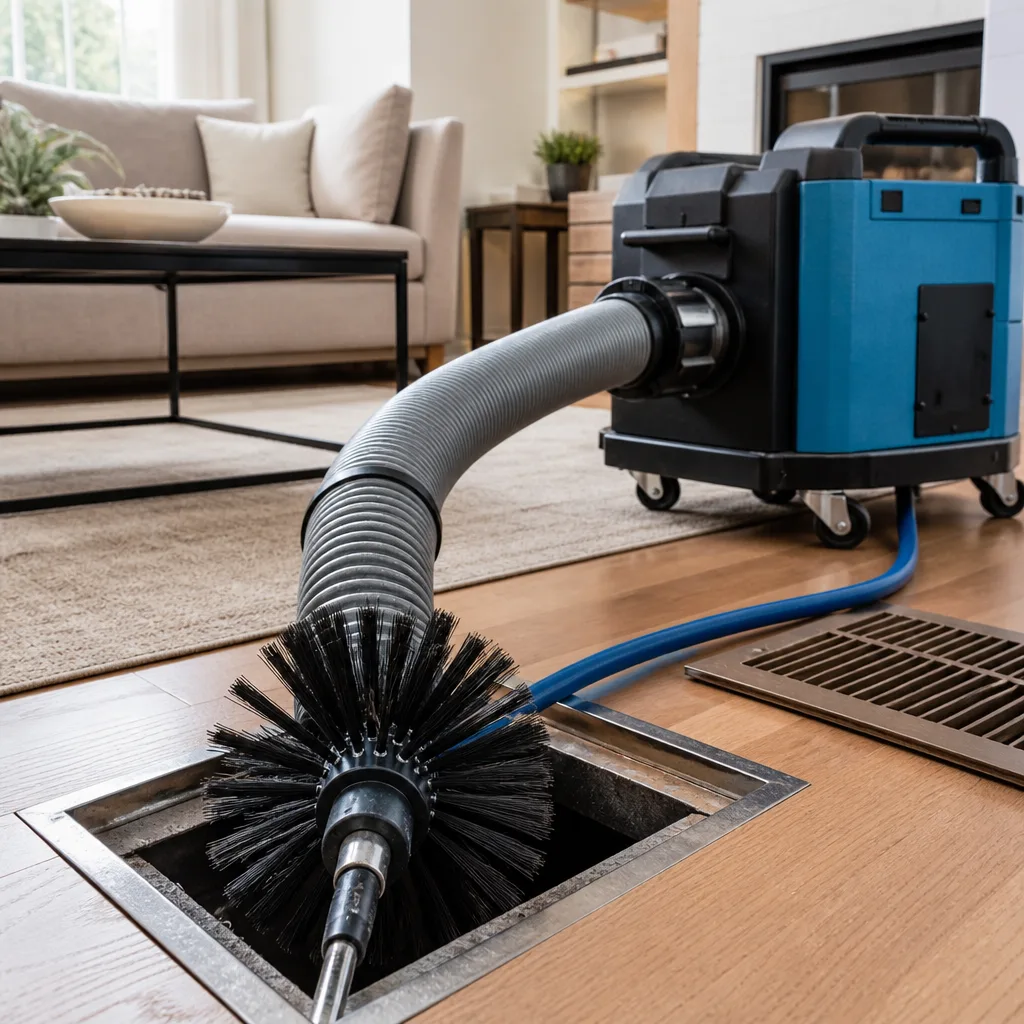 Whole-home duct cleaning
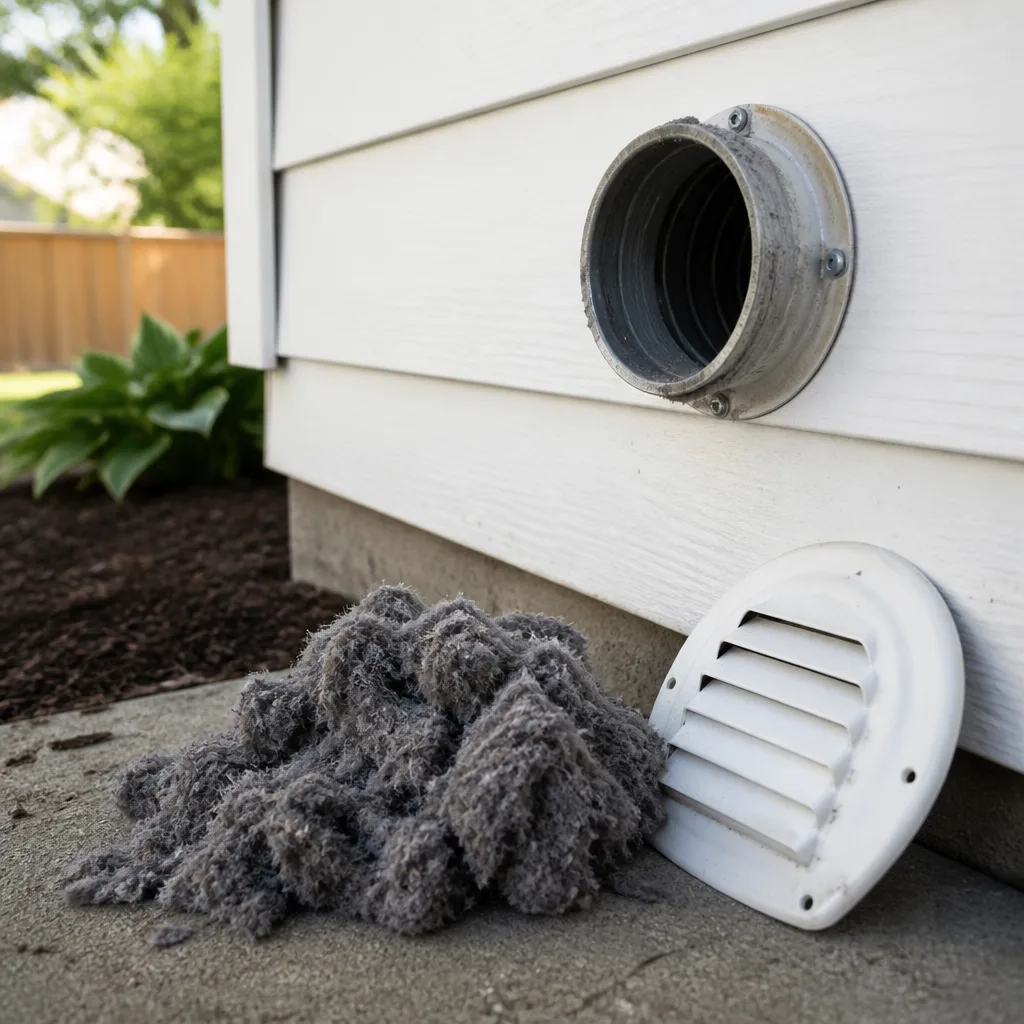 Dryer vent cleaning
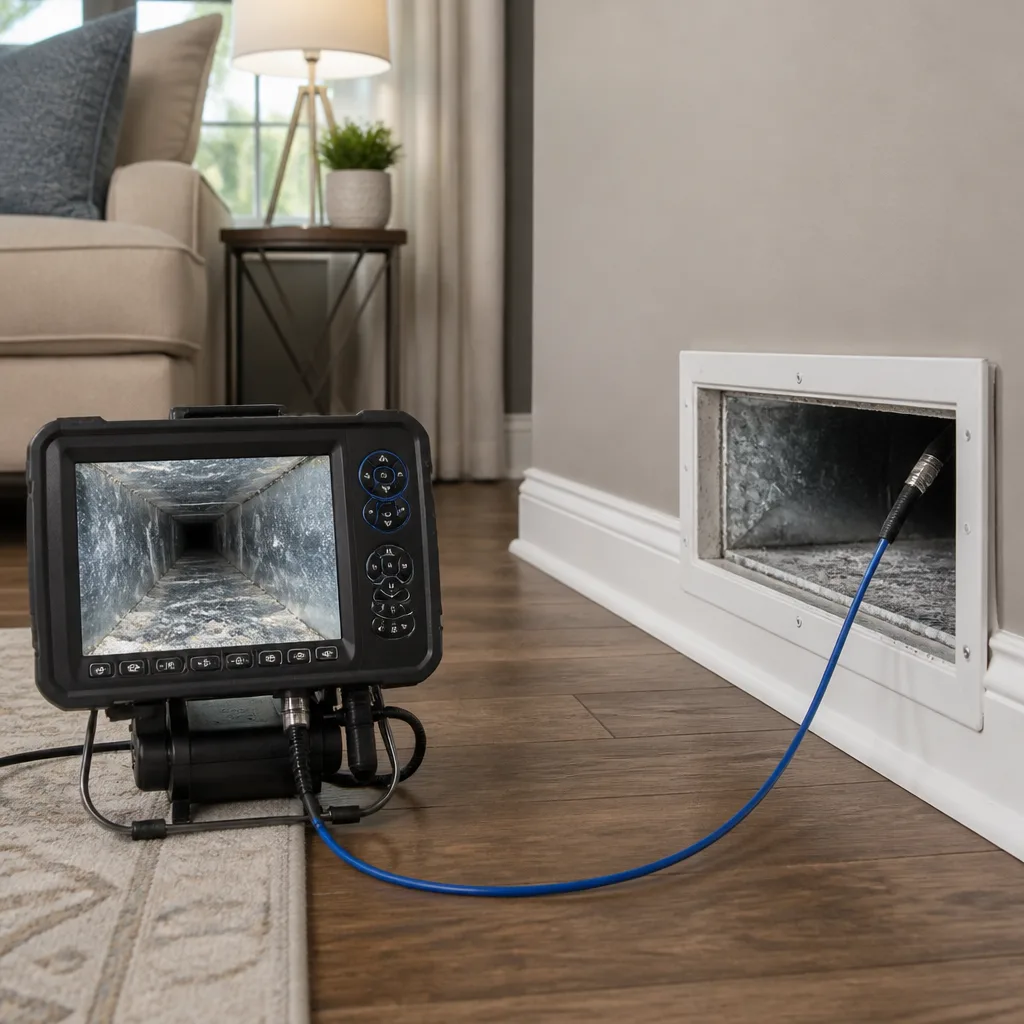 Camera inspection
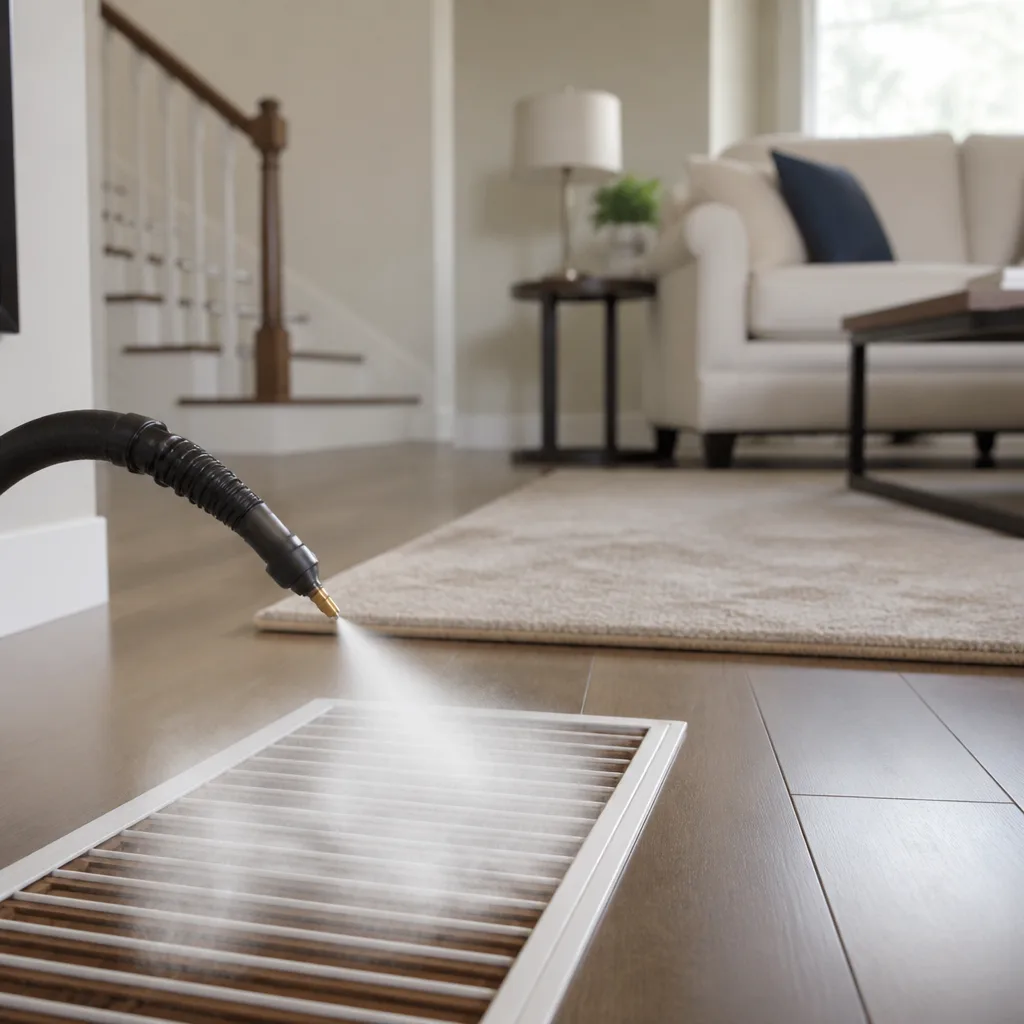 Sanitizing & deodorizing
Whole-system duct and dryer vent check with before-and-after photos - you see exactly what came out of your vents
That "$99 whole-house special" is a bait ad - the real number appears once they are in your hallway, or the "clean" is a shop-vac at the register. We photograph the inside of your ducts before and after instead.
Air Duct Cleaning Warning Signs: A West Jordan Homeowner’s Reference Guide
Most warning-sign articles point at what you can already see: dusty vents, a musty smell, a visible puff when the furnace kicks on. By the time those show up, the problem has usually been building for a season or two. The signals that actually matter in West Jordan homes are quieter. A fifteen percent bump in your January gas bill isn’t a utility rate change. It may be a duct leak or a restriction that started developing back in the last heating season, long before your comfort changed. This guide is about those early signals: how to read your energy use, your filter life, your room temperatures, and your return grilles, so you catch a duct problem while it’s still cheap to fix.
Quick Answer
The main early warning signs of a duct problem in a West Jordan home are a rising energy bill with no rate change behind it, a filter that loads up faster than it used to, upstairs bedrooms that have drifted several degrees away from the rest of the house, and radial dust rings forming around return grilles. Sudden visible dust or a musty smell means the problem is already advanced. The signals in this guide show up weeks or months sooner, which is when cleaning, sealing, and repair cost the least and recover the most efficiency.
Styles & brands we work with
- Whole-home duct cleaning
- Dryer vent cleaning
- Camera inspection
- Sanitizing & deodorizing
Table of Contents
- Your Energy Bill as a Duct Signal
- Upstairs Rooms That Drift: Temperature Differentials
- Filter Loading Rate: The Two-Week Filter
- Return Grille Dust Patterns
- The Post-Renovation Warning Window
- How to Baseline Your Home in Five Steps
- Common Mistakes to Avoid
- When to Call a Professional
Your Energy Bill as a Duct Signal
A duct system that leaks or restricts airflow makes your furnace and air handler work harder for the same comfort. That extra work shows up on your utility bill before it shows up anywhere else. In West Jordan, where the furnace runs hard from November through March, a duct problem has a lot of hours to make itself known. The trick is having a baseline to compare against, because a bill by itself tells you nothing.
The right baseline is the same month versus the same month the year before, adjusted for how cold it actually got. If January was a few degrees colder than last January, a modest bump in gas use is normal. But if the weather was comparable and your use climbed noticeably, that gap is worth investigating. Duct leakage is one common reason, since heated air escaping into a crawlspace or attic never reaches the rooms you’re paying to warm.
Look for two patterns in particular:
- Gradual seasonal creep. Each heating season costs a little more than the last one did, on similar weather. This points to a leak or restriction that’s slowly getting worse.
- Comfort that doesn’t match the bill. You’re paying more but rooms feel cooler or slower to warm up. That mismatch between spend and result is a strong signal.
Restrictions matter here too. A collapsed or disconnected run, or a duct that’s crushed where it passes through a tight bay, forces the blower to push against resistance. When airflow drops, the system runs longer to satisfy the thermostat. West Jordan’s two-story housing stock has a lot of long, developed runs feeding upstairs bedrooms, and those runs are where restrictions tend to hide. Comparing bills is the cheapest diagnostic a homeowner has, and it costs nothing but a few minutes with last year’s statements.
Upstairs Rooms That Drift: Temperature Differentials
In West Jordan’s two-story homes, the upstairs bedrooms are usually the first place an airflow problem announces itself. The reason is physics. Hot air rises, and a duct system that’s balanced for the whole house struggles to push conditioned air up against that natural buoyancy when the supply runs are compromised or undersized. If your upstairs used to keep pace with the main floor and has slowly started lagging, that drift is a signal.
Temperature differential is a pressure-balance story as much as a duct-condition story. The blower pushes air into a closed system. If supply ducts leak, return paths are undersized, or interior doors seal off rooms tightly, the pressure in different parts of the house goes out of whack. Rooms that can’t get supply air warm up or cool down more slowly than the rest. You feel it as a room that never quite catches up, and you adjust the thermostat to compensate, which raises your bill for the whole house to satisfy one room.
A simple way to check without tools:
- On a day with a steady outdoor temperature, let the system run normally for a while.
- Note the thermostat setpoint and the reading on the main floor.
- Check each upstairs bedroom with a simple thermometer at the same height.
- Write down the gap between rooms. A few degrees is normal. A widening gap over a season is the signal.
- Repeat the same check next month and compare.
What makes this useful is the trend, not the single reading. Homes in West Jordan age differently depending on how their ductwork was run and how tight the envelope is. The houses that drift are usually showing you a pressure or duct condition problem rather than a furnace problem. That distinction matters, because replacing equipment won’t fix a duct that’s leaking or pinched.
Filter Loading Rate: The Two-Week Filter
A filter that used to last four weeks and now loads up in two is telling you something specific: the duct system is carrying more particulate than it used to. Filter loading rate is one of the most underrated diagnostic signals in a home, because it’s easy to observe and hard to fake. Manufacturer guidance aside, the number that matters is the one your own house generates. If your furnace filter is visibly gray and clogged at twice the pace it used to be, the upstream source is worth understanding.
What loads a filter fast is contamination being pulled through the return side of the system. That can come from a few places:
- Accumulated dust in the return ducts. Once enough has built up, small disturbances shake it loose and the filter catches it.
- Leaky return ducts. A return that’s drawing from a crawlspace, attic, or wall cavity pulls in outside dust along with return air.
- Renovation dust. Drywall, insulation, and flooring work sends fine particulate into the system, and the filter pays for it.
- A filter that’s too restrictive for the system. A higher MERV rating isn’t automatically better. Some filters choke airflow, which changes how the system behaves.
If you’re running Honeywell or Aprilaire filtration equipment, the loading rate is especially meaningful because those systems are designed to be tracked and serviced. A sudden change in how fast the filter clogs is exactly the kind of operational signal those systems are built to reveal. Noticing the change in time is the homeowner’s job. Our technicians have up to 10 years of experience reading these patterns in West Jordan homes, and the filter is often where we start.
Return Grille Dust Patterns
Not all dust on a return grille is the same. Ordinary household dust settles evenly. A contamination problem throws dust outward in a specific shape, and the shape tells you where the air is moving and how fast. The signal worth learning is the radial dust ring: dust that collects in a ring or halo pattern around the grille, thicker near the edge and thinning as it spreads.
Radial dust rings mean air is moving through that grille at high velocity and carrying extra particulate with it. The dust is being thrown outward by the airflow and settling where the velocity drops off. A single grille with a faint even coat is nothing. A grille with a distinct ring pattern, or one grille in the house that looks much worse than the others, is telling you something changed.
Look for these patterns when you check your grilles:
- The ring is thick and well defined, not a light scatter across the whole surface.
- One or two grilles are noticeably worse, typically on the return side nearest the air handler or the one with the shortest, most direct return run.
- Dust extends onto the wall or ceiling around the grille, tracing the air pattern outward.
- The pattern developed gradually over a season, not overnight after a single event.
What this signals is high-velocity, contaminated airflow through that return. The contaminant could be accumulated dust in the duct, a leak pulling in outside air, or both. In our experience, the return grille is one of the most reliable early visual cues in a West Jordan home, because it’s a direct readout of what the system is moving. If you don’t want to crawl around your own returns with a flashlight, that’s fair. But if you have a step stool and a few minutes, the pattern is worth a look.
The Post-Renovation Warning Window
This is the point most warning-sign lists miss entirely. Any project that involves cutting drywall, removing or adding insulation, or tearing up flooring resets the cleaning clock regardless of when the ducts were last serviced. Drywall dust is extremely fine. It doesn’t settle where you can see it. It travels through the return air, coats the inside of duct runs, and starts loading the filter. Insulation fibers work the same way. Flooring work kicks up plenty of fine particulate too.
What this means practically is that the “last cleaned” date on your records isn’t the only thing that matters. A duct system that was clean two years ago could be a real mess right now if you had a bathroom remodel or a finished basement in the past six months. The warning window after renovation work is usually about a season long. In that window, you’ll see the filter loading faster, the returns picking up more dust, and possibly a slight drift in room temperatures as restrictions build.
The steps for handling a post-renovation window are straightforward:
- Change the filter immediately after the construction crew leaves, and change it again once the visible remodel dust has settled.
- Seal off the floor registers in rooms under construction before any dust-generating work begins. Plastic and tape are enough.
- Watch the filter loading rate for the next month. If it’s loading at double the pace, the system picked up more than the filter can manage.
- Check the return grilles for the radial pattern described above.
- Book a full-system assessment if any of the signals persist past the first month.
West Jordan has a lot of older housing stock that’s being updated right now. Kitchen rehabs, basement finishes, and bathroom remodels are happening across the city. Homeowners who track the renovation window separately from their regular cleaning schedule catch these issues earlier than those who don’t.
How to Baseline Your Home in Five Steps
The hardest part of catching a gradual duct problem is the word gradual. Change happens slowly enough that nobody remembers what normal felt like a year ago. A baseline solves this by giving you a reference point. Here’s how to build one in under an hour, no special tools required.
- Pull a year of utility bills. Most utility companies let you download the last twelve months. Note the winter gas use and the summer electric use by month, and keep the readings together somewhere you’ll find them.
- Record filter change dates. Write down the date every time you change the furnace filter. After a couple of months, you’ll know your standard interval.
- Measure the room gap. On a steady day, note the gap between the upstairs bedrooms and the main floor. Write it down with the date.
- Photograph the return grilles. A phone photo of each grille, taken at the same time each season, is the easiest record to keep. Compare the photos rather than relying on memory.
- Repeat and compare. Do the same checks at the same point next season. The difference between the two readings is your signal, not the readings themselves.
That’s the whole system. It’s cheap, and it’s easy to hand off to whoever handles the house’s maintenance. The point is comparison, not collection. A baseline nobody looks at is just paperwork. If you want to make the baseline useful, treat it like an annual checkup for the air pathway. Our team at West Jordan Air Duct Cleaning has helped West Jordan homeowners build and read these baselines, and a lot of problems we catch were visible in the numbers long before anyone noticed a comfort issue.
How the Full Air Pathway Connects
Duct warning signs can come from any part of the system: the ducts themselves, the air handler, the return side, the supply side, or the components that filter and condition the air. That’s why we lean on the full pathway rather than isolated services. A duct system that’s leaking contributes to dirty air just as much as one that’s clogged. A filter that’s loading fast is doing its job, but it’s telling you the system upstream is unhappy. Fixing only one piece leaves the rest to keep generating the same signals.
The five services we offer map directly to the signals in this guide. air duct cleaning addresses accumulated contamination in the runs and returns. HVAC cleaning handles the air handler side, including the blower and coil surfaces that get coated over time. Duct repair and sealing fixes the leaks that drive up energy use and pull in outside dust. dryer vent cleaning is separate from the HVAC system, but it’s part of the same home air picture, and a clogged dryer vent is its own hazard. Air quality and sanitizing treatment handles the contamination layer that cleaning alone can’t fully address.
What we bring to the job is the equipment tier. We work with professional Rotobrush and Nikro systems, the same commercial-grade tools used in industrial settings rather than shop-vac rigs brought to a residential job. We service Honeywell and Aprilaire equipment on the filtration and humidity side, so we understand how those systems behave in a whole-house context rather than treating the filter as a mystery box. And we use Abatement Technologies air-filtration equipment on-site, a standard from environmental remediation that lets us control contamination during the work instead of spreading it around. Sanitizing includes Guardsman-grade protective products. One company, every duct, is the way we’d rather work than hand you off to four vendors.
See the difference
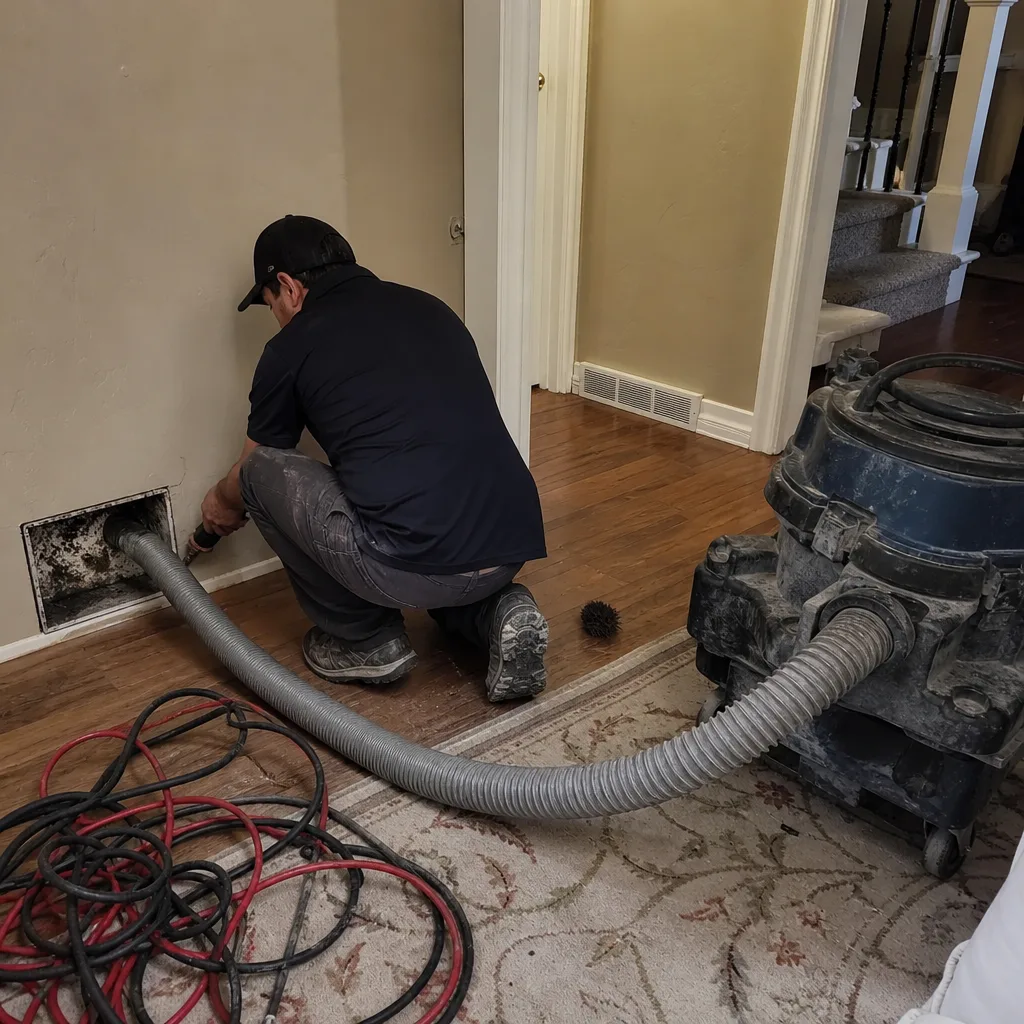 Before
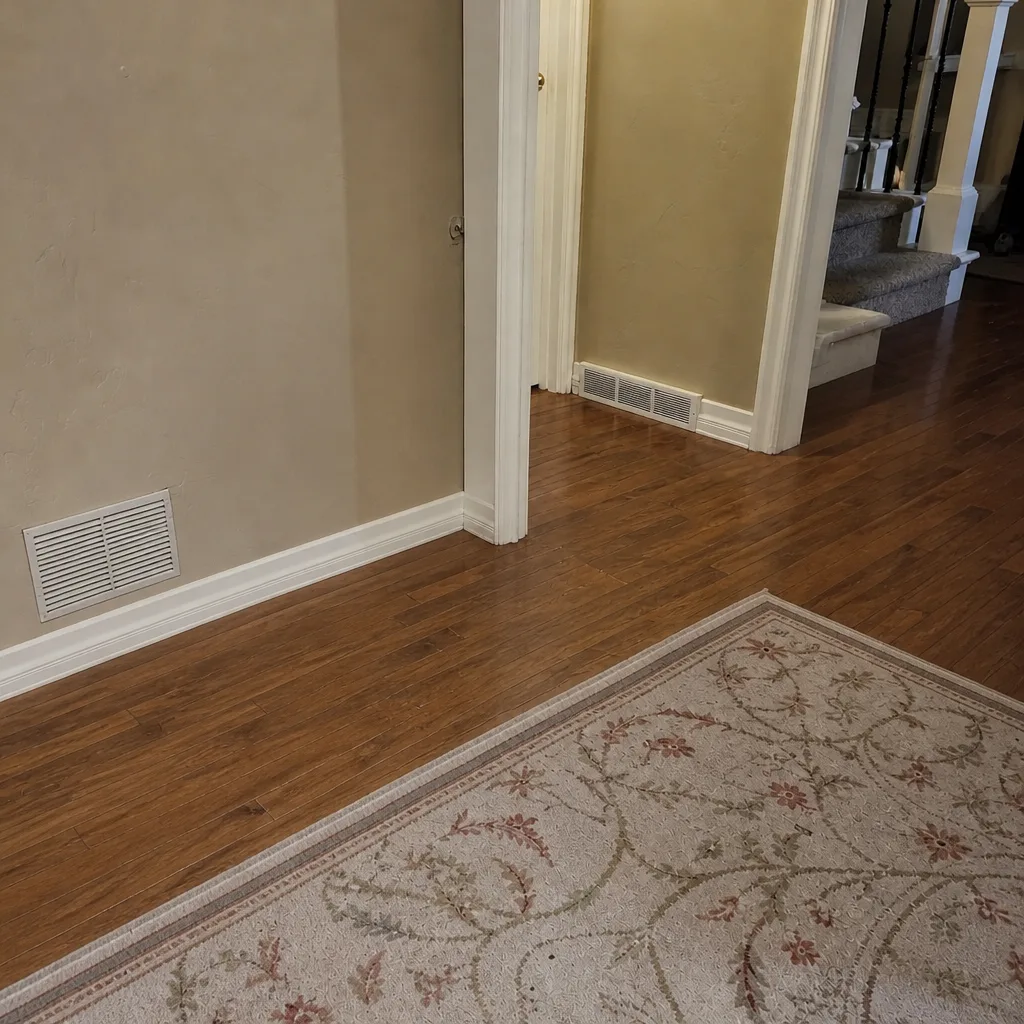 After
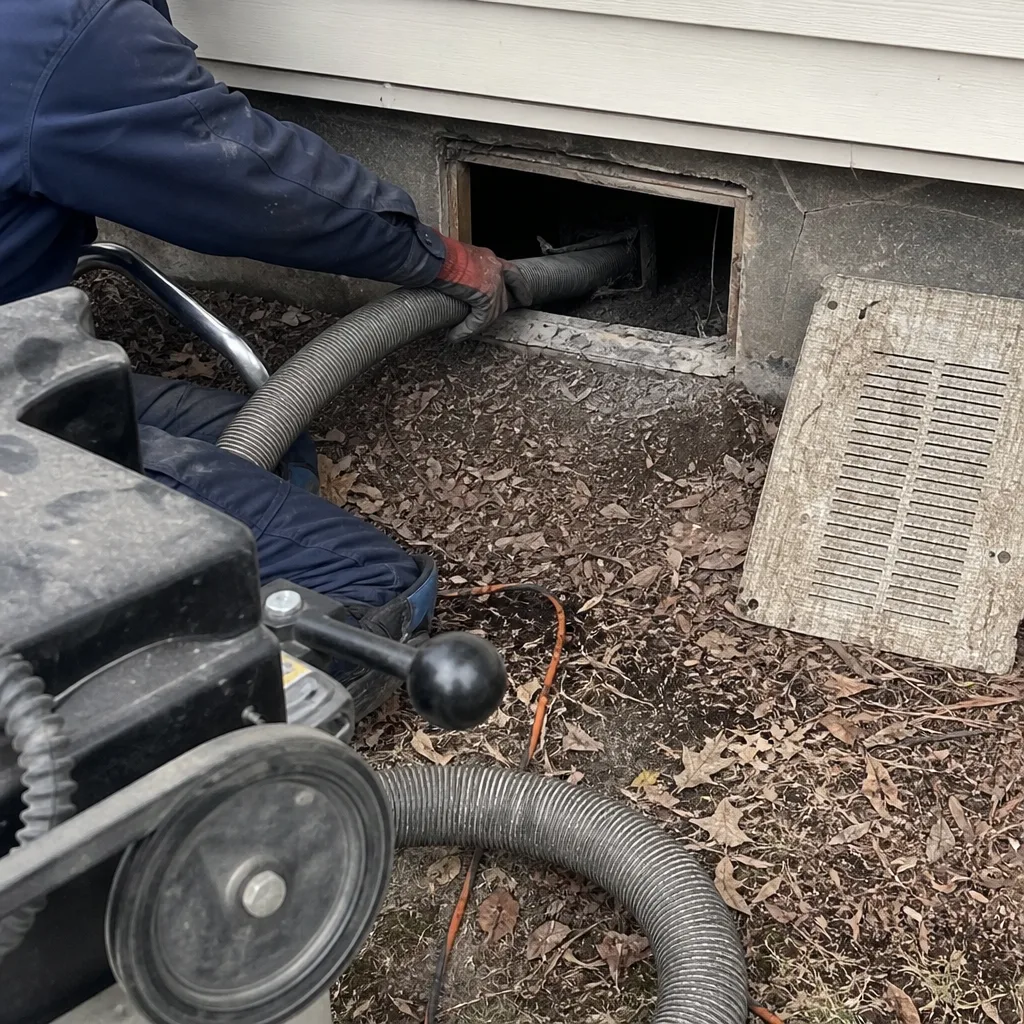 Before
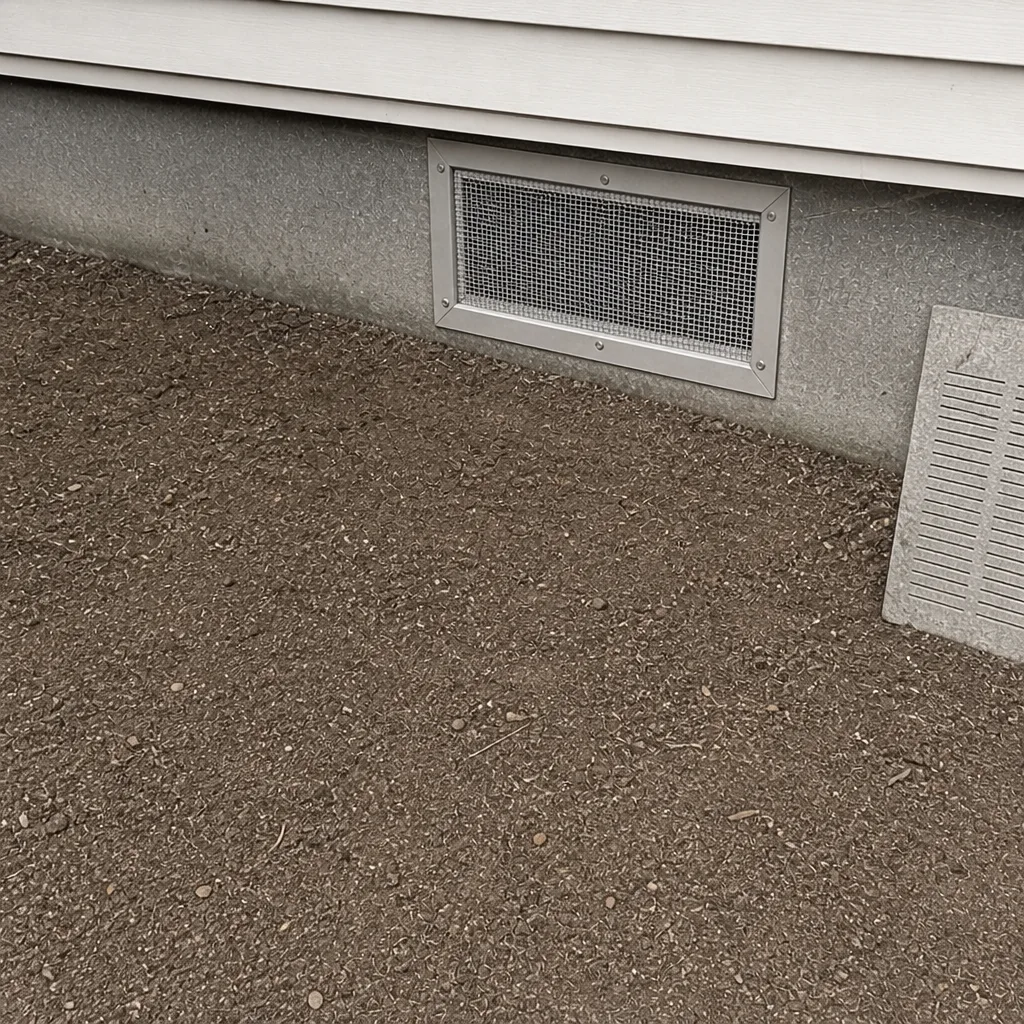 After
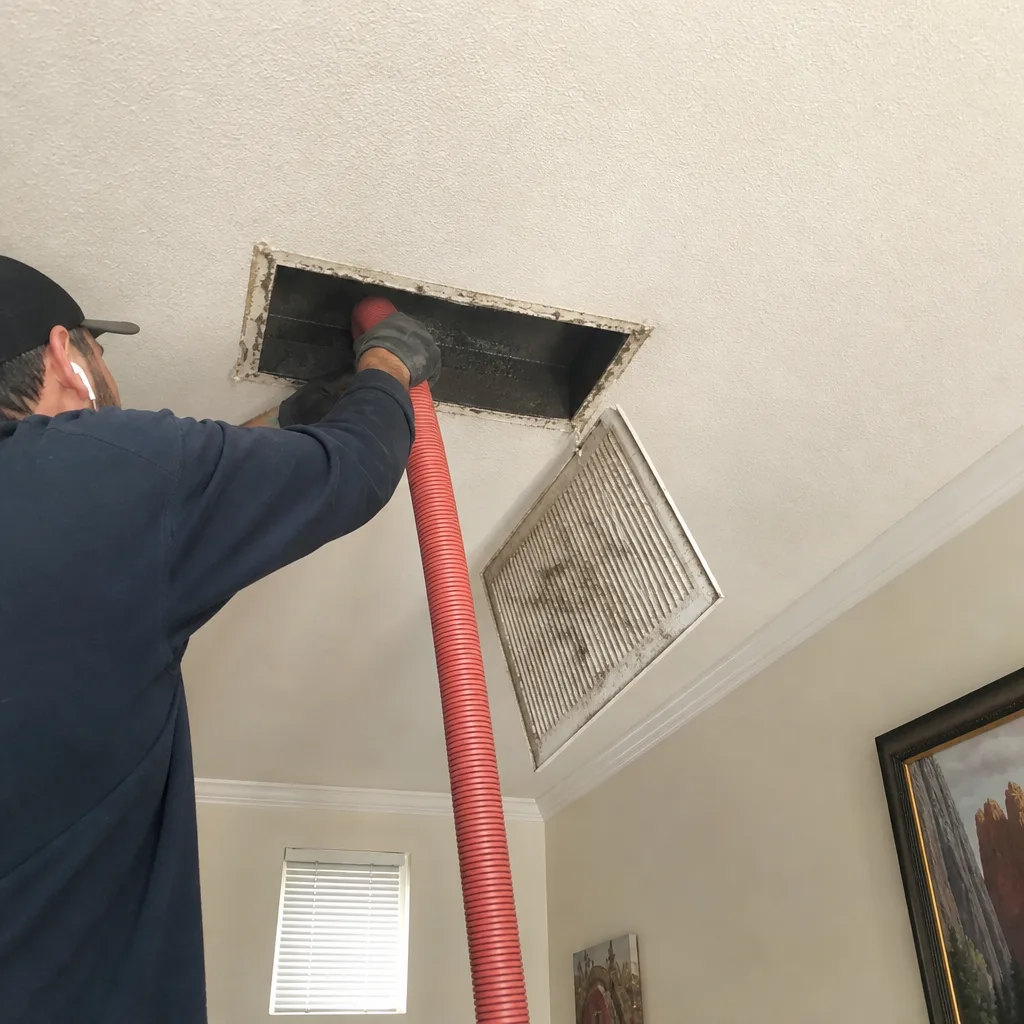 Before
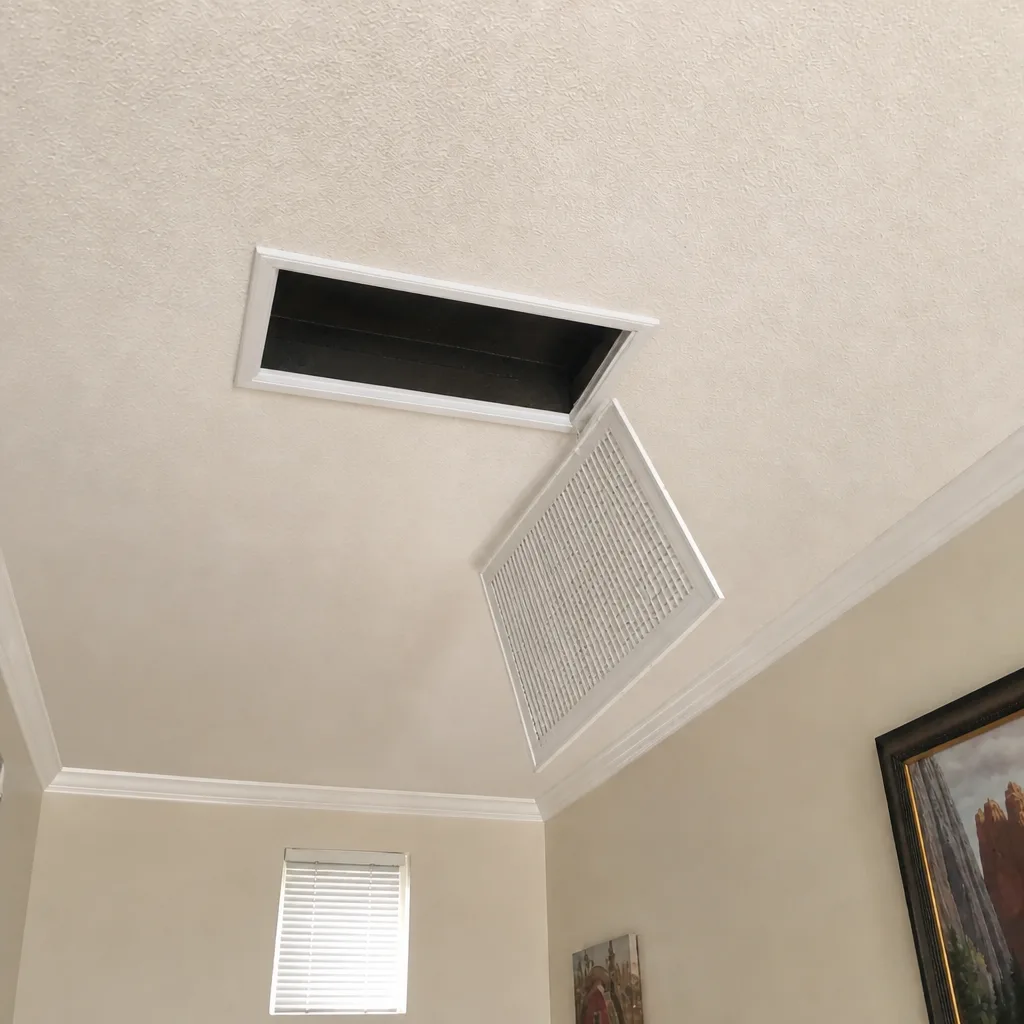 After
Common Mistakes to Avoid
- Chasing the coupon price. The lowest advertised price in a West Jordan mailer often comes with per-vent pricing on the invoice. Ask for a whole-system price before anyone arrives, and get it in writing.
- Trusting a single reading over a trend. One cold upstairs bedroom could be a closed register. Two seasons of drift is a duct problem. The trend carries the signal.
- Changing the filter without asking why it loaded fast. The new filter buys you time but tells you nothing. Figure out what’s loading it, then fix that.
- Skipping the post-renovation check. Drywall dust is the sneakiest contaminant in any West Jordan home. Treat remodel work as a trigger for an assessment, even if the ducts were cleaned recently.
- Assuming a higher MERV rating is always better. A filter that’s too restrictive for the system chokes airflow and can do more harm than good. Match the filter to the equipment, especially if you have Honeywell or Aprilaire components.
- Ignoring radial return grille dust. A ring pattern on the grille is a live readout of airflow conditions. It’s not ordinary household dust, and it doesn’t forgive being ignored.
- Confusing a dirty-duct symptom with a dirty-duct-cause. If the ducts are leaking, cleaning without sealing just resets the clock on the same problem. Duct repair and sealing is what stops the cycle.
When to Call a Professional
Some signals are worth watching. Others are worth calling about. Call a professional if your utility bill has climbed on comparable weather with no rate change, if the upstairs room gap is widening across two seasons, if your filter is loading at double its normal pace, if return grilles show the radial dust pattern, or if you’ve had drywall, insulation, or flooring work in the past six months. Any of those individually is a fair reason to book an assessment. Two or more together is a strong case. And if your ductwork won’t hold its shape, repair and sealing is a job for professional equipment, not tape from a hardware store. West Jordan Air Duct Cleaning offers free estimates in West Jordan. Call (877) 302-8330. We answer 24/7. Fast dispatch from 7am to 7pm, Sunday through Friday.
Frequently Asked Questions
The earliest signs are usually a rising energy bill on comparable weather, a filter that loads faster than it used to, a growing temperature gap between upstairs bedrooms and the main floor, and radial dust rings around return grilles. Visible dust or musty smells come later. If you’re tracking any of the early signals, call (877) 302-8330 for a free estimate so we can look at the whole system before it becomes a bigger job.
Air duct cleaning in West Jordan is priced per system rather than per vent, and the exact price is set by a written estimate after we see the layout and condition of the ducts. Whole-system cleaning typically falls in a few hundred dollars for a standard house, with the final figure depending on the number of runs, how accessible they are, and whether repair or sealing is also needed. Call (877) 302-8330. We answer 24/7, with fast dispatch from 7am to 7pm, Sunday through Friday.
Low advertised prices are usually per-vent teaser rates that grow once the technician is on site, or they reflect a partial job: a brush through the main trunk and nothing more. A whole-system price agreed before work starts, with commercial-grade equipment and before-and-after photos of your own ducts, is what to ask for. We price one flat rate per system and put it in writing. Call (877) 302-8330 for an estimate.
Most homes go a few years between cleanings, but the honest answer is that the calendar isn’t the best guide. Filter loading rate, renovation history, and return grille dust patterns are better indicators than the date on your records. A house that’s had a kitchen remodel this year may need attention far sooner than its last service date suggests. Call (877) 302-8330 and we’ll help you read your own signals.
Ask for before-and-after photos of your own ductwork, not stock photos from a brochure. Also ask what equipment is being used. Our technicians use Rotobrush and Nikro systems, which are commercial-grade, and Abatement Technologies air-filtration equipment on-site to control contamination during the job. If a company can’t tell you what they’ll use and show you the results, that’s a fair reason to look elsewhere. Call (877) 302-8330 with any questions.
Yes. Leaky supply ducts dump heated air into crawlspaces and attics, and restricted ducts force the blower to run longer to satisfy the thermostat. Both show up as higher winter gas use on comparable weather. If your bill has crept up without a rate change, that’s the signal. Call (877) 302-8330 for a full-system assessment and a free estimate.
The Bottom Line
The duct warning signs that matter most in West Jordan homes are the quiet ones: the energy bill that drifts up on comparable weather, the upstairs bedroom that slowly loses ground, the filter that loads in two weeks instead of four, and the radial dust rings forming on your return grilles. Visible dust and musty smells come later. By then, you’re paying to fix something that could have been caught with a filter change, a room check, and a few photos on your phone. Build the baseline, watch the trends, and treat renovation work as a reset. When two or more signals line up, get the whole system assessed rather than one piece of it.
Contact Us
If what you’ve read here matches what you’re seeing at home, the next step is a real assessment of the full air pathway: ducts, air handler, returns, and filtration. Call (877) 302-8330 for a free estimate. The local pro is licensed and insured as their state requires, and you’ll get one flat price per system agreed before any work starts, along with before-and-after photos of your own ducts. Our technicians have up to 10 years of experience reading these systems, and we work with the commercial-grade Rotobrush and Nikro equipment you’d want on a thorough job. We answer 24/7. Fast dispatch from 7am to 7pm, Sunday through Friday.
Written by the team at West Jordan Air Duct Cleaning.