
Last updated November 24, 2026
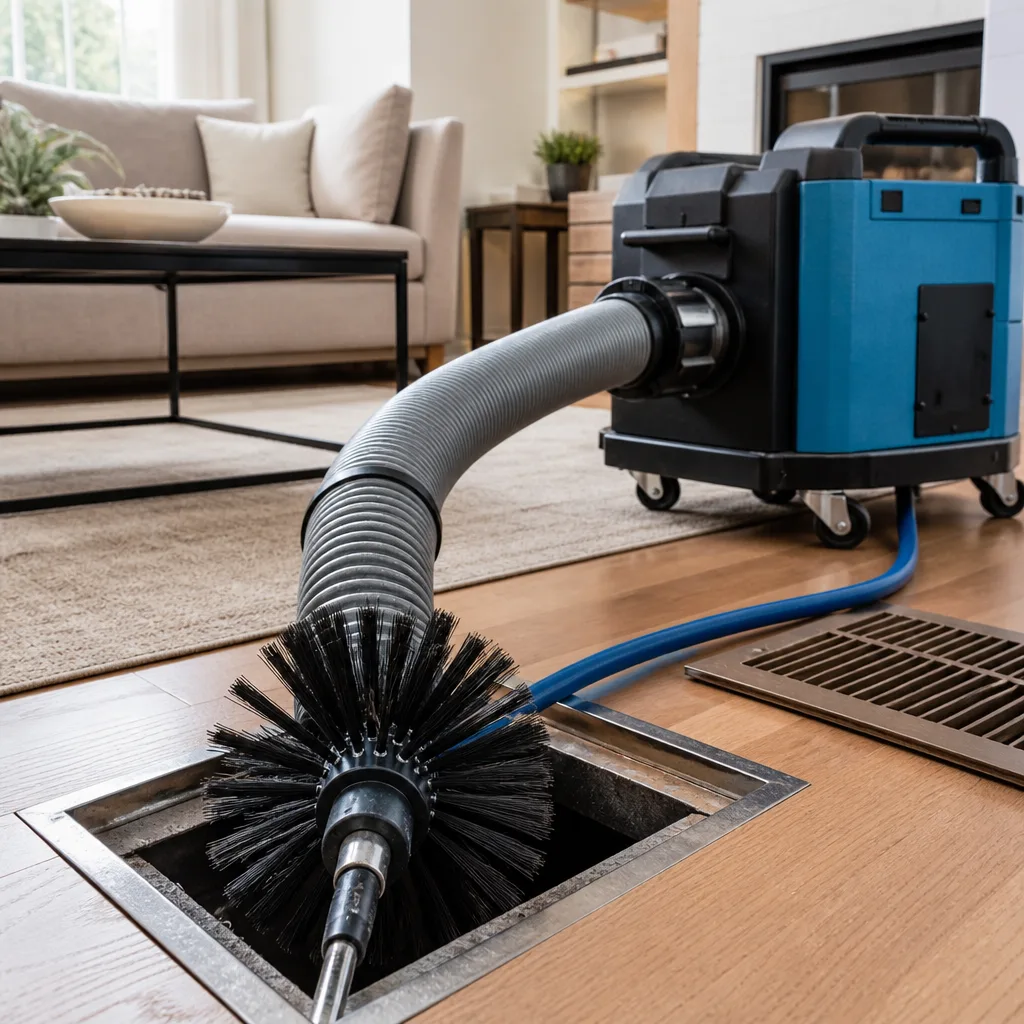 Whole-home duct cleaning
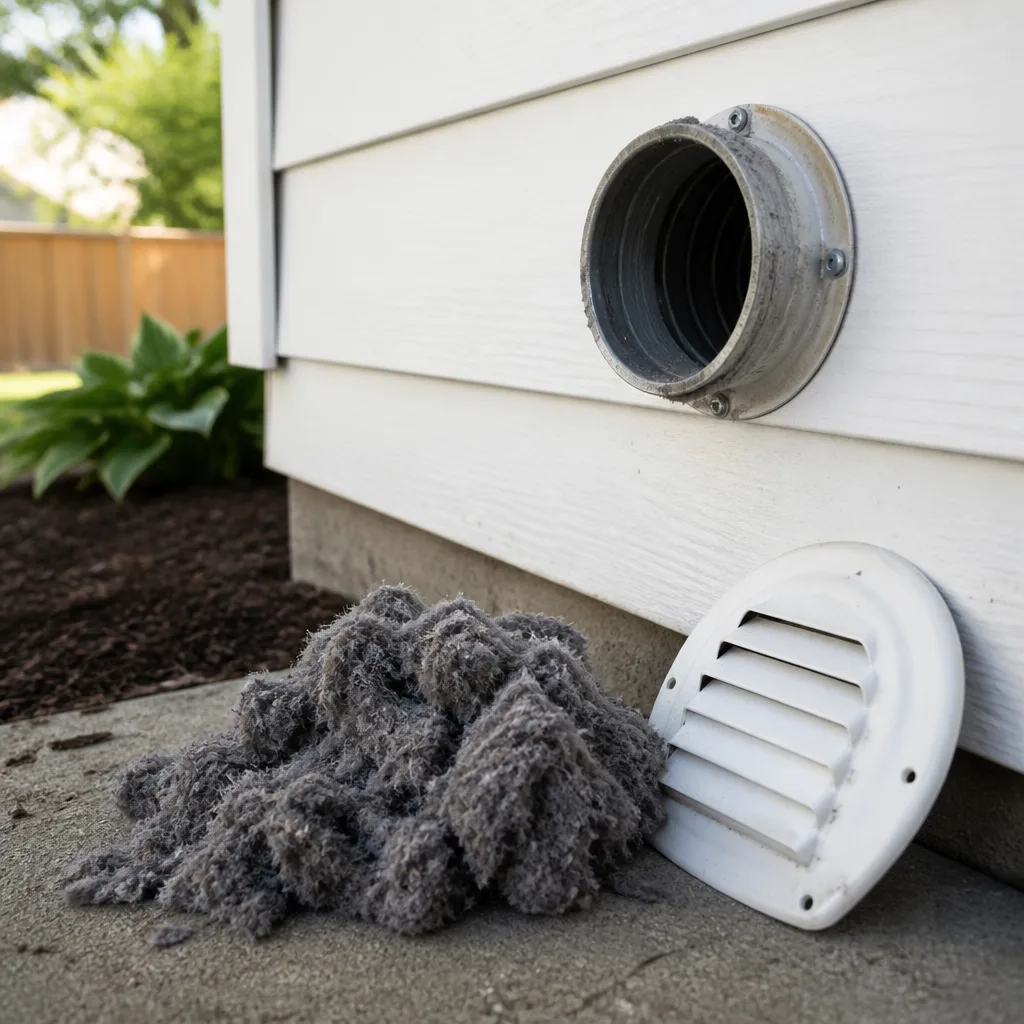 Dryer vent cleaning
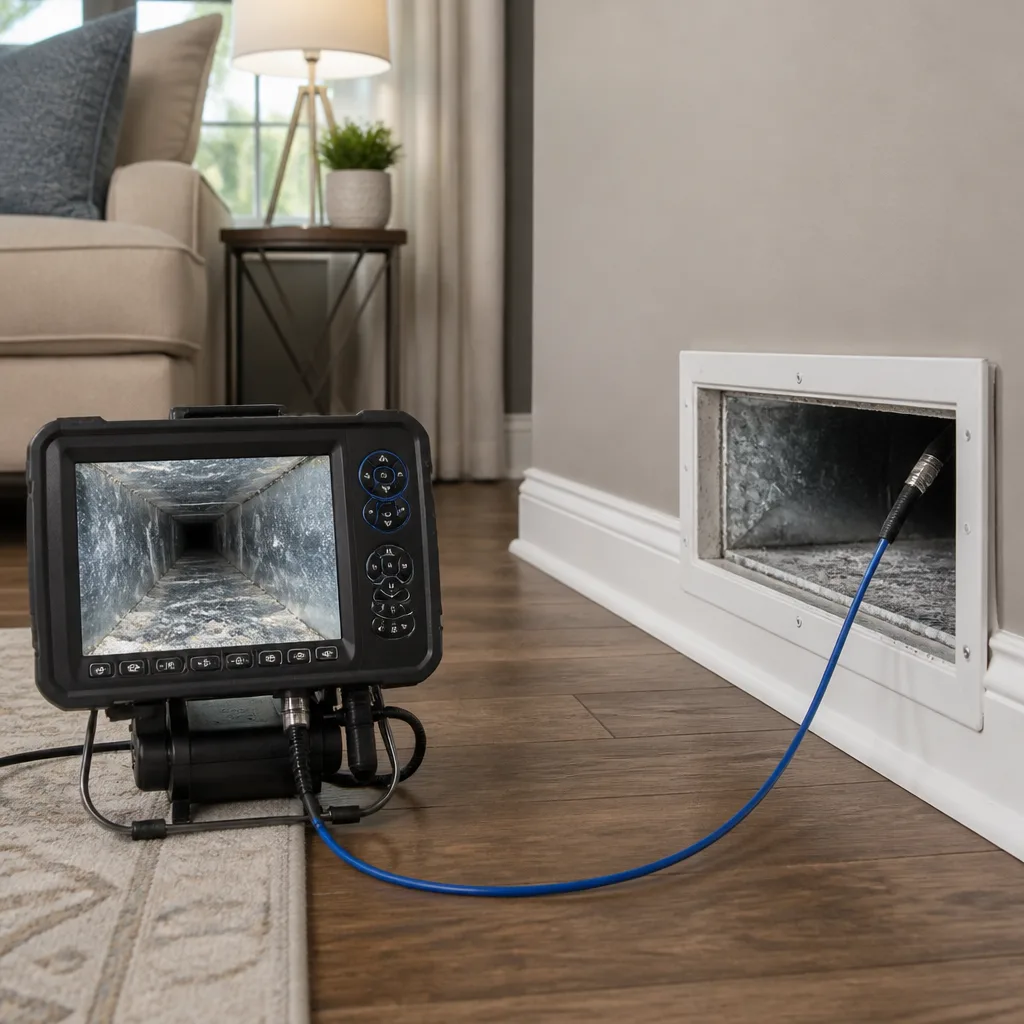 Camera inspection
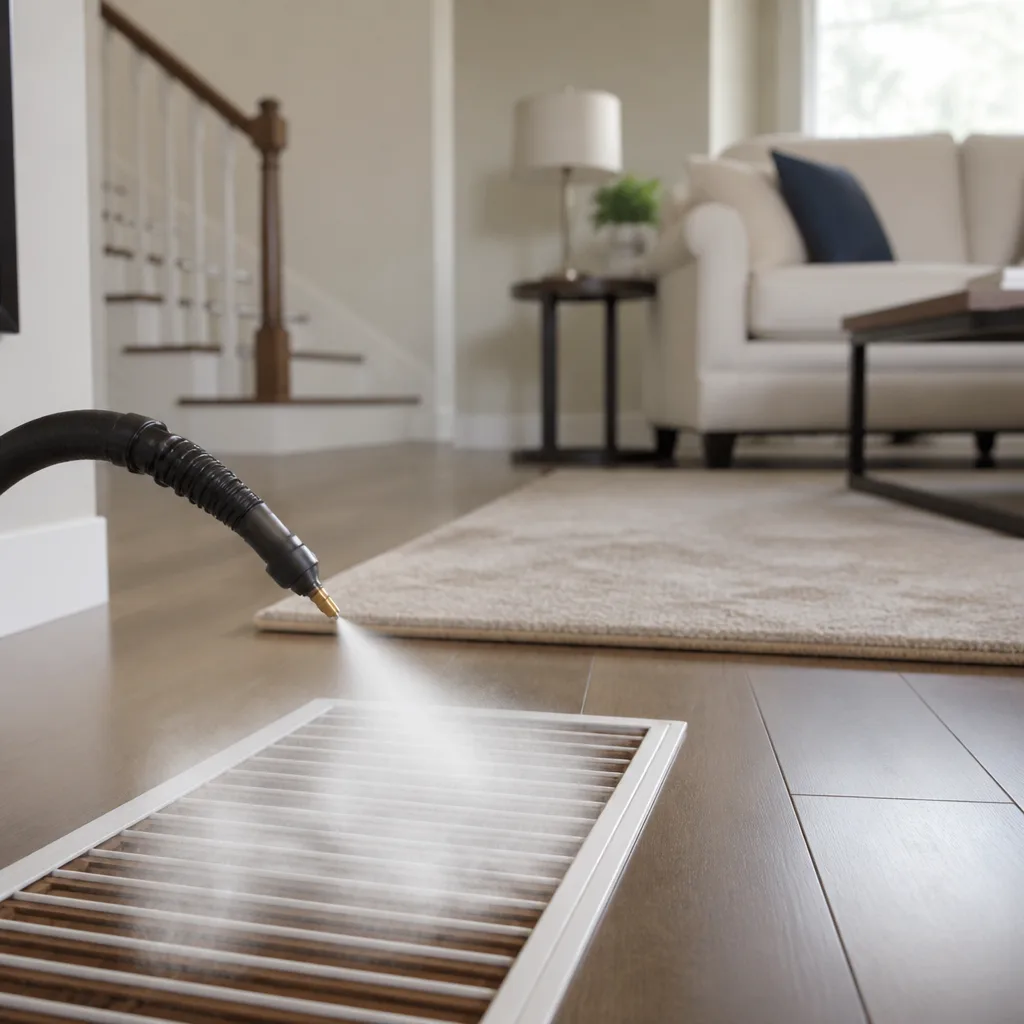 Sanitizing & deodorizing
Whole-system duct and dryer vent check with before-and-after photos - you see exactly what came out of your vents
That "$99 whole-house special" is a bait ad - the real number appears once they are in your hallway, or the "clean" is a shop-vac at the register. We photograph the inside of your ducts before and after instead.
Seasonal Air Duct Cleaning Care for West Jordan: Year-Round Homeowner’s Guide
Most homeowners think of duct cleaning as a once-a-year chore, usually scheduled when someone remembers it. In West Jordan, that approach misses the point. The Salt Lake Valley doesn’t hand you one pollution season; it hands you four, each with a different fingerprint on your HVAC system. Winter inversions trap fine particulate in the valley air for days. Summer runs your system hard through weeks of dry heat. Fall brings landscaping and construction dust rolling off the growing subdivisions on the city’s west side. Spring is what’s left over after all of it settles. This guide walks through each of those windows, what’s happening inside your ducts during them, and how to build a maintenance calendar around real local triggers instead of a generic quarterly reminder.
Quick Answer
The highest-value time to clean air ducts in West Jordan is late winter to early spring, right after inversion season ends, because that’s when accumulated particulate from months of trapped valley air is thickest in the return system. A second priority window opens in early fall before the heating season begins and after summer cooling load and landscaping dust have both peaked. The right year-round schedule combines one full cleaning around March or April with filter changes and grille inspections tied to inversion events, cooling-season startup, and the fall dust surge.
Styles & brands we work with
- Whole-home duct cleaning
- Dryer vent cleaning
- Camera inspection
- Sanitizing & deodorizing
Table of Contents
- Why West Jordan’s Air Duct Needs Don’t Follow a Generic Calendar
- Winter (November – February): The Inversion Season Protocol
- Spring (March – May): The Post-Inversion Cleaning Window
- Summer (June – August): Pre-Cooling-Season Coil and Blower Check
- Fall (September – October): Landscaping and Construction Dust Surge
- How to Build a 12-Month Duct Maintenance Calendar for West Jordan
- Common Mistakes to Avoid
- When to Call a Professional
Why West Jordan’s Air Duct Needs Don’t Follow a Generic Calendar
Air duct maintenance advice written for a coastal city or a humid Midwest climate doesn’t translate to West Jordan. The Salt Lake Valley sits in a bowl, and that geography drives the local air quality pattern more than any other single factor. Cold air and fine particulate settle into the valley floor during winter inversions, and the region’s PM2.5 can climb well past what the EPA calls unhealthy for days. That’s not a seasonal nuisance; it’s a sustained load on every filter and return duct in the city.
Summer works the opposite way. West Jordan homes run their cooling systems through long, hot, dry stretches where the HVAC is the primary air mover in the house. A system that moves that much air for that many weeks pulls dust, pollen, and construction particulate into the return side continuously. Fall adds a third stressor: the city’s continued residential growth means landscaping, grading, and new-build dust are part of the autumn landscape in a way they aren’t in older, fully built-out communities. Spring is the recovery season.
Four seasons, four different duct stressors. That’s the logic this guide is built on. It’s also why we approach the work as a full-system job rather than an isolated cleaning task. The return grilles, the supply runs, the filter housing, the coil, and the blower all interact, and a maintenance plan that ignores one component leaves the others working harder. If you want the overview of how the service itself works, our air duct cleaning page covers the process start to finish.
What “full system” means here
When we talk about the full air pathway, we mean everything the air touches between the return grille and the supply register: the return ducts, the filter slot, the blower compartment, the evaporator coil, the supply trunk and branches, and the registers themselves. Treating those as one connected system rather than separate line items is the difference between a duct cleaning and an HVAC health check. We stock and service Honeywell and Aprilaire air-quality components, so filtration and humidity questions get answered as part of the same visit rather than handed off to someone else.
Winter (November – February): The Inversion Season Protocol
During an inversion, outdoor PM2.5 can sit above the EPA’s unhealthy threshold for days at a time, which means your filter and return ducts are working harder than they were designed to handle on a continuous basis. Winter is not the season for a full duct cleaning in West Jordan. It’s the season for defensive maintenance: keep the system filtering aggressively, watch the return side, and know when to stop pulling outside air in.
Filter upgrade timing
The single most useful winter move is getting the filter right before the first sustained inversion. That usually means late October or early November. A filter that’s too restrictive chokes airflow and ices the coil; one that’s too loose lets the fine valley particulate straight through. The right choice depends on your system’s blower capacity, which is why a quick check of the filter slot and static pressure at the start of the season pays for itself. Check the filter monthly through winter rather than on a fixed 90-day schedule. Inversion weeks load a filter far faster than a mild January.
Return grille inspection frequency
Walk the return grilles every two to three weeks during inversion season. You’re looking for visible dust matting on the grille face, dark streaking around the frame that suggests air bypass, and any grille that’s noticeably dirtier than the others. An uneven pattern usually points to a return that’s undersized or a duct run that’s leaking. Note it and address it in spring; don’t tear into ductwork mid-winter.
When to prioritize recirculation over fresh-air intake
If your home has a fresh-air intake, an HRV, or an economizer tied to the HVAC, inversion days are when you want it closed or set to recirculate. Pulling valley air into the return during a bad inversion just loads the filter faster and drags fine particulate into the duct system. On the cleanest winter days, opening it back up is fine. The judgment call is simple: if you can see the brown-gray haze sitting over the valley, recirculate.
Spring (March – May): The Post-Inversion Cleaning Window
Spring is the highest-value cleaning window of the year in West Jordan, and it’s not close. After a full inversion season, the return ducts and filter housing have absorbed months of fine particulate that a normal filter can only intercept part of. Add the spring pollen load and the dust kicked up by the first warm-weather yard work, and you have a system carrying more debris than at any other point in the year. Cleaning in March or April means the system is clear before cooling season starts pushing air through it at full volume.
What accumulated contaminants typically look like after inversion season
In our experience, a post-winter duct system in West Jordan usually shows a few consistent patterns: a fine gray-brown dust coating on the return trunk interior, heavier matting on the return grilles than the supply side, visible dust loading on the blower wheel blades, and a filter that’s been changed but still leaves a residue ring in the slot. The supply side is often cleaner than homeowners expect, because the filter caught most of the load before it got there. The return side and the blower are where the winter shows up.
What a proper spring cleaning includes
- Inspect and photograph the return and supply sides before any work starts, so you have a baseline.
- Pull and evaluate the filter; note the loading pattern and whether the slot is sealing properly.
- Clean the return trunk and branches with a rotary brush system sized to the duct material.
- Clean the supply trunk and branches, checking each register for airflow and debris.
- Clean the blower wheel and blower compartment; this is where winter dust concentrates.
- Inspect the evaporator coil face for dust loading ahead of cooling season.
- Sanitize where contamination or odor warrants it, using a product appropriate to the duct material.
- Provide before-and-after photos of your own ducts so you can see what changed.
We use Rotobrush and Nikro rotary equipment for this work, the same class of commercial-grade tooling used in larger commercial and industrial settings. Consumer-level vacuums don’t move enough air or agitate the duct surface enough to do the job properly, and the difference shows in the after photos.
Summer (June – August): Pre-Cooling-Season Coil and Blower Check
Summer is when a dirty coil multiplies duct contamination, and most homeowners never see it happening. A dust-loaded evaporator coil loses its ability to shed condensate, the coil face stays damp longer, and that moisture combines with dust to create the conditions for microbial growth inside the air handler. From there, the blower pushes that contaminated air straight into the supply ducts all summer long. High-humidity weeks are the trigger. West Jordan’s summers are mostly dry, but the monsoon moisture that pushes through the valley in July and August is enough to expose a coil that isn’t shedding water properly.
The pre-summer check, in order
- Inspect the evaporator coil face for dust loading and confirm it’s draining freely.
- Check the condensate drain line and pan for standing water, algae, or a slow drain.
- Look at the blower wheel for dust buildup on the blades; an unbalanced wheel strains the motor.
- Verify the filter is seated and the correct size for the slot.
- Check the return grilles for airflow restriction before the system runs hard.
- Test that supply registers in every room are moving air evenly.
This is HVAC work as much as duct work, which is why we treat HVAC cleaning as part of the same service relationship. Cleaning ducts without checking the coil and blower is only half the job, because the coil and blower are what determine how clean the air stays after the ducts are clean.
Why condensate matters more than people think
A condensate line that drains slowly is a small problem in June and a bigger one in August. Standing water in the pan or line becomes a growth site, and the blower pulls air right past it. If you notice a musty smell when the AC kicks on, start with the drain line and the coil face before assuming the ducts are the problem. The smell is often coming from the air handler, not the duct runs.
Fall (September – October): Landscaping and Construction Dust Surge
Fall in West Jordan brings a dust surge that catches a lot of homeowners off guard. The city’s continued residential growth means grading, excavation, and landscaping work are ongoing in and around the newer subdivisions on the west side. Add the normal fall yard work, leaf cleanup, and the first windy fronts, and the outdoor particulate load climbs just as the heating season is about to start. A system that goes into winter with a loaded filter and dirty return grilles carries that debris through the entire inversion season.
The fall pre-heating-season audit
- Inspect every return grille and note any that are noticeably dirtier than the rest.
- Replace the filter and confirm the slot is sealing around the edges.
- Check exterior foundation vents and any fresh-air intake for debris or pest screens that are clogged.
- Look at the supply registers for visible dust trails that suggest a leaking joint nearby.
- Inspect accessible duct joints for separation, tape failure, or disconnected runs.
- Note any rooms that feel stuffier or dustier than the rest of the house; those are the ones worth checking first.
Fall is also the right time to think about duct sealing if the audit turns up problems. Leaking joints pull attic and crawlspace air into the supply side, and no amount of cleaning fixes a duct system that’s open to the outside. Our duct repair and sealing service addresses that root cause directly. If your fall audit turns up leaks, seal them before winter, not after.
How to Build a 12-Month Duct Maintenance Calendar for West Jordan
A useful maintenance calendar is tied to local triggers, not to the first of every quarter. Here’s the schedule we recommend for a typical West Jordan home, built around the four stress periods above. Adjust the dates to your system type, filter class, and whether anyone in the home has respiratory sensitivity.
- Late October: Install the winter filter, inspect return grilles, close or set fresh-air intake to recirculate for inversion season.
- November through February: Check the filter monthly. Walk the return grilles every two to three weeks. Keep the fresh-air intake closed on inversion days.
- March or April: Schedule the full post-inversion cleaning. This is the anchor appointment of the year.
- May: Pre-cooling-season check on the coil, blower, and condensate drain.
- June through August: Watch for musty odors at AC startup. Check the filter monthly during the heaviest cooling weeks.
- September: Fall audit of grilles, filter slot, accessible duct joints, and exterior intake screens.
- October: Sealing work if the audit found leaks. Replace the filter again before heating season.
That’s one full cleaning, one seasonal deep check, and a series of short inspections you can do yourself in a few minutes each. The calendar works because each step is timed to a specific West Jordan trigger: the inversion, the cooling load, the fall dust surge, and the spring recovery window. If you’d rather have the whole pathway handled at once, including the air quality and sanitizing inspection, we can fold it into the spring appointment.
Adapting the calendar to your home
A house with pets, a household with allergy or asthma concerns, or a system with a short return run will need more frequent checks during inversion season. A newer build in one of West Jordan’s growth areas may need the fall audit sooner and more carefully, because construction dust from surrounding lots can persist for a full season. The calendar above is the baseline; your home’s specifics move it up or down.
Common Mistakes to Avoid
- Cleaning in the wrong season. Scheduling a full duct cleaning in the middle of inversion season means the system is loaded again within weeks. Wait for the spring window unless there’s an active problem that can’t wait.
- Running a fresh-air intake through an inversion. Leaving an economizer or fresh-air intake open on a bad air day pulls valley particulate straight into the return. Close it and recirculate until the air clears.
- Skipping the blower and coil. A cleaned duct system attached to a dirty blower and loaded coil gets contaminated again fast. The air handler is the engine of the whole pathway.
- Ignoring the return side. Return grilles and the return trunk carry more of the winter load than the supply side in most West Jordan homes. If a cleaning quote focuses only on the supplies, ask why.
- Assuming a filter change is a duct cleaning. Filters capture what reaches them; they don’t remove what’s already settled in the return trunk, the blower compartment, or the supply branches.
- Putting off duct sealing after a fall audit. Leaking joints pull attic or crawlspace air into the supply side, and cleaning around a leak doesn’t fix it. Seal first, then clean.
- Choosing a quote on price alone. A very low quote often means a shop-vac rig and no blower or coil inspection. Ask what equipment is used and whether before-and-after photos of your ducts are included.
When to Call a Professional
Some of this calendar you can run yourself: filter changes, grille walks, visual inspections. The cleaning itself and any sealing work belong with a professional, because the equipment and the scope are what make the job work. Call us when you’re ready to schedule the spring post-inversion cleaning, when a fall audit turns up leaking joints, when you notice musty odors at AC startup, when a room in the house is consistently dustier than the rest, or when you’ve never had the ducts cleaned and don’t know what’s in them. West Jordan Air Duct Cleaning offers free estimates in West Jordan. Call (877) 302-8330. Our technicians have up to 10 years of experience, and we use Rotobrush and Nikro equipment along with Abatement Technologies air-filtration gear on-site.
See the difference
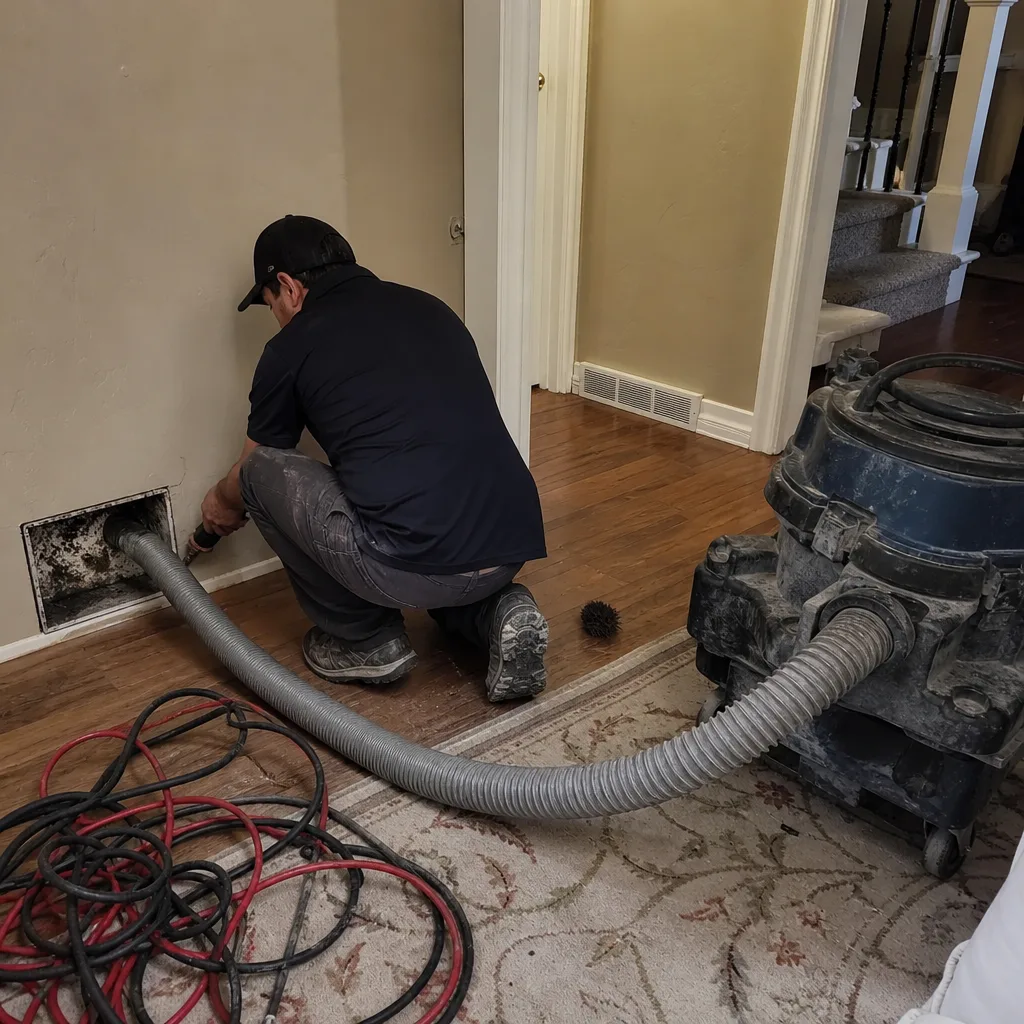 Before
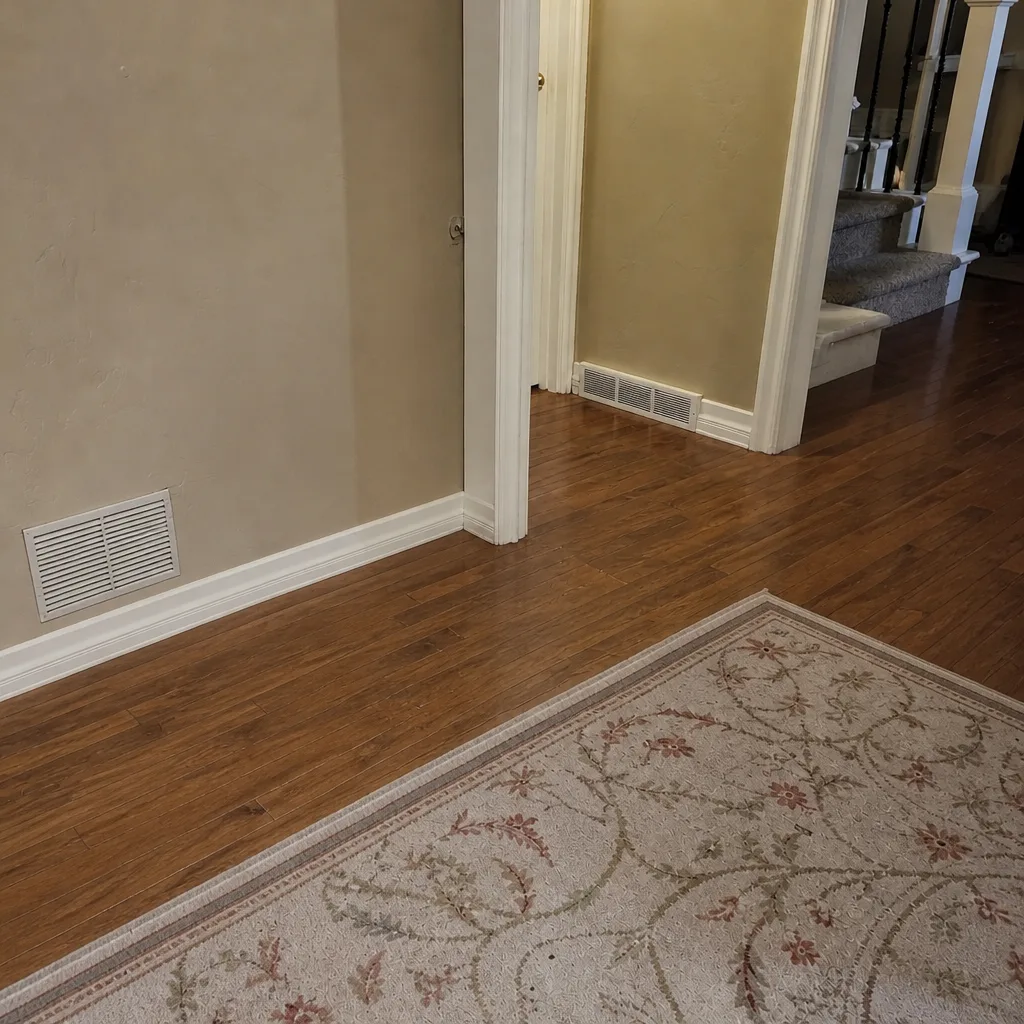 After
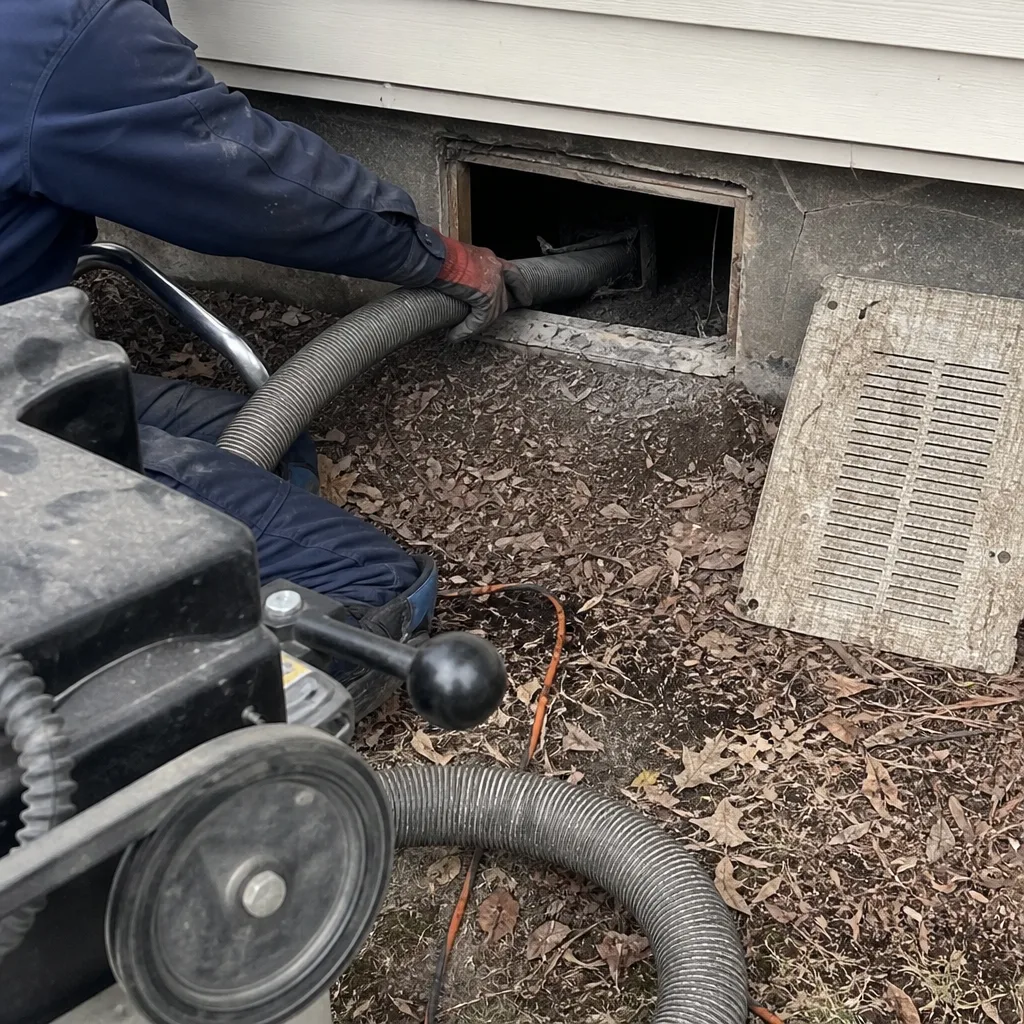 Before
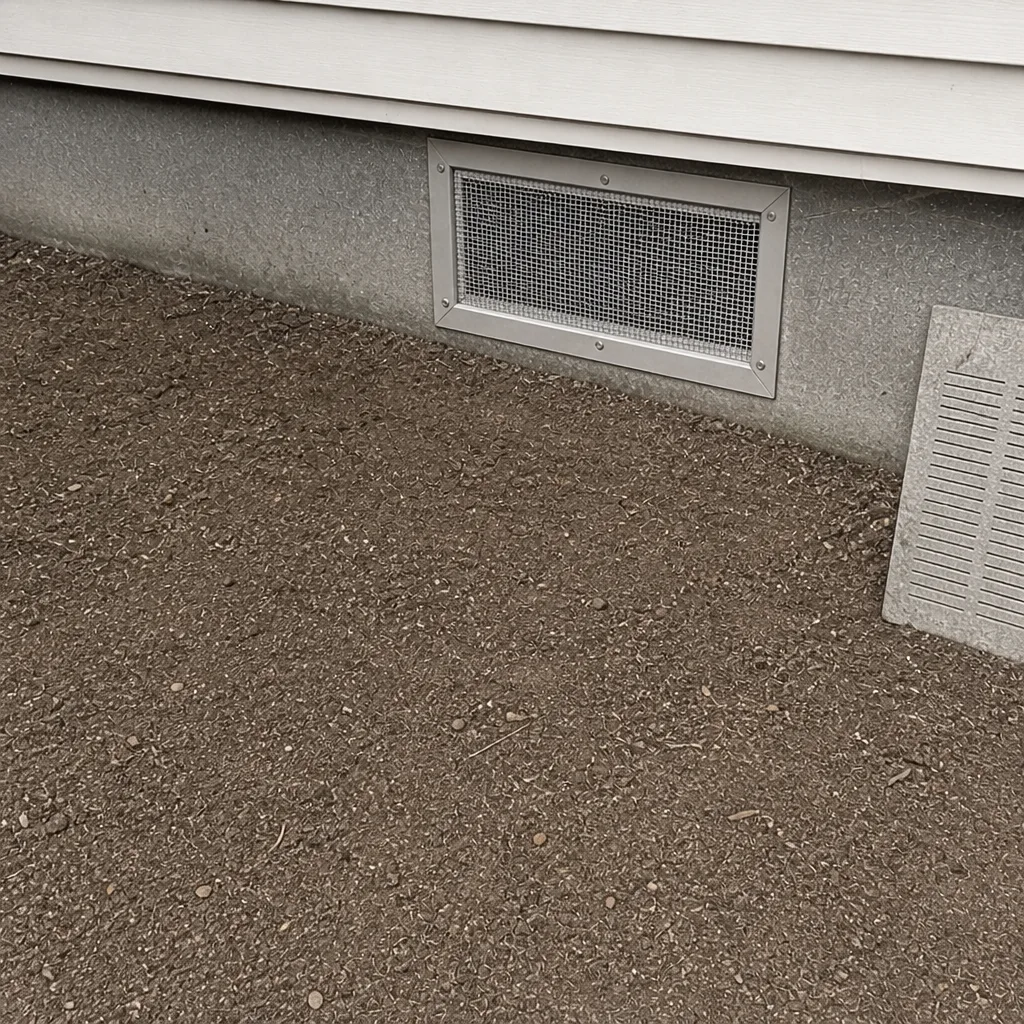 After
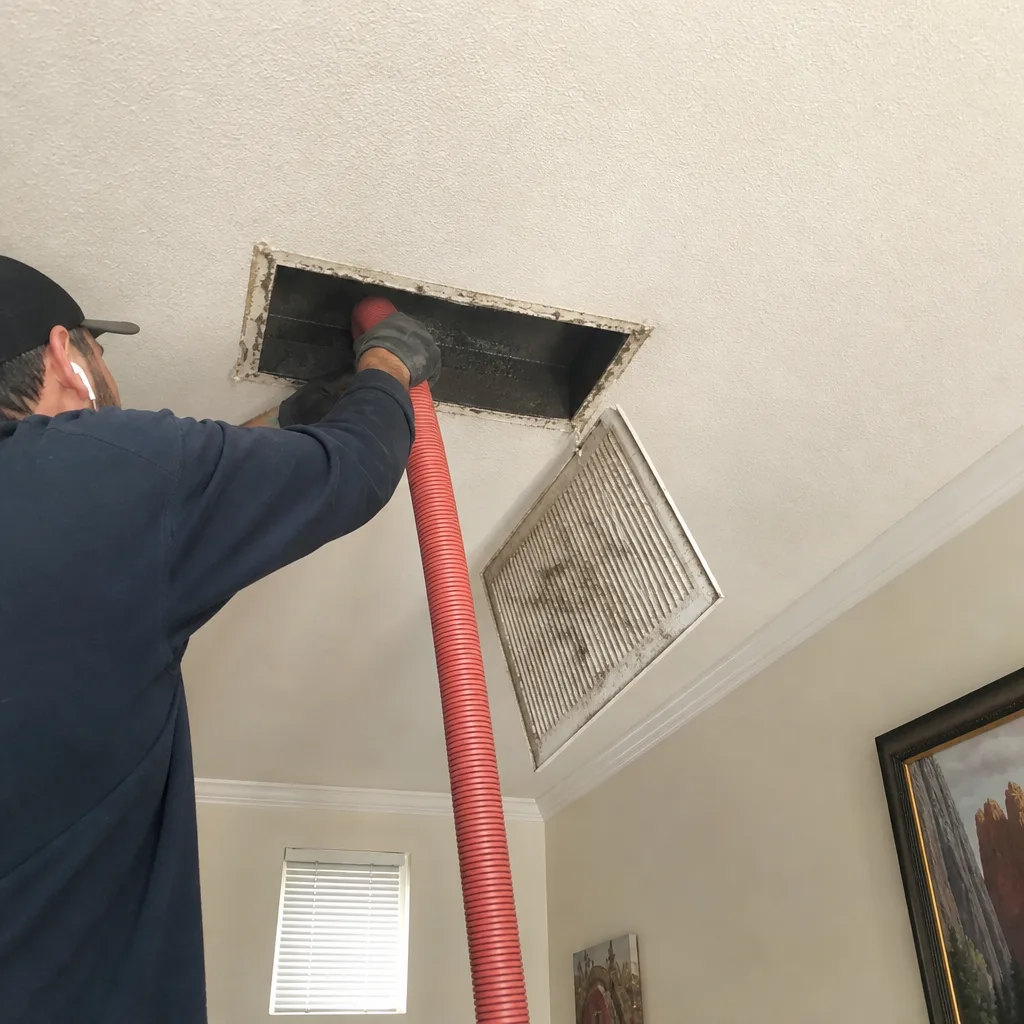 Before
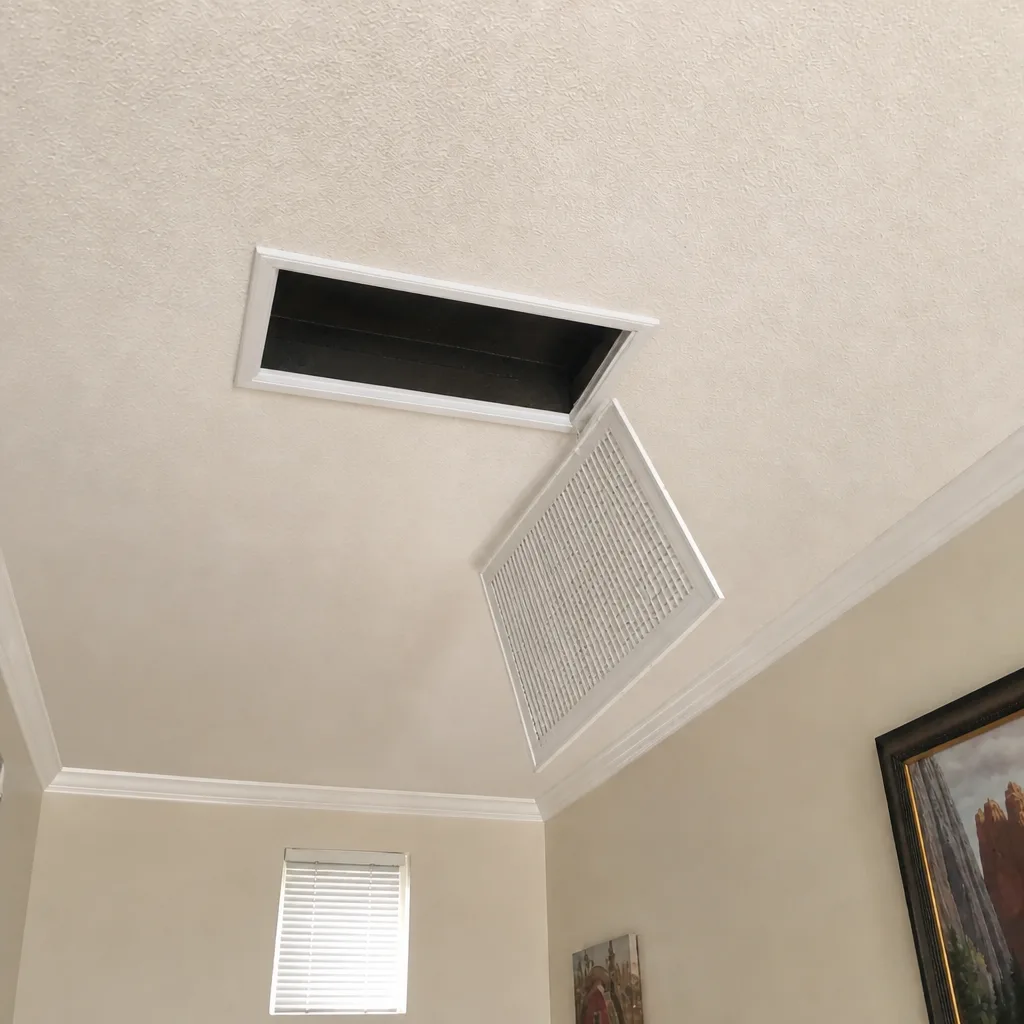 After
Frequently Asked Questions
Once a year is right for most homes here, timed to the spring post-inversion window, with filter changes and grille inspections throughout the year. Homes with pets, allergy concerns, or heavy winter inversion exposure may benefit from a second inspection in fall before heating season.
March or April, after inversion season ends and before cooling season starts, is the best window. That’s when accumulated winter particulate is thickest in the return system, and cleaning then gets the system clear before the summer cooling load pushes air through it full-time.
Yes. During a sustained inversion, outdoor PM2.5 can sit above EPA unhealthy thresholds for days, which loads your filter and return ducts far faster than normal. That’s why we recommend monthly filter checks and closing fresh-air intakes on bad air days.
The smell usually comes from the air handler, not the ducts themselves: a dust-loaded evaporator coil or a slow condensate drain line holding water. Check the coil face and drain line first, then the ducts.
Cleaning removes what’s settled in the ducts; sealing closes off the leaks that pull attic, crawlspace, or outdoor air into the supply side. If a fall audit finds separated joints or failed tape, seal first, then clean, so the cleaning actually holds.
We price per system by written estimate, not per vent, so the number depends on the size and layout of your home and the scope of work. We give one flat price per system before any work starts, with before-and-after photos of your own ducts included. Call (877) 302-8330 for an exact quote. Estimates are free. We answer 24/7. Fast dispatch from 7am to 7pm, Sunday through Friday.
Ask for before-and-after photos of your own ducts, not stock images. We photograph the return and supply sides before work starts and again at the end, so you can see exactly what changed. Call (877) 302-8330 to schedule an estimate.
The Bottom Line
West Jordan doesn’t have one duct-cleaning season; it has four, and each one calls for a different response. Winter is for defensive filtering and recirculation during inversions. Spring is the high-value cleaning window, right after the winter load peaks and before cooling season starts. Summer is about the coil, the blower, and the condensate drain, because a dirty coil recontaminates clean ducts. Fall is the pre-heating audit, and the time to seal leaks before they carry attic air into the supply side all winter. Build the calendar around those four triggers, and the system stays clear through the year. If you’d rather have the full pathway handled in one visit, call us and we’ll walk the house with you.
Call (877) 302-8330 for a free estimate. We answer 24/7. Fast dispatch from 7am to 7pm, Sunday through Friday. Every job is one flat price per system agreed before work starts, with before-and-after photos of your own ducts. Learn more about how we approach the work at West Jordan Air Duct Cleaning, and when you’re ready for the spring appointment, we also handle dryer vent cleaning on the same visit so the whole air pathway is covered in one call.
Written by the team at West Jordan Air Duct Cleaning.